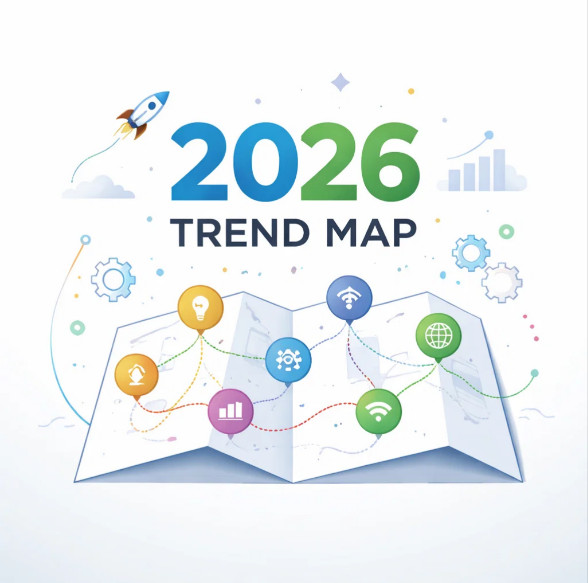
2026년은 누군가가 단정적으로 이제 회복 국면 혹은 침체 확정이라고 말하기 어려운 해가 될 가능성이 크다. 성장률 자체가 완전히 꺾이지 않더라도 무역 규제 전쟁 기후 기술이 동시에 흔들리면서 기업과 개인은 방향보다 충격을 버티는 구조를 더 중요하게 보게 된다. 그래서 2026 트렌드는 유행어보다 시스템 변화에 가깝다. 아래 11가지는 경제 문화 IT가 서로 물려 돌아가며 만들어낼 가능성이 큰 연쇄 트렌드들이다.
1. 성장률은 낮고 변수는 많은 저성장 고변동 운영 방식
2026년의 핵심은 잘 될 산업을 맞히는 것보다 버티는 운영을 설계하는 데 있다. 기업은 매출 성장만으로 정당화되던 투자보다 현금흐름 재고 가격전략 환위험 관리 조달선 다변화처럼 운영의 세부 설계를 경쟁력으로 삼을 가능성이 크다. 특히 금리와 물가가 완만히 내려가더라도 충격은 불규칙하게 온다. 지정학적 뉴스 하나로 환율과 원자재가가 흔들리고 소비심리가 급격히 얼어붙는 장면이 반복될 수 있다. 그럴수록 예측이 아니라 대비가 중요해진다.
계획을 하나로 고정하는 대신 시나리오를 여러 개로 두고 자금과 인력을 탄력적으로 배치하는 방식이 보편화될 수 있다. 개인도 비슷하다. 단기 소비 확대보다 고정비 관리와 소득의 분산이 늘어날 수 있다. 한 직장에서의 연봉 상승만이 아니라 프로젝트형 노동 부업 온라인 판매 같은 수입원 다변화가 자연스러워지고 보험 대출 주거비를 포함한 생활 고정비 최적화가 생활 전략의 중심으로 올라올 가능성이 크다.
2. 공급망의 블록화가 이념이 아니라 원가로 찍히는 시점
무역과 기술의 지정학이 길어질수록 우호국 중심 공급망은 구호가 아니라 재무제표의 숫자로 남는다. 2026년에는 핵심 소재 부품 장비의 대체 조달망 구축이 본격 비용화될 가능성이 크다. 기업은 가장 싼 곳을 찾기보다 끊기지 않는 곳을 찾는다. 그러면 생산 거점이 지역별로 분화되고 동일한 제품을 여러 지역에서 중복 생산하는 구조가 늘어난다. 단기적으로는 원가 상승이지만 장기적으로는 중단 리스크를 줄이는 보험료에 가깝다. 이 과정에서 멕시코 동남아 동유럽처럼 중간 기착지 역할을 할 수 있는 지역이 더 중요해질 수 있다.
다만 어느 지역이든 정치 리스크가 완전히 사라지는 것은 아니므로 공급망의 지도는 단순히 중국에서 다른 곳으로 옮겨가는 그림이 아니라 여러 축으로 분산되는 모양이 될 가능성이 크다. 그래서 2026년의 제조업 전략은 공장 하나를 어디에 세우는 문제가 아니라 부품별로 어떤 경로로 돌릴지 위기 시 대체 루트가 얼마나 빨리 가동되는지의 문제로 바뀔 수 있다.
3. 탄소가 환경 이슈에서 무역 관문으로 바뀌는 2026
2026년은 탄소 규제가 선언과 캠페인의 언어에서 통관과 계약의 언어로 넘어가는 변곡점이 될 수 있다. 배출량을 줄이겠다는 목표만으로는 충분하지 않다. 어떤 공정에서 얼마가 나오는지 데이터를 증명해야 하고 그 데이터가 거래 조건의 일부가 되는 흐름이 커질 수 있다. 특히 탄소 관련 제도는 한 지역에서 시작해 다른 지역의 정책 경쟁을 촉진하는 성격이 있다.
따라서 수출 기업은 단지 친환경 이미지를 쌓는 것이 아니라 제품 단위의 배출량 계산 체계를 갖추고 공급망 전체의 배출 데이터를 확보해야 한다. 이때 중요한 것은 기술보다 조직이다. 생산 담당 품질 담당 구매 담당이 각자 움직이면 데이터가 일관되지 않다. 탄소 데이터는 회계처럼 표준화되어야 하며 외부 감사나 검증을 염두에 둔 기록 방식이 필요해진다.
이런 변화는 단기적으로 귀찮고 비용이 들지만 장기적으로는 시장 접근권을 지키는 비용이 된다. 2026년에는 탄소 규제가 특히 가격 협상력에 영향을 주면서 배출량이 낮은 공정이 프리미엄이 되고 높은 공정은 할인 요인이 되는 장면이 늘어날 가능성이 크다.
4. 전력과 데이터센터가 2026 경제의 숨은 병목이 된다
AI와 디지털화가 커질수록 전기가 성장의 상한선을 정할 가능성이 커진다. 데이터센터는 단지 서버를 쌓는 건물이 아니라 전력망과 냉각과 통신망과 부지 규제까지 포함한 복합 인프라다. 2026년에는 모델 성능 경쟁만큼이나 전력 확보 경쟁이 더 눈에 띌 수 있다. 기업 입장에서는 데이터센터를 어디에 지을지보다 전기를 어떤 조건으로 장기 계약할지와 송전 병목을 어떻게 해결할지가 더 중요해질 수 있다.
국가 입장에서도 데이터센터는 산업유치의 대상이지만 동시에 전력과 물을 많이 쓰는 시설이기 때문에 주민 수용성과 환경 규제가 맞물릴 수 있다. 그래서 2026년에는 전력망 증설과 재생에너지 발전 확대 원전 활용 여부 에너지 저장장치 투자 같은 에너지 정책이 디지털 경쟁력과 직결되는 논쟁으로 더 자주 등장할 가능성이 크다. 결국 AI의 보급 속도는 알고리즘의 혁신뿐 아니라 전력 인프라가 허용하는 범위 안에서 결정될 수 있다.
5. 업무는 챗봇에서 에이전트로 그리고 규제는 뒤따라 잠긴다
2026년 IT의 중심은 대답하는 AI보다 일을 끝내는 AI로 옮겨갈 가능성이 크다. 메일을 읽고 회의를 요약하는 수준을 넘어 일정 조정 결재 문서 작성 고객 문의 처리 재고 발주 같은 업무의 흐름 자체를 자동화하려는 수요가 커질 수 있다. 여기서 핵심은 연결이다. 기업 내 시스템은 서로 다른 권한과 로그 구조를 갖고 있고 이걸 AI가 안전하게 넘나들려면 권한 관리와 기록 체계가 필수다.
그래서 2026년에는 AI 도입과 거버넌스가 한 세트로 굳어질 가능성이 높다. 누가 어떤 권한으로 무엇을 실행했는지 기록이 남아야 하고 오류가 났을 때 되돌릴 수 있어야 하며 민감 정보가 외부로 새지 않게 해야 한다. 이때 에이전트는 편리하지만 사고가 나면 피해가 크다. 그래서 도입 초기에는 사람이 최종 승인하는 반자동이 주류가 되다가 검증이 쌓이면 점차 자동 실행 범위가 늘어나는 방식이 확산될 수 있다.
6. 진짜와 가짜 구분 비용이 급등하는 사회
생성형 AI는 콘텐츠 생산비를 낮추지만 검증 비용을 올린다. 2026년에는 딥페이크 가짜 공문 위장 고객응대 같은 형태가 더 정교해지면서 기업과 개인 모두 신뢰를 증명해야 하는 상황이 늘어날 수 있다. 기업은 브랜드를 겨냥한 허위 영상이나 가짜 공지에 신속히 대응할 공식 채널 운영 역량이 중요해질 수 있고 개인은 금융사기와 신분 도용에 더 자주 노출될 수 있다.
이 흐름은 사이버 보안과도 직결된다. 단순 해킹이 아니라 사람을 속여서 권한을 뺏는 방식이 늘어나기 때문이다. 그래서 2026년에는 보안이 기술 부서의 일이 아니라 전 직원 교육과 프로세스의 문제가 될 가능성이 크다. 동시에 사회적으로는 출처 인증 워터마킹 공식 기록의 강화처럼 신뢰 인프라를 요구하는 목소리가 커질 수 있다. 결국 정보의 홍수 속에서 누가 진짜인지 증명하는 능력이 경쟁력이 된다.
7. 국방과 산업이 다시 붙는 재산업화
2026년에는 국방비 확대가 단순 군사 이슈를 넘어 산업정책과 고용정책으로 연결될 가능성이 커진다. 방산 조달은 장기 계약이 많아 생산설비와 인력 양성이 뒤따른다. 이 과정에서 자동차 기계 소재 같은 기존 제조업이 방산 공급망으로 편입되거나 전환되는 사례가 늘어날 수 있다. 또한 드론 위성 감시정찰 사이버 방어처럼 소프트웨어 비중이 큰 분야가 부각되면서 IT 기업도 방산 생태계의 중요한 플레이어가 될 수 있다.
하지만 방산은 수출통제와 기술 규제가 강하기 때문에 시장이 커져도 자유롭게 확장되기 어렵다. 그래서 2026년의 방산 트렌드는 성장과 동시에 규제와 표준 경쟁이 함께 커지는 형태가 될 가능성이 크다. 산업적으로는 민수 기술이 군사로 흡수되는 것만이 아니라 군사 기술이 민수로 스핀오프 되는 흐름도 생길 수 있다.
8. 문화는 더 짧게 더 중독적으로
2026년 문화 트렌드에서 눈에 띄는 것은 짧고 빠른 서사다. 세로형 영상과 연재형 콘텐츠는 단지 길이가 짧다는 점이 아니라 제작과 유통과 수익화 구조를 바꾼다. 제작비가 낮아지면 실험작이 늘고 플랫폼 알고리즘은 완주율 중심으로 최적화되며 서사는 더 빠른 반전과 강한 훅을 요구받는다.
시청자는 긴 러닝타임의 작품보다 짧은 에피소드를 연속 소비하는 습관이 굳어질 수 있고 브랜드 마케팅도 단발 광고보다 이야기 연속재로 이동할 가능성이 크다. 다만 이런 구조는 자극의 인플레를 부를 수 있다. 그래서 2026년에는 짧은 콘텐츠가 폭발적으로 늘어나는 동시에 피로감도 함께 커지면서 차별화 포인트가 스토리의 깊이인지 제작의 미감인지 커뮤니티의 결속인지로 갈릴 수 있다.
9. 플랫폼 경제는 크리에이터가 미디어가 되는 방향으로 굳어진다
크리에이터는 2026년에 더 이상 주변부가 아니라 주류 미디어로 작동할 가능성이 높다. 광고주 입장에서는 대형 매체에 일괄 집행하는 방식보다 크리에이터 단위로 정밀하게 타깃을 맞추는 방식이 더 매력적일 수 있다. 크리에이터는 제작자이자 상품기획자이며 커뮤니티 운영자다.
그래서 플랫폼 경제는 콘텐츠 산업과 유통 산업과 전자상거래가 한 몸처럼 결합하는 방향으로 가속될 수 있다. 동시에 제도화도 뒤따른다. 허위 광고 표기 문제 저작권 문제 AI 생성물 표기 문제 등이 커지면서 크리에이터 개인의 역량만이 아니라 계약과 법무와 운영 시스템이 중요해질 수 있다. 2026년은 크리에이터가 더 성장하는 해이면서 동시에 더 관리되고 더 규정되는 해가 될 가능성이 크다.
10. 여행은 계속 회복하되 가격 안전 정치가 동선을 바꾼다
관광 수요는 생각보다 끈질기게 유지될 가능성이 높다. 다만 2026년의 여행 트렌드는 더 많이 간다보다 어디로 어떤 방식으로 간다에 가깝다. 고물가와 항공료 지정학적 긴장 기후 리스크는 여행자의 동선을 바꾼다. 그래서 가까운 곳으로 짧게 자주 가는 형태가 늘거나 안전과 보험과 취소정책이 중요한 구매 조건이 될 수 있다.
여행 산업 측면에서는 경험의 고급화가 계속될 가능성이 있다. 단순 숙박과 이동이 아니라 지역 문화 체험 공연 스포츠 행사 같은 콘텐츠 결합 상품이 강해질 수 있다. 동시에 여행지의 주민 수용성과 환경 규제가 강화되면 과잉 관광을 줄이기 위한 예약제나 방문세 같은 장치가 늘어날 수 있고 이는 여행 방식 자체를 바꿀 수 있다.
11. 고령화 돌봄 노동력 부족이 산업을 재설계한다
고령화는 2026년에 갑자기 시작되는 현상이 아니지만 비용과 제도로 더 크게 체감될 가능성이 크다. 의료 요양 재활 정신건강 같은 돌봄 산업이 커지고 기업은 숙련 인력 부족을 자동화 재교육 이민 정책 변화 등으로 메우려 할 수 있다. 소비 구조도 달라질 수 있다. 고령층 소비는 물건보다 건강 유지 관계 경험 쪽으로 이동하기 쉬워 웰니스 보험 주거 모빌리티 산업이 재편될 가능성이 있다.
또 하나의 축은 생산성이다. 일할 사람이 줄어드는 환경에서 생산성을 올리는 기술과 운영이 중요해진다. 로봇과 자동화가 제조업뿐 아니라 물류 요양 서비스로 확산될 수 있고 사람의 일을 보조하는 형태의 기술이 더 빠르게 상용화될 수 있다. 결국 2026년의 핵심 질문은 성장률이 몇 퍼센트냐보다 인구구조가 바뀌는 세계에서 생산성과 돌봄을 어떻게 같이 올리느냐가 될 가능성이 크다.
2026 Global Trend Map
- A Year When Uncertainty Stops Being an Event and Becomes the Environment
In 2026, it may be hard for anyone to say with confidence that we are clearly in a recovery phase or that a downturn is inevitable. Even if overall growth does not collapse, trade, regulation, war, climate, and technology can shake the world at the same time, and companies and individuals may come to value structures that can absorb shocks more than a single clear direction. That is why the trends of 2026 are closer to system-level change than to catchy buzzwords. The eleven items below are chain trends that are likely to be created as the economy, culture, and IT interlock and move together.
1. Low Growth, Many Variables, and the Operating Style of a High-Volatility Economy
In 2026, the core issue is less about guessing which industries will do well and more about designing operations that can endure. Companies may treat detailed operational design as competitiveness, focusing on cash flow, inventory, pricing strategy, foreign-exchange risk management, and diversification of sourcing lines rather than investments justified only by revenue growth. Even if interest rates and inflation gradually ease, shocks can arrive irregularly. A single geopolitical headline can swing exchange rates and commodity prices and suddenly freeze consumer sentiment, and such scenes may repeat. The more that happens, the more preparation matters over prediction. Instead of fixing one plan, it may become common to keep multiple scenarios and allocate cash and people flexibly. Individuals may show a similar pattern. Rather than expanding short-term consumption, more people may focus on managing fixed costs and diversifying income. Instead of relying only on salary increases from a single job, income diversification such as project-based work, side jobs, and online selling may feel more natural, and optimizing living fixed costs including insurance, loans, and housing expenses may move to the center of everyday strategy.
2. The Moment When Supply-Chain Blocization Shows Up Not as Ideology but as Cost
As long as trade and technology geopolitics persist, friendshoring can become not a slogan but a number printed on financial statements. In 2026, building alternative procurement networks for core materials, parts, and equipment may become full-scale and explicitly costed. Companies may prioritize places that do not break over places that are cheapest. Then production bases can fragment by region, and structures that duplicate production of the same product across multiple regions can increase. In the short term, it is higher cost, but in the long term, it resembles an insurance premium that reduces disruption risk. In this process, regions that can serve as intermediate hubs such as Mexico, Southeast Asia, and Eastern Europe may become more important. But since political risk never disappears entirely anywhere, the supply-chain map is unlikely to be a simple move from China to one alternative; it may become a multi-axis distribution. Therefore, the manufacturing strategy of 2026 can shift from where to build a single factory to how to route each component and how quickly alternative routes can be activated in a crisis.
3. Carbon Shifts from an Environmental Issue to a Trade Gate in 2026
In 2026, carbon regulation may cross a turning point, moving from the language of declarations and campaigns to the language of customs and contracts. Setting a goal to reduce emissions is no longer enough. It becomes necessary to prove, with data, how much is emitted in which process, and those data can become part of transaction terms. Moreover, carbon-related systems often start in one region and then trigger policy competition in others. As a result, exporters may need not only to build a green image but also to establish product-level emissions calculation systems and secure emissions data across the entire supply chain. What matters here can be organizational more than technical. If production, quality, and procurement teams each move separately, data will not be consistent. Carbon data may need to be standardized like accounting, with recordkeeping designed for external audit or verification. In the short term, this can feel annoying and expensive, but in the long term, it becomes a cost of protecting market access. In 2026, carbon regulation may increasingly influence price bargaining power, creating scenes where low-emission processes earn a premium and high-emission processes become a discount factor.
4. Power and Data Centers Become the Hidden Bottleneck of the 2026 Economy
The more AI and digitization grow, the more electricity can set an upper bound on growth. A data center is not just a building stacked with servers; it is a complex infrastructure that includes the grid, cooling, telecom networks, land use, and permitting. In 2026, competition for securing power may become as visible as competition for model performance. For companies, the key may shift from where to build a data center to how to secure long-term power contracts and how to resolve transmission bottlenecks. For countries, data centers can be targets for industrial attraction, but at the same time, they consume large amounts of power and water, so local acceptance and environmental regulation can collide. Therefore, in 2026, energy policy debates such as grid expansion, renewable buildout, nuclear utilization, and energy storage investment may appear more often as arguments directly tied to digital competitiveness. Ultimately, the speed of AI diffusion can be determined not only by algorithmic innovation but also by what power infrastructure allows.
5. Work Moves from Chatbots to Agents, and Regulation Follows and Locks In
In 2026, IT may shift from AI that answers to AI that finishes work. Demand may grow to automate the flow of work itself, not just summarize emails or meetings, but also coordinate schedules, draft approval documents, handle customer inquiries, and manage inventory ordering. The key here is integration. Internal enterprise systems have different permission structures and logging formats, and for AI to move safely across them, access control and recordkeeping are essential. So in 2026, AI adoption and governance may harden into a single package. It must be recorded who executed what with which authority, it must be possible to roll back when errors occur, and sensitive information must not leak outside. Agents can be convenient, but when something goes wrong, damage can be large. Therefore, early adoption may lean toward semi-automation where humans give final approval, and as verification accumulates, the scope of automatic execution may gradually expand.
6. A Society Where the Cost of Distinguishing Real from Fake Surges
Generative AI lowers the cost of producing content but raises the cost of verification. In 2026, deepfakes, fake official notices, and impersonated customer responses may become more sophisticated, and both companies and individuals may face situations where they must prove trust more often. Companies may need stronger official-channel operations to respond quickly to false videos or fake announcements aimed at their brands, and individuals may be more frequently exposed to financial fraud and identity theft. This trend is directly linked to cybersecurity. It is not only hacking but also taking authority by deceiving people that can increase. So in 2026, security may become not only the job of technical departments but a matter of all-employee training and process design. At the same time, society-wide demand may grow for trust infrastructure such as source authentication, watermarking, and the strengthening of official records. In the end, in a flood of information, the ability to prove who is real can become competitiveness.
7. Reindustrialization Where Defense and Industry Reconnect
In 2026, expanded defense spending may increasingly connect not only to military issues but to industrial and employment policy. Defense procurement often involves long-term contracts, which then require production facilities and workforce development. In that process, more cases may appear where existing manufacturing such as automotive, machinery, and materials is incorporated into defense supply chains or converted toward them. In addition, as areas with a high software share such as drones, satellites, ISR, and cyber defense gain prominence, IT companies may also become important players in the defense ecosystem. However, because defense has strict export controls and technology regulation, even if the market grows, it is not easy to expand freely. So the defense trend of 2026 may take the form of growth accompanied by rising regulation and standards competition. Industrially, it may not only be civilian technology being absorbed into military use, but also military technology spinning off into civilian applications.
8. Culture Becomes Shorter and More Addictive
A noticeable cultural trend in 2026 is fast, short-form storytelling. Vertical video and serialized content change not only the length but also the structure of production, distribution, and monetization. As production costs fall, experimental works can increase, platform algorithms optimize around completion rate, and narratives are pushed to deliver faster twists and stronger hooks. Viewers may become accustomed to consuming short episodes in sequence rather than long-runtime works, and brand marketing may shift from one-off ads to serialized story content. However, this structure can also trigger stimulus inflation. So in 2026, while short content explodes, fatigue may rise at the same time, and differentiation may split across factors such as narrative depth, production aesthetics, and community cohesion.
9. The Platform Economy Solidifies Toward Creators Becoming Media
Creators may operate as mainstream media in 2026 rather than as a peripheral phenomenon. For advertisers, shifting from blanket spending on large media outlets to precise targeting at the creator level may look more attractive. Creators are not only producers but also product planners and community operators. Thus, the platform economy may accelerate toward a direction where the content industry, distribution, and e-commerce merge into one body. At the same time, institutionalization follows. Issues such as misleading advertising disclosures, copyright, and labeling of AI-generated content can grow, making not only individual creator talent but also contracts, legal support, and operational systems more important. 2026 may be a year when creators grow further and also become more managed and more regulated.
10. Travel Continues to Recover, but Price, Safety, and Politics Change the Routes
Tourism demand may remain more resilient than expected. However, the travel trend of 2026 is less about traveling more and more about where and how people travel. High prices, airfares, geopolitical tension, and climate risk can change traveler routes. Short, frequent trips to nearby destinations may increase, or safety, insurance, and cancellation policies may become important purchase conditions. On the industry side, the premiumization of experiences may continue. Products that combine content such as local cultural experiences, performances, and sports events rather than just lodging and transport may strengthen. At the same time, if local acceptance and environmental regulation tighten, mechanisms to reduce overtourism such as reservation systems or visitor taxes may spread, which can change travel behavior itself.
11. Aging, Care, and Labor Shortages Redesign Industry
Aging is not a phenomenon that suddenly begins in 2026, but it may be felt more strongly through costs and institutions. Care industries such as medical care, long-term care, rehabilitation, and mental health can expand, and companies may try to fill skilled labor shortages through automation, reskilling, and changes in immigration policy. Consumption structure can change as well. Because older consumers often shift from goods toward health maintenance, relationships, and experiences, industries such as wellness, insurance, housing, and mobility may be reshaped. Another axis is productivity. In an environment where fewer people can work, technology and operations that raise productivity matter more. Robots and automation may spread from manufacturing into logistics, care, and service, and technologies that assist human work may commercialize faster. Ultimately, the core question of 2026 may be less about what percentage growth is and more about how to raise productivity and care at the same time in a world where demographic structure is changing.