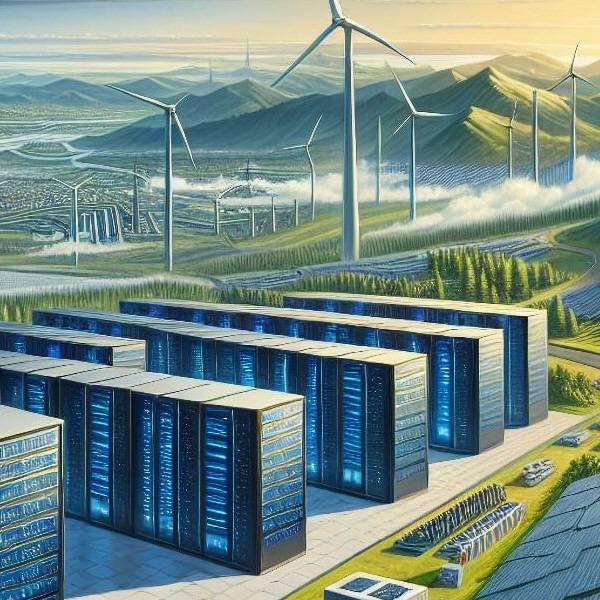
기술의 진보는 언제나 전기를 먹고 자란다. 하지만 지금의 디지털 문명은 스스로 만든 전력의 굶주림에 시달리고 있다. 인류는 이제 더 빠른 컴퓨터보다 더 ‘지속 가능한 컴퓨터’를 만들어야 하는 시대에 들어섰다.
에너지의 경고 - 기술의 심장은 전력이다
AI의 진화, 데이터 센터의 폭증, 블록체인과 양자컴퓨팅의 확장은 모두 하나의 자원을 중심으로 움직인다. 바로 전기다. 전력은 IT 문명의 피이자 심장이다. 그러나 기술의 속도가 빨라질수록 그 심장은 과열되고, 전력 수요 곡선은 예측 불가능한 스파이크를 그리기 시작했다.
대규모 언어모델의 학습 한 번이 중형 도시의 하루 전력 수요에 육박한다는 분석이 등장했고, 추론 단계에서도 사용자 수가 늘수록 단위 요청당 에너지 소모가 누적된다. 특히 실시간 음성-영상 멀티모달 모델은 메모리 대역폭과 네트워크 스위칭 전력을 동시 소모하는 특성 탓에, 동일한 파라미터라도 텍스트 전용 모델보다 에너지 집약적이다. 결과적으로 데이터센터 확충은 더 많은 송전선, 변전소, 변압기 교체와 같은 '전력 인프라의 보강 비용'을 동반하며, 이는 다시 전력요금과 탄소 배출의 상향 압력으로 되돌아온다.
아울러 ‘피크 시간대’의 수요 급증은 그리드 안정성까지 시험한다. 전통적 전원(화력·원자력)은 관성으로 버티지만 재생에너지 비중이 커질수록 변동성이 커지고, IT 수요의 순간적 급증은 '주파수 유지 비용'을 높인다. 기술이 문명의 뇌라면, 전력망은 순환계다. 어느 한쪽이 균형을 잃으면 다른 한쪽도 흔들린다.
데이터센터의 그림자 - 디지털 산업의 환경 비용
IT는 ‘비물질 산업’으로 오랫동안 오해받았지만, 실제로는 철강·석유·시멘트 못지않게 물리적 기반에 기대고 있다. 냉각타워, UPS, 배터리 스트링, 디젤 백업, 랙-스위치-파이버, 해저케이블과 대용량 변전 설비까지, 디지털은 거대한 물성을 가진 산업이다. 고밀도 랙이 보편화되며 랙당 20~30kW를 넘기고, 일부 GPU 클러스터는 랙당 60kW 이상을 요구한다. 공랭식으로는 더 이상 감당하기 어려워, 직접액체냉각(DLC)과 2상(immersion) 냉각으로의 전환이 가속된다.
도시 계획도 영향을 받는다. 암스테르담과 더블린이 신규 데이터센터 인허가를 유예한 사례는 상징적이다. 서울·성남 축에서 나타난 국지적 피크와 변전 용량 포화는 ‘디지털 편의’의 뒤편에 숨어 있던 '공간·에너지 외부효과'를 드러냈다. 한편 수자원도 쟁점이다. 증발식 냉각과 아디아바틱 시스템은 전력 효율을 올리지만, 물 사용량(WUE)을 키우며 가뭄 지역과의 갈등을 초래한다. 지속가능성은 PUE만으로 재단할 수 없고 'WUE, CUE(탄소), TUE(총체적 효율)' 같은 다차원 지표로 재정의되어야 한다.
또 다른 그림자는 '전자폐기물(e-waste)'이다. 서버 교체 주기가 3년 내외로 짧고, GPU 세대교체가 빨라질수록 폐기-재자원화 공정이 따라가지 못한다. 희토류와 유가금속 회수율, 납땜·난연제의 환경영향, 보안상의 디스크 파쇄 관행 등이 복합적으로 지속가능성을 약화시킨다. 이제 ‘성능’은 TCO만이 아니라 'TEO(Total Environmental Ownership)'로 평가받아야 한다.
녹색 IT의 부상 - 탄소 없는 기술을 향한 전환
거대 테크는 에너지·탄소를 새로운 KPI로 채택했다. 24/7 CFE(시간 단위 탄소자유 전력 매칭), 지역별 그리드 탄소강도 지표를 반영하는 '탄소 인지 스케줄링', 연중 전력-열 수요 곡선에 맞춘 '수요반응(DR)' 참여가 일상이 된다. 클라우드 3사는 가상 발전소(VPP) 프로그램과 연동해 데이터센터를 '그리드 상호작용 건물(GEB)'로 전환하고, 피크 시간대에는 AI 트래픽을 재생에너지 잉여가 많은 지역으로 이동시킨다.
기업 전력조달도 진화했다. 전통 PPA를 넘어 '온사이트 태양광·연료전지', '오프사이트 풍력·지열', '시간기반 REC'와 '그라뉼러 인증서(GEC)'가 결합되며, 전력의 ‘양’이 아니라 ‘시간적 순도’를 중시한다. 북유럽·캐나다의 수력 인접지, 미국 내풍 자원이 풍부한 내륙, 한국 동해안의 해상풍 인근지역으로 데이터센터 입지가 다변화되는 이유도 여기에 있다.
동시에 ‘워터-카본 트레이드오프’를 해소하려는 움직임이 있다. 해수·호수수 열원 냉각, 재이용수 순환, 냉매의 GWP 절감, '폐열 회수'를 통한 지역 난방 기여 등 다수의 파일럿이 가동 중이다. 코펜하겐과 스톡홀름의 '디스트릭트 히팅' 연계 사례처럼 데이터센터는 도시의 열 순환계 일부가 될 수 있다.
칩과 전력 - 반도체의 에너지 혁명
하드웨어는 분명한 분기점에 있다. 미세화의 한계와 발열·누설전류 문제는 속도 대신 '에너지/연산' 비율을 최적화하는 방향을 강제한다. 인텔의 RibbonFET·PowerVia, 삼성의 GAA, TSMC의 백사이드 전원 구조는 같은 성능에서 더 적은 전압과 더 낮은 스위칭 손실을 노린다.
가속기 영역에서는 'HBM 대역폭/와트'가 성능의 진짜 척도가 되었고, GPU-CPU 코히어런시, NVLink/CCIe 광대역 인터커넥트가 ‘연산-메모리 왕복 전력’을 줄인다. 포토닉 컴퓨팅은 매트릭스 연산을 빛으로 처리해 'J/OP(연산당 줄)'를 한 자릿수까지 낮추는 실험 성과를 내고, 아날로그 '메모리 내 연산(IMC)'과 '스파이킹 뉴로모픽'은 과제(정확도·보정)와 기회(초저전력)를 동시에 제시한다.
엣지에서도 변화가 크다. ARM·RISC-V 기반 저전력 NPU, 이벤트 기반 카메라, '온디바이스 양자화·스파스화'가 서버 라운드트립을 줄이고 지연을 낮춘다. ‘센터의 거인’만이 아니라 '엣지의 군집'이 총체적 에너지 사용을 줄이는 분산형 구조가 유효해진다.
재생에너지와 데이터 - 기술과 자연의 새로운 동맹
재생에너지와 디지털의 결합은 단순한 전력 조달을 넘어 '운용 철학'을 바꾼다. 풍·태양은 시간·계절 변동성을 갖기에, 서비스는 '수요 유연성'을 내장해야 한다. 학습 잡은 야간 풍력·비수기 시간대로, 추론 트래픽은 실시간성에 따라 저탄소 리전에 배분한다.
그리드 차원에서는 AI가 발전량·수요·가격·온도·풍속·구름량을 통합 예측해 약한 송전구간 혼잡을 완화한다. 배터리 에너지 저장장치(BESS)와 '열 저장(TES)'가 조합되어 데이터센터는 ‘전기-열-디지털’의 '섹터 커플링' 허브가 된다. 일부 지역은 지열과 해수열을 냉열원으로 써 전력 대신 열을 옮기고, 다른 지역은 'SMR(소형모듈원전)'이나 '그린 수소 연료전지'를 백업으로 실증 중이다. 현실적 위험·수용성을 두고 논쟁이 있지만, 목표는 하나다. '연중 24/7 저탄소 가용성'이다.
또한, 아시아 초장거리 고압직류(HVDC) 연계 구상은 재생에너지의 지리적 편차를 상쇄한다. 송전 비용·정치적 리스크·환경영향을 감수할 가치가 있는가의 질문이 남지만, 디지털 수요의 쏠림과 재생 공급의 쏠림을 ‘시간-공간’에서 맞춰보려는 실험 자체가 문명적이다.
냉각의 혁신 - 열을 다스리는 문명
냉각은 이제 공학과 생태의 교차로다. 공랭에서 '직접액체냉각(DLC)'으로, 다시 '2상 침지 냉각'으로 가며 랙 밀도 80kW 환경을 실용화한다. 비전도성 유체의 누설·보수, 유체의 GWP·수명, 장비 호환성 같은 현실 과제는 있으나, PUE 1.1 미만과 고밀도 GPU 시대를 위한 사실상의 해법으로 자리 잡는다.
AI 제어 냉각은 센서-튜닝-예측의 루프를 통해 '쿨링COP'를 끌어올리고, 습구온도·미세기상 데이터까지 반영해 시간별 최적 운전점으로 이동한다. 물 소비가 큰 아디아바틱·증발식은 수자원 취약지역에서 제한되고, 그 대신 '폐열 회수-지역난방-온실농업-수산양식'과 연계하는 지역순환 모델이 확산된다. 북유럽 데이터센터의 온수는 겨울에 주거 난방을 돕고, 여름에는 흡수식 냉동으로 전기부하를 줄인다.
수중·해저 데이터센터는 자연 냉각·염분·파랑·부식·정비라는 상충 조건 속에서 케이스 바이 케이스로 평가받는다. 중요한 것은 ‘실험할 권리’와 ‘학습의 공유’다. 냉각 혁신은 기업 단위 최적화가 아니라 '산업-도시-생태계의 공동 설계'에서 더 큰 효과를 낸다.
소프트웨어의 절약 - 계산의 윤리와 그린옵스
지속가능성은 하드웨어만으로 완성되지 않는다. '알고리즘 효율'은 지난 10년간 하드웨어 향상을 능가하는 성장세를 보였고, 앞으로도 그럴 공산이 크다. 거대 모델의 에너지 발자국을 줄이려면 '학습 전·중·후' 전 주기에 걸친 최적화가 필요하다.
학습 전 단계에서는 '데이터 커리큘럼'과 '데이터 디듀플리케이션'으로 불필요한 중복을 제거해 학습 에폭을 낮춘다. '데이터 가중치화'와 '하드 네거티브 마이닝'은 같은 품질을 더 적은 샘플로 달성하도록 돕는다. 'RAG(검색증강)'는 모델 파라미터 대신 외부 지식을 주입해 학습량을 줄인다.
학습 중에는 '저정밀도 연산(예: FP8, INT8)', '스파스 텐서', '혼합 전문가(MoE)'로 집행 에너지를 줄인다. 통신 최적화(ZeRO, FSDP, 파이프라인 병렬)와 '체크포인트 스케줄링', '탄소 인지형 클러스터 오케스트레이션'은 시간·장소별 그리드 탄소강도에 맞춰 학습 잡을 이동시킨다.
학습 후에는 '지식 증류', '프루닝', '4비트 양자화', 'KV캐시 최적화', '토큰 효율 프롬프팅'으로 추론당 전력과 지연을 동시에 낮춘다. 엔지니어링 조직은 '그린옵스(GreenOps)'를 도입해 FinOps(비용)와 동렬로 탄소·에너지 지표를 관리한다. CI/CD에 '에너지 회귀 테스트'를 포함하고, PR마다 ‘추론당 mJ’ 변화량을 메트릭으로 리뷰한다.
사례도 쌓인다. 한 전자상거래사는 검색 랭킹 모델을 MoE-디스틸 조합으로 바꿔 '동일 NDCG에서 추론 전력을 62% 절감'했고, 미디어 스트리밍사는 엔드-투-엔드 코덱을 학습형으로 교체하되 '적응형 비트레이트 정책'을 재설계해 동일 체감품질에서 '네트워크 전송 에너지 28%'를 줄였다. 국내 한 핀테크는 '카본 어웨어 SDK'로 야간 배치·ETL을 재배열해 클라우드 전력비 17%, 추정 탄소 35%를 낮췄다. '효율은 성능의 하위 개념이 아니라 윤리의 상위 개념'으로 격상되고 있다.
정책과 시장 - 규제에서 경쟁력으로, 금융에서 표준으로
정책은 ‘쳐내기’가 아니라 ‘끌어올리기’의 방식으로 변한다. EU는 'Energy Efficiency Directive'와 '데이터센터 보고 의무'를 통해 PUE·WUE·CUE 공시를 요구하고, 2026년 'Green Data Directive'로 역치 초과 시 탄소가격을 적용한다. 미국은 'IRA'와 주 단위 인센티브로 재생·저탄소 전력 조달을 지원하고, 캘리포니아는 '탄소 정보 공개'를 클라우드 사업자에 의무화한다. 한국의 'K-RE100'과 '디지털 탄소중립 로드맵'은 공공·민간 조달을 연결해 규모의 경제를 만든다. 일본의 'GX League'는 산업계 자율감축과 배출권 시장을 연동한다.
금융시장도 재빠르다. '그린본드·전환본드(SLB)'가 데이터센터·광자칩·냉각 개보수에 투입되고, 'SBTi(과학기반 감축목표)'와 'TCFD/ISSB 공시'는 IT 기업의 Scope 2·3를 압박한다. 고객사는 '24/7 CFE 인증', '그라뉼러 REC'를 요구하고, 클라우드 견적서에는 이제 vCPU·GPU·스토리지 옆에 '추정 gCO₂e'가 함께 표기된다. '카본 SLA'가 가격·지연과 함께 경쟁 항목이 되는, '탄소-지연-비용의 삼변 최적화' 시대다.
표준화도 빨라진다. 'ISO 30134'(PUE/WUE/CUE), 'Green Software Foundation 패턴', 'W3C 시간기반 에너지 속성' 등이 상호참조되며, 에너지·소프트웨어·회계의 언어가 연결된다. 이 연결이 만들어내는 것은 감시가 아니라 '비용 신호와 혁신 유인'이다.
기술과 인간 - 공존의 철학, 정의로운 전환, 그리고 지역사회
지속가능성의 진짜 무대는 철학과 공동체다. 데이터센터 입지는 토지·수자원·경관과 맞물리고, 전력 인프라 증설은 송전선로·변전소와 마주한다. 이 과정에서 '환경정의(EJ)'와 '원주민·지역사회 협의'가 핵심 의제가 된다. 싸고 빠른 전력만을 좇으면 사회적 수용성을 잃고, 결국 프로젝트 리스크가 커진다. '사전 협의·보상·이익공유(Community Benefit)' 모델은 기술의 사회적 면허를 획득하는 최소 조건이다.
노동과 교육도 새 질서를 만든다. ‘그린 IT’는 하드웨어 기술자만의 일이 아니다. '에너지 데이터 분석가, 그린옵스 엔지니어, 카본 어웨어 스케줄러, 냉각-AI 튜너' 같은 새로운 직무가 등장한다. 대학과 폴리텍은 '전력·열·코드'를 함께 가르치는 융합 커리큘럼으로 이동해야 한다. 디지털 전환이 고용을 줄였다는 오래된 논쟁은, '지속가능 전환이 새로운 일자리'를 만든다는 데이터로 업데이트된다.
윤리의 자리는 더 분명해진다. 효율을 극대화하는 과정에서 소외되는 지역이 없는가, 재생에너지 조달이 지역 생태와 충돌하지 않는가, 전자폐기물 처리에서 글로벌 남반구로 외주화하는 도덕적 회피가 없는가. ‘초거대 모델의 사회적 가치’에 대한 질문은 ‘얼마나 큰가’에서 ‘얼마나 의미 있는가’로 변한다. '적은 에너지로 더 많은 지식·치료·교육을 제공하는가'가 핵심 성과지표가 된다.
마지막으로, 사용자의 선택도 힘이 된다. '저탄소 리전 선택', '에코 모드', '배치·백업의 야간화', '콘텐츠 코덱의 효율 옵션', '기기 수명 연장'은 개인과 기업이 당장 실행할 수 있는 작은 레버다. 거대한 시스템을 바꾸는 것은 종종 작은 기본값을 바꾸는 일에서 시작된다.
기술의 속도보다 긴 생명의 리듬
지속가능한 IT는 미래 문명의 생존 조건이다. 기술은 속도를 사랑하지만, 생명은 균형을 요구한다. 우리는 더 많은 연산을 꿈꾸면서도, 더 적은 에너지로 더 큰 의미를 만드는 법을 배워야 한다.
이제 문명의 경쟁력은 FLOPS가 아니라 'Meaning per Joule'로 측정될 것이다. 데이터센터는 도시의 열·전기 순환에 기여하고, 칩은 와트당 지능을 높이며, 소프트웨어는 불필요한 계산을 용서하지 않는다. 정책과 금융은 규제가 아니라 혁신의 무대가 되고, 지역사회는 기술의 수혜자이자 설계자가 된다.
기술은 지구의 시간을 빌려 쓴다. 그러므로 그 속도는 책임으로 조율되어야 한다. 지속가능한 IT는 친환경의 수식어가 아니라 '문명의 기본값'이며, '지속가능한 공존의 기술'이 바로 우리가 다음 세대에 남겨야 할 가장 단단한 유산이다.
Sustainable IT - The Experiment of Coexistence Between Energy and Technology
Technological progress has always fed on electricity. Yet the digital civilization of today is suffering from the hunger of the very power it consumes. Humanity has entered an era where it must build not faster computers, but 'sustainable' ones.
The Warning of Energy - The Heart of Technology Is Power
The evolution of AI, the explosion of data centers, and the expansion of blockchain and quantum computing all revolve around a single resource: electricity. Power is both the blood and the heart of IT civilization. But as technology accelerates, that heart overheats, and the power demand curve begins to draw unpredictable spikes.
A single large-scale model training session can consume as much power as a mid-sized city uses in an entire day. Even during inference, as the number of users grows, per-request energy usage accumulates. Real-time multimodal models that combine speech and vision are even more energy-intensive, since they consume both memory bandwidth and network switching power. As data centers expand, they drag with them new transmission lines, substations, and transformer upgrades—an ever-rising cost that feeds back into energy prices and carbon emissions.
The surge of demand during peak hours also threatens grid stability. Traditional generation sources like thermal and nuclear power can withstand such shocks with inertia, but as renewable penetration grows, variability increases, and IT’s sudden spikes drive up 'frequency regulation costs'. If technology is the brain of civilization, then the grid is its circulatory system—when one loses balance, the other falters.
The Shadow of Data Centers - The Environmental Cost of the Digital Industry
For decades, IT was misunderstood as an “immaterial” industry. In reality, it depends on physical infrastructure no less than steel, oil, or cement. Cooling towers, UPS units, battery strings, diesel backups, racks, switches, fiber optics, undersea cables, and high-voltage substations—digital technology rests upon massive material foundations. High-density racks now exceed 20–30 kW each, with GPU clusters surpassing 60 kW. Air cooling can no longer handle the heat, driving a rapid transition to 'direct liquid cooling (DLC)' and 'two-phase immersion' systems.
Urban planning is being reshaped. Amsterdam and Dublin have suspended new data center permits to prevent power grid overload. In South Korea, Seoul’s 2026 power shortage was traced to six hyperscale cloud data centers in Pangyo starting up simultaneously. Beneath the comfort of digital convenience lies an enormous 'spatial and energetic externality'.
Water use is another cost. Evaporative and adiabatic cooling systems improve energy efficiency but consume large amounts of water, causing tension in drought-prone regions. Sustainability can no longer be judged by PUE alone—it must include 'WUE (water), CUE (carbon), and TUE (total utilization efficiency)'.
Electronic waste adds yet another shadow. The typical server life cycle is under three years, and GPU generations move even faster. Rare-earth recovery, lead solder, flame retardants, and secure disk destruction all weigh on sustainability. The performance metric of the future is not just TCO but 'TEO—Total Environmental Ownership'.
The Rise of Green IT - The Shift Toward Carbon-Free Technology
Big Tech now treats energy and carbon as key performance indicators. 24/7 'Carbon-Free Energy (CFE)' matching, carbon-aware workload scheduling, and 'demand-response participation' are becoming standard practice. The three major cloud providers are turning data centers into 'Grid-Interactive Efficient Buildings (GEBs)' that shift AI traffic to regions with renewable energy surpluses.
Corporate power procurement has also evolved. Beyond traditional PPAs, firms are combining on-site solar and fuel cells with off-site wind and geothermal, and adopting 'granular energy certificates (GECs)' that verify the 'time purity' of power usage. This has diversified data center locations—from hydro-rich Scandinavia to U.S. Midwest wind corridors and offshore wind sites along Korea’s eastern coast.
At the same time, companies are addressing the water–carbon trade-off. Seawater and lake cooling, graywater recycling, low-GWP refrigerants, and 'waste heat recovery' for district heating are all expanding. In cities like Copenhagen and Stockholm, waste heat from servers now warms residential buildings in winter and drives absorption chillers in summer.
Chips and Power - The Semiconductor Energy Revolution
Hardware stands at a clear inflection point. The limits of miniaturization and the problems of heat and leakage are forcing a shift from sheer speed to 'energy-per-computation' optimization. Intel’s RibbonFET and PowerVia, Samsung’s GAA, and TSMC’s backside power delivery all aim to achieve equal performance at lower voltages and switching losses.
In accelerators, the metric is now 'bandwidth-per-watt'. GPU-CPU coherency and optical interconnects like NVLink and CCIe reduce the energy cost of data movement. Photonic computing uses light for matrix operations, cutting 'Joules per operation' by an order of magnitude. Analog 'In-Memory Computing (IMC)' and 'spiking neuromorphic architectures' present both challenges (accuracy and calibration) and promises (ultra-low power).
At the edge, ARM and RISC-V NPUs, event-based cameras, and 'on-device quantization and sparsification' reduce server round trips and latency. The age of “centralized giants” is giving way to 'distributed swarms' that collectively cut total energy consumption.
Renewable Energy and Data - The New Alliance Between Nature and Technology
The convergence of renewable energy and digital systems is transforming the logic of operation itself. Because wind and solar fluctuate over time, digital services must become 'load-flexible'. Model training jobs can be scheduled for nighttime wind surpluses, while inference tasks are routed to low-carbon regions in real time.
At the grid level, AI integrates forecasts of generation, demand, price, temperature, wind, and cloud cover to ease transmission bottlenecks. Battery energy storage (BESS) and 'thermal energy storage (TES)' are combined to make data centers hubs of 'sector coupling' between electricity, heat, and data. Some regions use geothermal or seawater cooling to move heat rather than power, while others experiment with 'SMRs (small modular reactors)' and 'green hydrogen fuel cells' as backup sources. Despite differing risks and public perceptions, the goal is clear: '24/7 year-round low-carbon availability'.
Meanwhile, Asia’s long-distance HVDC grid projects aim to balance renewable abundance and digital demand across borders. The economic, political, and environmental costs remain under debate, but the attempt to align renewable geography with digital geography marks a civilizational experiment in itself.
Cooling Innovation - A Civilization That Masters Heat
Cooling has become the intersection of engineering and ecology. From air to 'direct liquid cooling', and now to 'two-phase immersion', systems are achieving rack densities of 80 kW or higher. Though challenges remain—non-conductive fluid leakage, GWP, fluid lifetime, and component compatibility—these systems have become the de facto path to PUE below 1.1 in the GPU era.
AI-driven cooling analyzes real-time temperature, humidity, and load data to optimize compressor cycles and fan speeds. Wet-bulb temperature and microclimate inputs guide systems to the best operating points each hour. Water-intensive methods are restricted in arid regions, while 'heat recycling for district heating, greenhouse agriculture, and aquaculture' expands rapidly. In Scandinavia, waste heat from servers now serves urban heating in winter and air conditioning in summer through absorption chillers.
Subsea data centers balance natural cooling against corrosion and maintenance difficulty. What matters most is the 'right to experiment' and the 'sharing of learning'. Cooling innovation works best not as isolated corporate optimization, but as 'co-design between industry, cities, and ecosystems'.
Software Efficiency - The Ethics of Computation and GreenOps
Sustainability cannot be achieved by hardware alone. 'Algorithmic efficiency' has improved faster than hardware for a decade and will continue to do so. Reducing energy footprints of large models requires optimization across all three phases—before, during, and after training.
Before training, 'data curriculum design' and 'deduplication' remove redundancy and reduce epochs. 'Weighted sampling' and 'hard-negative mining' achieve the same accuracy with fewer samples. 'Retrieval-Augmented Generation (RAG)' injects external knowledge instead of retraining massive parameters.
During training, 'low-precision formats (FP8, INT8)', 'sparse tensors', and 'Mixture-of-Experts (MoE)' architectures minimize compute load. Communication optimization (ZeRO, FSDP, pipeline parallelism) and 'carbon-aware orchestration' shift jobs to regions and hours with cleaner grids.
After training, 'knowledge distillation', 'pruning', '4-bit quantization', 'KV-cache optimization', and 'token-efficient prompting' reduce both power and latency per inference. Engineering teams now practice 'GreenOps', managing carbon and energy metrics alongside FinOps. Continuous Integration pipelines include 'energy regression tests', and pull requests are reviewed for changes in “millijoules per inference.”
Real-world results abound. An e-commerce company replaced its ranking model with MoE-distilled versions, cutting inference energy by '62%' at identical accuracy. A media streaming platform redesigned adaptive bitrate policies to maintain perceived quality while lowering 'network transmission energy by 28%'. A Korean fintech firm used a 'carbon-aware SDK' to reschedule batch and ETL jobs, reducing cloud power bills by 17% and emissions by 35%. 'Efficiency has risen from a subcategory of performance to the very definition of ethics.'
Policy and Markets - From Regulation to Competitiveness, From Finance to Standards
Policy is shifting from punitive to constructive. The EU’s 'Energy Efficiency Directive' mandates disclosure of PUE, WUE, and CUE, while the 'Green Data Directive (2026)' will price excess emissions. The U.S. combines the 'Inflation Reduction Act (IRA)' with state-level incentives to support low-carbon power procurement. California will require 'carbon disclosure' for all cloud providers by 2027. South Korea’s 'Digital Carbon Neutral Roadmap (2025)' mandates 30% renewable power in public data centers. Japan’s 'GX League' ties voluntary corporate reductions to national emissions trading.
Finance has moved quickly. 'Green and sustainability-linked bonds' now fund data center retrofits, photonic chips, and cooling upgrades. 'SBTi' and 'TCFD/ISSB' frameworks pressure IT firms to manage Scope 2 and 3 emissions. Clients demand '24/7 CFE certification' and 'granular RECs', while cloud quotes now list estimated 'gCO₂e' beside vCPU and GPU costs. A new metric has emerged: 'Carbon SLA'—optimizing carbon, latency, and cost together.
Standardization is accelerating. 'ISO 30134' (PUE/WUE/CUE), the 'Green Software Foundation patterns', and 'W3C time-based energy attributes' are being aligned, bridging the languages of energy, software, and accounting. This alignment is not surveillance—it is the 'market signal for innovation'.
Technology and Humanity - The Philosophy of Coexistence, Just Transition, and Local Communities
The true stage of sustainability is neither laboratory nor boardroom, but philosophy and community. Data center siting intersects with land, water, and landscape; grid expansion crosses communities and ecosystems. Thus, 'environmental justice (EJ)' and local consent are central. Chasing cheap power without social acceptance leads to opposition and risk. 'Early consultation, compensation, and benefit-sharing' are now prerequisites for a technology’s social license to operate.
Labor and education are also transforming. “Green IT” is not just for hardware engineers. New professions—'energy data analysts, GreenOps engineers, carbon-aware schedulers, and cooling-AI tuners'—are emerging. Universities and polytechnics must teach 'electricity, thermodynamics, and code' together. The old debate that digitalization kills jobs is giving way to data showing that 'sustainable transition creates them'.
Ethics, too, becomes clearer. Are there communities excluded by our pursuit of efficiency? Do renewable projects conflict with local ecosystems? Does e-waste export outsourcing hide moral evasion? The key performance indicator is shifting from “How large?” to “How meaningful?” The new question is 'how much knowledge, healthcare, and education we can deliver with less energy'.
Even users have agency. Choosing 'low-carbon cloud regions', enabling 'eco modes', scheduling 'batch jobs overnight', selecting 'efficient codecs', and 'extending device lifespans'—small defaults can change massive systems. Transformation often begins not with revolutions, but with default settings.
The Rhythm of Life Is Longer Than the Speed of Technology
Sustainable IT is the condition for civilization’s survival. Technology loves speed, but life demands balance. We must learn to create greater meaning with less energy, not just more computation.
Civilization’s competitiveness will soon be measured not in FLOPS but in 'Meaning per Joule'. Data centers will contribute to city energy loops, chips will raise intelligence per watt, software will refuse wasteful computation, and finance will reward efficiency as innovation. Local communities will no longer be bystanders but co-designers of technology’s benefits.
Technology borrows time from the Earth; therefore, its speed must be tuned by responsibility. Sustainable IT is not an adjective of ecology but the 'default state of civilization itself'. The 'technology of coexistence' is the most enduring legacy humanity can leave to the generations that follow.