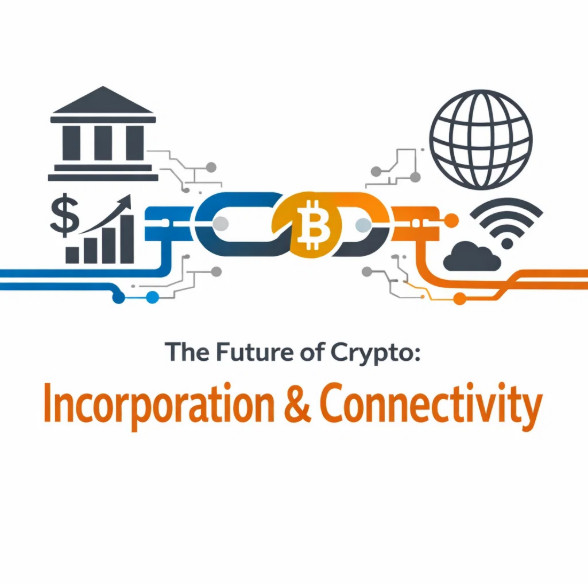
암호화폐는 늘 두 개의 이야기 사이에서 흔들렸다. 기존 금융을 대체한다는 혁명 서사와 새로운 투기판이라는 냉소 서사다. 지난 몇 년은 이 둘이 현실과 부딪히는 시간이었다. 결론은 의외로 단순했다. 기존 금융은 무너지지 않았고, 암호화폐도 사라지지 않았다. 대신 암호화폐는 세상을 뒤엎는 망치가 아니라 금융과 인터넷의 틈새에 끼워지는 도구로 이동하고 있다. 앞으로의 미래를 예견한다면 방향은 더 선명해진다. 다음 국면은 편입, 그리고 규격화된 연결이다. 사람들은 코인을 믿음으로 들고 가기보다 코인이 만든 배관을 일상 속에서 쓰게 된다.
코인보다 토큰화가 더 오래 간다
대중은 암호화폐를 가격으로 기억한다. 하지만 산업은 가격보다 구조로 움직인다. 다음 사이클에서 중요한 질문은 어떤 코인이 오르나가 아니라 어떤 자산이 토큰이 되나에 가깝다. 주식, 채권, 펀드 지분, 머니마켓 상품, 부동산의 수익권, 탄소배출권처럼 원래도 계약과 소유권 위에서 돌아가던 자산들은 토큰을 입는 순간 유통 방식이 바뀐다. 이때 블록체인은 새 돈이라기보다 정산·소유권·담보 관리의 표준 포맷이 된다. 중앙은행 준비자산, 은행예금, 국채 같은 핵심 자산이 토큰화된 플랫폼에서 함께 움직일 수 있다는 구상이 점점 “실험”이 아니라 “청사진”의 언어로 바뀌고 있다.
사례를 하나 떠올려보자. 해외 스타트업이 투자를 받을 때 주주명부 정리, 권리 확인, 스톡옵션 부여, 국가별 규정 점검은 늘 번거롭다. 토큰화된 지분 구조가 붙으면 권리 이전과 확인이 더 단순해질 수 있다. 권리 변경이 생길 때마다 종이와 PDF를 돌리는 대신, 권리 상태가 업데이트되고 감사 가능한 기록으로 남는다. 또 다른 예시는 담보다. 전통 금융에서 담보는 기관 내부 시스템과 법률 문서에 분산돼 관리된다. 토큰화된 담보는 “설정, 해제, 만기 관리, 담보 대체” 같은 과정이 더 자동화될 여지를 만든다. 현장에서 이 변화는 철학이 아니라 비용 절감과 시간 단축으로 설명된다.
다만 토큰화가 만능은 아니다. 자산을 토큰으로 만든다는 것은 법적 권리와 기술적 기록을 연결한다는 뜻이다. 여기에서 관할권, 준거법, 투자자 보호, 세무 같은 문제가 끼어들면 기술의 속도가 멈춘다. 그래서 토큰화의 미래는 모든 자산이 한 번에 온체인으로 이동하는 장면이 아니라, 법적으로 명확하고 표준화하기 쉬운 영역부터 조용히 침투하는 흐름에 가깝다. 단기 국채, 머니마켓 상품, 펀드 지분처럼 구조가 정형화된 쪽이 먼저 움직이고, 복잡한 권리관계가 얽힌 부동산과 비상장 지분은 더 느리게 따라올 가능성이 크다.
규제는 족쇄가 아니라 필터다
암호화폐 시장이 성숙해질수록 규제는 더 두꺼워진다. 많은 사람은 이를 자유의 상실로 보지만, 현실적으로는 시장 참여자의 변경을 뜻한다. 규제가 없을 때 들어오는 돈은 빠르지만 얕다. 규제가 생기면 들어오는 돈은 느리지만 깊다. 연기금, 보험사, 은행, 상장 기업은 불확실성보다 명확한 규칙을 좋아한다. 그래서 규제는 성장의 브레이크가 아니라 누가 이 시장의 주도권을 잡는지 결정하는 필터가 된다. 이런 방향성은 국제 공조 문서에서도 반복된다. 즉, 스테이블코인과 기타 크립토 활동을 제도권 규율 아래로 넣는 “프레임” 자체는 이미 확정된 흐름이다.
예시는 거래소의 변화에서 가장 잘 보인다. 초기 거래소는 빠른 상장과 높은 레버리지로 사용자를 끌어모았다. 하지만 시장이 커질수록 거래소는 은행처럼 보이기 시작한다. 고객 자산 분리 보관, 수탁 구조, 내부통제, 보안 규정, 이해상충 관리가 핵심 능력이 된다. 어느 순간부터 승부는 “상장 속도”가 아니라 “사고가 났을 때 책임지고 복구하는 능력”으로 이동한다.
규제의 필터가 강해질수록 시장은 두 갈래로 갈라진다. 하나는 규제 친화형 크립토다. 신원 인증과 자금세탁 방지 기준을 전제로 거래되는 자산, 투명한 회계·감사 기준을 갖춘 발행사, 책임 소재가 분명한 인프라가 중심이 된다. 다른 하나는 규제 바깥으로 밀려나는 영역이다. 이쪽은 존재하더라도, 주류 금융이 붙는 속도는 느려진다. 미래는 암호화폐가 이기냐 지냐가 아니라, 어떤 암호화폐가 제도권에 들어오느냐의 경쟁으로 바뀐다.
스테이블코인이 가장 현실적인 킬러앱이 될 가능성이 높다
블록체인의 응용 중에서 가장 실용적인 것은 화려한 NFT보다 스테이블코인일 수 있다. 이유는 단순하다. 사람들은 “오르는 자산”만 원하지 않는다. “흔들리지 않는 돈”을 더 많이 쓴다. 특히 국경을 넘는 송금, 플랫폼 내부 결제, 기업 간 정산에서는 “빠르고 싸고 24시간 동작하는 달러”가 매력적이다. IMF 역시 스테이블코인이 결제와 금융에서 가질 기회와 함께, 준비금·운영·금융안정 리스크를 동시에 강조한다.
예시는 일상 속에서 흔하다. 해외 프리랜서가 플랫폼에서 돈을 받을 때 송금이 며칠씩 걸리고 수수료가 겹겹이 붙는다. 스테이블코인 기반 정산은 시간과 비용을 줄일 수 있다. 공급망을 가진 중소기업은 결제 지연이 곧 운영 리스크다. “정산이 빨라지는 것”만으로도 재고와 운전자본이 달라진다. 여행자 관점에서도 환전 수수료, 카드 해외 결제 수수료를 줄이려는 수요는 늘 있었다. 스테이블코인은 그 수요를 기술적으로 더 매끄럽게 만들 수 있다.
중요한 전환점은 암호화폐가 대중에게 먹히려면 투자가 아니라 결제가 되어야 한다는 사실이다. 결제는 변동성을 싫어한다. 그래서 스테이블코인은 블록체인이 현실과 맞물리는 가장 자연스러운 접점이 된다. 미래를 예견한다면 “비트코인 일상결제”보다 “스테이블코인이 뒤에서 돌아가는 결제”가 더 그럴듯하다. 사람들은 스테이블코인을 쓰되, 그것이 블록체인 위에 있는지조차 모른 채 쓰게 될 가능성이 크다.
탈중앙화는 사라지지 않지만 중앙화된 서비스가 이긴다
블록체인의 이상은 탈중앙이지만, 사용자가 경험하는 현실은 중앙화다. 사람들이 원하는 것은 자유보다 편함이기 때문이다. 비밀번호 하나 잊으면 모든 자산을 영원히 잃는 시스템은 대중화에 불리하다. 그래서 미래는 완전한 탈중앙이 아니라 탈중앙 인프라와 중앙화된 서비스 레이어의 결합으로 굳어질 가능성이 크다.
예시를 들어보자. 대부분의 사람은 자산을 스스로 보관하는 방식이 불안하다. 그래서 거래소나 수탁 서비스에 맡긴다. 문제는 이것이 다시 “은행과 다를 게 무엇이냐”는 비판을 낳는다는 점이다. 하지만 대중화는 대체로 이 경로를 따라왔다. 인터넷도 처음에는 개인이 직접 서버를 돌리고 관리했지만, 결국 대부분은 클라우드로 이동했다. 크립토도 지갑은 앱처럼 단순해지고, 고객센터가 붙고, 부정거래 보상과 보험이 도입되고, 세금 보고 지원과 상속 절차 같은 기능이 표준이 될 가능성이 크다. 사용자는 편해지고 시장은 커지지만, 그 순간 크립토는 ‘무정부의 돈’이 아니라 ‘새로운 금융 서비스’로 재정의된다.
다음 폭등보다 다음 정리가 더 중요하다
솔직히 말하면 암호화폐의 미래는 버블과 붕괴를 반복할 가능성이 있다. 글로벌 유동성이 풀리면 위험자산 선호가 커지고, 레버리지가 붙고, 서사가 과열되며, 규제의 빈틈이 확대된다. 그러다 사고가 터지고 회계와 담보가 문제의 핵심으로 떠오르며 정리가 시작된다. 다만 크립토는 24시간 거래되고 국경이 없어서 속도가 더 빠를 뿐이다.
사고는 늘 비슷한 지점에서 난다. 거래소의 고객 자산 운용이 불투명해지거나, 고수익을 약속하는 대출 서비스가 만기 미스매치를 일으키거나, 스테이블코인의 준비금이 흔들리거나, 체인 간 이동을 담당하는 브리지가 해킹되거나, 오라클이 왜곡되면서 담보가 붕괴한다. 이런 사건은 “이제 끝났다”는 말을 반복하게 만들지만, 동시에 다음 단계의 표준을 만든다. 사고가 난 뒤에야 준비금 증명, 수탁 규정, 보안 감사, 리스크 공시가 강화된다. 시장은 꿈으로 커지고, 회계로 살아남는다.
암호화폐가 남기게 될 것, 돈이 아니라 권리의 포맷
암호화폐가 약속했던 것은 돈 그 자체라기보다 디지털 세계에서 소유권을 어떻게 정의할 것인가라는 문제였다. 게임 아이템의 소유권, 창작물의 수익 분배, 데이터 접근권, 커뮤니티 멤버십, 거버넌스 참여권 같은 것들은 법과 플랫폼 정책의 틈에서 흔들린다. 블록체인은 이 틈을 기술적 증명으로 메우려 했다.
사례는 콘텐츠와 커뮤니티에서 많이 나온다. 어떤 창작자가 특정 커뮤니티에만 공개하는 자료를 배포할 때, 기존에는 플랫폼의 로그인 권한으로만 통제했다. 하지만 토큰 기반 멤버십을 쓰면 권한이 계정이 아니라 토큰 소유로 증명될 수 있다. 데이터 접근권도 비슷하다. 특정 데이터셋 접근권을 토큰으로 발급하고, 사용 이력을 기록하며, 수익을 자동 분배하는 구조가 가능하다. 물론 현실에서는 저작권, 개인정보, 관할권 문제가 늘 발목을 잡는다. 그래서 토큰이 모든 권리를 해결하는 만능열쇠가 되긴 어렵다.
그럼에도 미래를 예견한다면, 암호화폐가 남기는 가장 큰 유산은 비트코인 가격보다 권리를 다루는 새로운 파일 포맷일 가능성이 크다. 토큰은 돈이 아니라 권리의 교환 방식을 바꾸는 방향으로 오래 남는다. 결국 암호화폐의 미래는 화려한 혁명이 아니라, 우리가 모르는 사이에 일상 시스템 속으로 스며드는 편입의 역사로 기록될 가능성이 높다.
미래 예측, 전망치로 정리하면
첫째, 스테이블코인은 “코인 시장의 파생상품”이 아니라 “국경 간 결제의 배관”으로 커질 가능성이 크다. 전망치는 60~70%로 본다. 이유는 단순하다. 변동성이 없는 디지털 현금은 결제·정산에서 즉시 쓰임이 생기고, 제도권이 가장 먼저 규율하고 싶은 영역이기도 하다. ([IMF][3])
둘째, 토큰화는 “대중의 유행”이 아니라 “기관의 업무개선”으로 진행될 가능성이 크다. 전망치는 70% 안팎으로 본다. 특히 단기 국채, 펀드 지분, 토큰화된 예금, 도매 결제자산 같은 ‘정형화된 자산’부터 확대될 공산이 크다. ([BIS][1])
셋째, 거래소·수탁·브로커 같은 중개자는 줄어들기보다 재편될 가능성이 크다. 전망치는 60% 정도다. 다만 “무규제 중개자”는 줄고 “규제 친화형 중개자”가 늘어난다. 이 과정에서 글로벌 공조의 속도가 시장의 속도를 완전히 따라잡진 못해, 지역별 규제 차이를 활용한 회색지대도 한동안 공존할 수 있다. ([Financial Stability Board][2])
넷째, 유럽처럼 규제의 틀이 먼저 확정된 지역에서는 “합법적 크립토 인프라”가 표준화될 가능성이 높다. 전망치는 70%다. 규정이 정리되면 성장은 느려져도, 시장 참여자의 질이 바뀌면서 장기 지속성이 생긴다. ([esma.europa.eu][4])
다섯째, 가격 사이클은 남는다. 다만 사이클의 중심은 “내러티브”에서 “준비금·담보·공시·감사”로 이동한다. 전망치는 50~60%로 본다. 시장이 더 커질수록 금융안정 관점의 규율이 강해지고, 그 과정에서 과도한 레버리지는 반복적으로 정리될 가능성이 크다. ([Financial Stability Board][2])
Reference
BIS. “The next-generation monetary and financial system.” BIS Annual Report 2025, Chapter III.
FSB. “Global Regulatory Framework for Crypto-asset Activities.” 2023.
IMF. “Understanding Stablecoins.” IMF Departmental Paper, 2025.
ESMA. “Markets in Crypto-Assets Regulation (MiCA).”
FSB. “The Financial Stability Implications of Tokenisation.” 2024
The future of crypto comes not as a revolution, but as an incorporation
Crypto has always wavered between two stories. One is the revolutionary narrative that it will replace traditional finance, and the other is the cynical narrative that it is a new speculation arena. The last few years have been a period in which these two collided with reality. The conclusion was surprisingly simple. Traditional finance did not collapse, and crypto did not disappear. Instead, crypto has been moving not as a hammer that overturns the world, but as a tool that wedges into the gaps between finance and the internet. If we try to foresee what comes next, the direction becomes even clearer. The next phase is incorporation, and standardized connectivity. People will not carry coins as belief so much as use, in daily life, the plumbing that coins created.
Tokenization will last longer than coins
The public remembers crypto by price. But industries move by structure more than by price. In the next cycle, the more important question is not which coin will rise, but which assets will become tokenized. Assets that have always run on contracts and ownership rights, such as stocks, bonds, fund shares, money market products, income rights in real estate, and carbon credits, change the moment they put on the form of tokens. At that point, blockchain becomes less a new kind of money and more a standard format for settlement, ownership, and collateral management. The idea that core assets such as central bank reserve assets, bank deposits, and government bonds can move together on tokenized platforms is gradually shifting from the language of experimentation to the language of a blueprint.
Consider one example. When a startup raises capital overseas, organizing the shareholder registry, verifying rights, granting stock options, and checking regulations by jurisdiction is always cumbersome. If a tokenized equity structure is added, transferring and verifying rights can become much simpler. Instead of circulating paper and PDFs every time a rights change occurs, the state of rights can be updated and preserved as auditable records. Collateral is another example. In traditional finance, collateral is managed in a dispersed way across internal systems and legal documents. Tokenized collateral creates room for processes such as setting, releasing, maturity management, and collateral substitution to become more automated. In the field, this change is explained not by philosophy but by cost reduction and time savings.
However, tokenization is not a cure-all. To tokenize an asset is to connect legal rights with technical records. Once issues like jurisdiction, governing law, investor protection, and taxation intervene, the speed of technology slows. Therefore, the future of tokenization is less a scene in which all assets move on-chain at once, and more a flow in which it quietly penetrates first into areas that are legally clear and easy to standardize. It is more likely to expand first in standardized assets such as short-term government bonds, fund shares, tokenized deposits, and wholesale settlement assets, while real estate and unlisted equity, where complex rights relationships are entangled, follow more slowly.
Regulation is not a shackle, but a filter
As the crypto market matures, regulation becomes thicker. Many people see this as a loss of freedom, but in reality it means a change in market participants. Money that comes in when there is no regulation is fast but shallow. Money that comes in when regulation exists is slow but deep. Pension funds, insurers, banks, and listed companies prefer clear rules over uncertainty. Regulation thus becomes not a brake on growth, but a filter that determines who takes the initiative in this market. This direction is repeatedly emphasized in international coordination documents as well. In other words, the frame itself of bringing stablecoins and other crypto activities under rules in the mainstream system is already a decided trend.
This is most clearly seen in the evolution of exchanges. Early exchanges attracted users with fast listings and high leverage. But as the market grew, exchanges began to look like banks. Customer asset segregation, custody structures, internal controls, security rules, and conflict-of-interest management become core capabilities. At some point, the competition shifts from listing speed to the ability to take responsibility and recover when accidents happen.
As the regulatory filter strengthens, the market splits into two paths. One is regulation-friendly crypto. Assets traded on the premise of identity verification and anti–money laundering standards, issuers with transparent accounting and audit standards, and infrastructures with clearly defined accountability become central. The other is the domain pushed outside regulation. This area may still exist, but the pace at which mainstream finance joins it slows. The future shifts from whether crypto wins or loses to the competition over which crypto enters the mainstream system.
Stablecoins are most likely to become the most realistic killer app
Among blockchain applications, the most practical one may be stablecoins rather than flashy NFTs. The reason is simple. People do not only want assets that rise. They use stable money more. Especially in cross-border remittances, in-platform payments, and inter-company settlement, a dollar that runs 24/7, quickly and cheaply, is attractive. The IMF likewise emphasizes that stablecoins can create opportunities in payments and finance while simultaneously posing reserve, operational, and financial-stability risks.
Examples are common in everyday life. When overseas freelancers get paid through platforms, remittances can take days and fees can stack in layers. Stablecoin-based settlement can reduce time and cost. For SMEs with supply chains, payment delays are operational risk. Even just speeding up settlement can change working capital and inventory. From a traveler’s perspective, demand to reduce exchange fees and overseas card transaction fees has always existed. Stablecoins can make that demand more seamless technically.
The crucial turning point is the fact that for crypto to take hold with the public, it must become payments rather than investments. Payments dislike volatility. That is why stablecoins are the most natural point where blockchain meshes with reality. If we try to foresee the future, “everyday Bitcoin payments” is less plausible than “payments powered by stablecoins operating in the background.” People are likely to use stablecoins without even knowing they run on blockchain.
Decentralization will not disappear, but centralized services will win
The ideal of blockchain is decentralization, but the reality users experience is centralization. That is because what people want is convenience more than freedom. A system where forgetting a single password can permanently erase all assets is unfavorable for mass adoption. Therefore, the future is likely to solidify not as complete decentralization, but as a combination of decentralized infrastructure and a centralized service layer.
Consider an example. Most people feel uneasy about self-custody. So they entrust assets to exchanges or custody services. The problem is that this invites the criticism that it is no different from banks. But mass adoption has typically followed this route. The internet also began with individuals running and managing servers themselves, but eventually most moved to the cloud. Crypto is likely to follow a similar path, with wallets becoming as simple as apps, customer support added, fraud compensation and insurance introduced, and features like tax reporting support and inheritance procedures becoming standard. Users become more comfortable and the market grows, but at that moment crypto is redefined not as stateless money, but as a new financial service.
Decentralization will not vanish entirely. Rather than being the way everyone operates, it is likely to remain as an option that some choose. Most people will use centralized interfaces while preferring a structure where they can move to decentralized infrastructure when needed.
The next cleanup matters more than the next spike
To be honest, the future of crypto may continue to repeat bubbles and collapses. When global liquidity loosens, risk appetite grows, leverage increases, narratives overheat, and regulatory gaps widen. Then accidents occur, accounting and collateral become the core issues, and a cleanup begins. The difference is that crypto trades 24/7 and has no borders, so it simply moves faster.
Accidents tend to happen in similar places. Customer asset operations at exchanges become opaque, lending services promising high yields create maturity mismatches, stablecoin reserves wobble, bridges that move value between chains get hacked, and distorted oracles cause collateral to collapse. These events prompt repeated claims that it is all over, but they also create the standards for the next stage. Only after an accident do proof of reserves, custody rules, security audits, and risk disclosures strengthen. Markets grow on dreams, and survive on accounting.
What crypto will leave behind is not money, but a format for rights
What crypto promised was not money itself so much as the question of how to define ownership in the digital world. This problem is still unresolved. Ownership of game items, revenue sharing for creative works, data access rights, community memberships, and governance participation rights all waver in the gaps between law and platform policies. Blockchain attempted to fill these gaps with technical proof.
Many examples come from content and communities. When a creator distributes materials only to a specific community, previously it was controlled only through the platform’s login permissions. But with token-based memberships, the permission can be proven not by an account but by token ownership. Data access rights are similar. It is possible to issue access rights to a specific dataset as tokens, record usage history, and automatically distribute revenue. Of course, in reality copyright, personal data, and jurisdiction issues always get in the way. So tokens are unlikely to become a master key that solves all rights.
Even so, if we try to foresee the future, the biggest legacy crypto leaves may be not the price of Bitcoin, but a new file format for handling rights. Tokens will remain for a long time in the direction of changing how rights are exchanged, not money. In the end, the future of crypto is likely to be recorded not as a flashy revolution, but as a history of incorporation that seeps quietly into everyday systems without us noticing.
Future prediction, summarized as outlook ranges
First, stablecoins are likely to grow not as derivatives of the coin market but as the plumbing of cross-border payments. I put the outlook at 60–70%. The reason is simple. Volatility-free digital cash immediately finds use in payments and settlement, and it is also the area the mainstream system most wants to regulate first.
Second, tokenization is likely to proceed not as a public fad but as institutional process improvement. I put the outlook at around 70%. In particular, it is likely to expand first in standardized assets such as short-term government bonds, fund shares, tokenized deposits, and wholesale settlement assets.
Third, intermediaries such as exchanges, custodians, and brokers are more likely to be reorganized than to disappear. I put the outlook at about 60%. However, “unregulated intermediaries” will shrink and “regulation-friendly intermediaries” will grow. In this process, the speed of global coordination will not fully catch up with the speed of markets, so gray areas that exploit regulatory differences by region may coexist for some time.
Fourth, in regions like Europe where the regulatory framework is settled first, “legal crypto infrastructure” is likely to become standardized. I put the outlook at 70%. Once rules are clarified, growth may slow, but the quality of market participants changes and long-term durability emerges.
Fifth, price cycles will remain. However, the center of the cycle will shift from narrative to reserves, collateral, disclosure, and audits. I put the outlook at 50–60%. The larger the market becomes, the stronger the discipline from a financial stability perspective, and in that process excessive leverage is likely to be repeatedly cleared out.
Reference
BIS. “The next-generation monetary and financial system.” BIS Annual Report 2025, Chapter III.
FSB. “Global Regulatory Framework for Crypto-asset Activities.” 2023.
IMF. “Understanding Stablecoins.” IMF Departmental Paper, 2025.
ESMA. “Markets in Crypto-Assets Regulation (MiCA).”
FSB. “The Financial Stability Implications of Tokenisation.” 2024