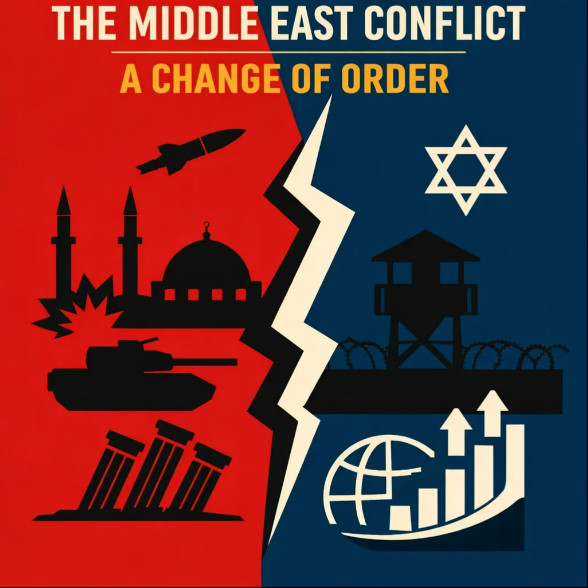
중동의 전쟁을 볼 때 가장 먼저 버려야 할 관점은 이것이 어느 한 사건의 연장이라는 생각이다. 많은 사람에게 출발점은 2023년 10월 7일 하마스의 기습 공격이다. 실제로 그날은 분명 거대한 분기점이었다. 그러나 지금 벌어지는 충돌은 단순히 가자전의 확대판이 아니다. 가자지구에서 시작된 충격이 레바논, 홍해, 시리아, 이라크, 이란 본토, 걸프 해역까지 이어지며 하나의 넓은 전장으로 연결된 결과에 가깝다. 다시 말해 현재의 중동 위기는 “이스라엘 대 하마스”라는 1차 방정식을 지나, “이스라엘 대 이란의 지역 질서 경쟁”과 “미국의 재개입”이 결합된 2차, 3차 방정식으로 넘어왔다. 전장의 이름은 여러 개지만, 실제로는 하나의 구조가 움직이고 있다.
이 변화가 중요한 이유는 전쟁의 목표가 바뀌었기 때문이다. 예전에는 누가 더 많은 로켓을 쏘고, 어느 도시가 더 크게 타격을 받았는가가 중심이었다. 지금은 그런 차원을 넘어, 중동에서 누가 억지력을 설계하고, 누가 동맹을 묶고, 누가 에너지와 항로의 안정성을 보증하는가가 핵심 질문이 되었다. 이란은 오래전부터 하마스, 헤즈볼라, 후티, 이라크·시리아의 친이란 무장세력을 하나의 연결망처럼 활용해 왔다. 반면 이스라엘은 이 네트워크를 국경 밖 위협이 아니라 자국 생존을 겨누는 포위 구조로 인식해 왔다. 미국은 한동안 직접 개입을 줄이려 했지만, 이 구조가 핵 문제와 해상 물류, 걸프 안보를 동시에 흔들자 다시 깊게 들어오고 있다. 지금 중동의 전쟁은 영토보다 네트워크를 둘러싼 싸움이다. 누가 더 많은 땅을 차지하느냐보다, 누가 더 오래 질서를 설계하느냐가 더 중요해졌다.
그림자 전쟁의 시대가 끝나고 직접 충돌의 시대가 열렸다
오랫동안 이란과 이스라엘은 서로를 직접 전면 타격하기보다 그림자 전쟁의 방식으로 소모시켰다. 이란은 대리세력을 통해 압박했고, 이스라엘은 시리아 내 거점이나 핵·미사일 관련 시설, 지휘관을 겨냥하는 제한된 타격으로 대응했다. 이 문법은 불안정했지만, 동시에 일종의 안전장치이기도 했다. 서로가 선을 넘지 않는다는 묵시적 계산이 있었기 때문이다. 그러나 2024년 이란의 직접 미사일 공격, 그리고 2025년의 이스라엘·미국 대이란 군사행동은 그 문법을 무너뜨렸다. 이제는 “직접 맞부딪히면 모두 손해이니 자제할 것”이라는 오래된 가정이 성립하지 않는다. 직접 충돌은 더 이상 예외가 아니라, 필요할 때 선택 가능한 옵션이 되었다.
이 변화는 생각보다 훨씬 위험하다. 그림자 전쟁에서는 오판의 폭이 제한적이었다. 대리세력이 맞고, 보복은 간접적이며, 외교적 출구가 남아 있었다. 하지만 직접전은 다르다. 본토가 맞고, 핵 시설이 타격 대상이 되며, 체제의 상징과 군사 지휘부가 동시에 흔들린다. 이런 전쟁은 한번 열리면 다시 예전의 간접전 상태로 되돌리기 어렵다. 왜냐하면 상대가 이미 선을 넘었다고 판단하는 순간, 다음 타격의 기준도 함께 높아지기 때문이다. 중동의 최근 충돌이 무서운 이유는 단지 미사일 숫자가 아니라, “직접 때려도 된다”는 금기의 붕괴에 있다. 그 한 번의 붕괴가 이후의 전략 문법 전체를 바꿔 놓는다.
가자는 출발점이었지만, 지금은 전쟁 전체를 정당화하는 배경이 되었다
가자지구는 여전히 중요하다. 민간인 피해, 인도주의 위기, 휴전의 불안정성, 구호체계의 붕괴는 지금도 중동 전체의 감정 온도를 바꾸는 핵심 변수다. 그러나 현재의 중동 위기를 이해하려면 가자를 중심이 아니라 배경으로 봐야 한다. 가자는 끝난 전장이 아니라, 헤즈볼라와 후티, 이란이 자신들의 행동을 설명하는 명분의 저장고가 되었다. 이스라엘이 가자에서 군사작전을 이어갈수록, 주변 세력은 이를 지역적 연대의 근거로 사용한다. 반대로 이스라엘 내부에서는 가자가 “부분전”이 아니라 “포위 구조의 첫 번째 전선”이라는 인식이 강해진다. 그래서 가자는 하나의 전장이면서 동시에 더 큰 전쟁을 계속 움직이게 하는 감정적 엔진이 되었다.
여기서 중요한 것은 시간이 갈수록 전쟁의 중심이 옮겨간다는 점이다. 처음에는 인질, 가자 시가전, 휴전 협상이 뉴스의 중심이었다. 그 다음에는 레바논 국경과 홍해가 중요해졌다. 지금은 이란 본토와 걸프 해역, 미국 기지, 핵 시설, 에너지 인프라가 더 큰 비중을 차지한다. 전쟁이 이렇게 이동한다는 것은 출발점이 사라졌다는 뜻이 아니다. 오히려 출발점이 해결되지 않았기 때문에 전선이 옆으로, 위로, 바깥으로 계속 번져 나간다는 뜻에 가깝다. 가자 문제를 봉합하지 못한 상태에서 다른 전선만 관리하려는 접근은 언제나 불안정할 수밖에 없다. 그래서 중동의 미래를 예측할 때 가자를 “이미 지나간 사건”으로 보면 계속 오판하게 된다. 가자는 지금도 지역 정당성의 언어를 공급하고 있다.
이란의 힘은 미사일 수보다 연결망에 있었지만, 그 연결망이 닳고 있다
이란은 전통적으로 미국이나 이스라엘과 정면 대결에서 우위를 점하는 나라가 아니었다. 대신 비용을 분산시키는 데 강했다. 직접 맞지 않고도 주변을 흔들고, 여러 전선을 동시에 열어 상대를 피곤하게 만들며, 대리세력과 정치·종파 네트워크를 결합해 영향력을 키웠다. 이른바 ‘저항의 축’은 그래서 단순한 동맹이 아니라, 이란식 지역 전략의 핵심 장치였다. 문제는 지난 1~2년 동안 그 장치가 빠르게 약해졌다는 데 있다. 하마스는 크게 소모되었고, 헤즈볼라도 이전보다 더 큰 타격을 받았으며, 시리아 정세의 변화는 이란의 육상 보급 통로와 전략적 깊이를 약화시켰다. 결국 이란은 과거처럼 대리망만으로 상대를 묶어두기 어려운 단계로 들어서고 있다.
이것은 단순한 세력 약화가 아니다. 더 위험한 것은 구조의 불안정화다. 연결망이 튼튼할 때는 본국이 직접 나설 이유가 적다. 하지만 연결망이 마모되면 본국의 불안이 커지고, 그 불안은 오히려 더 직접적이고 더 과격한 대응으로 이어질 수 있다. 약해진 네트워크는 체제의 조급함을 자극한다. 그래서 어떤 시기에는 힘이 약해진 쪽이 오히려 더 위험해 보인다. 지금의 이란이 그렇다. 외형상 자산이 줄고 영향력이 약해지는 듯 보이지만, 바로 그 때문에 더 높은 수준의 억지 시연이나 더 과감한 보복을 시도할 가능성이 있다. 약화는 곧 온건화를 뜻하지 않는다. 때로는 그 반대다. 체제가 약해질수록 “우리가 아직 무섭다”는 신호를 더 강하게 보내려 하기 때문이다.
미국과 이스라엘의 목표는 승리보다 체제 기능의 약화에 가깝다
미국과 이스라엘은 공식적으로는 핵 억제, 미사일 능력 차단, 자위권, 역내 안정 같은 표현을 쓴다. 그러나 최근의 군사행동을 전체적으로 보면 보다 실제적인 목표는 이란이 지금처럼 중동 질서를 흔들 수 있는 능력을 줄이는 데 있는 듯하다. 즉, 단번에 정권을 바꾸겠다는 선언적 목표보다, 체제의 군사·정보·억지 기능을 약화시키고 전략적 선택지를 좁히는 것이 더 가까운 목적처럼 보인다. 핵 프로그램, 장거리 미사일, 대리세력 지원 구조, 해상 위협 능력, 지휘 체계를 동시에 압박하는 현재의 접근은 단순 보복보다 구조적 약화를 겨냥한 성격이 강하다.
문제는 이런 전쟁에는 끝의 기준이 없다는 점이다. 핵 시설을 얼마나 부수면 충분한가, 미사일 능력을 어느 정도 떨어뜨리면 성공인가, 대리세력의 재무장 가능성을 어떻게 계산할 것인가, 체제 내부 균열이 실제 변화로 이어질 것인가 같은 질문에는 명확한 답이 없다. 그래서 목표가 넓어질수록 전쟁도 길어질 가능성이 커진다. 종전은 군사적 성과가 아니라 정치적 판단의 산물이 되는데, 정치가 불확실할수록 군사행동은 관성처럼 이어진다. 바로 이 지점에서 중동 전쟁은 “끝내는 전쟁”이 아니라 “관리하는 전쟁”으로 바뀐다. 전쟁은 끝나지 않고, 다만 강도와 형식만 바뀌며 지속된다. 그 구조가 굳어질수록 중동은 평시와 전시의 경계가 흐린 공간이 된다.
걸프 국가들은 더 이상 방관자가 아니라, 비용을 직접 내는 이해당사자가 되었다
사우디아라비아, 아랍에미리트, 카타르, 바레인, 쿠웨이트 같은 걸프 국가들은 오랫동안 줄타기의 달인이었다. 미국의 안보 우산에 기대면서도 이란과 완전히 적대하지 않았고, 상업과 투자, 에너지 수출의 안정을 최우선으로 삼아 왔다. 그러나 지금의 전쟁은 이들에게 중립의 여지를 점점 줄이고 있다. 미군 기지, 항만, 정유시설, 도시 상공, 해상 교통이 위험에 노출되기 시작하면 걸프 국가들은 더 이상 남의 전쟁을 멀리서 보는 입장에 머물 수 없다. 특히 해협과 항만의 안전이 흔들리면 이들은 외교의 중재자이자 투자 허브라는 정체성보다, 피격 위험을 직접 감당하는 안보 당사자가 된다.
이 변화는 중동의 향후 정렬을 결정할 가능성이 크다. 과거에는 걸프 국가들이 미국과 이란 사이에서 거리를 조정하며 공간을 벌 수 있었다. 그러나 자국 영토와 기반시설, 항로가 계속 위협받으면 계산은 달라진다. 장기적으로는 반이란 성향의 안보 협력이 더 공고해질 수 있고, 단기적으로는 더 많은 방공망 연동, 정보 공유, 미군 의존 강화가 나타날 수 있다. 한때는 미국의 개입 축소를 환영했던 나라들조차, 실제 위기가 닥치면 다시 미국의 존재를 필요로 하게 된다. 이것은 걸프 지역의 시계를 거꾸로 돌리는 변화다. 탈미국적 자율성이 아니라, 위기 속 재의존이 강화될 가능성이 커진다.
핵 문제는 전쟁의 명분일 뿐 아니라, 중동 불안의 구조적 바닥이다
이란을 둘러싼 불안이 단순한 정파적 적대나 국경 긴장으로 끝나지 않는 이유는 핵 문제가 그 아래 깔려 있기 때문이다. 최근 몇 년 동안 이란의 고농축 우라늄 비축량과 사찰 문제는 계속 국제사회의 긴장을 높여 왔다. 군사행동으로 핵 시설의 일부를 타격할 수는 있어도, 핵 지식과 기술 인력, 재구축 의지까지 제거할 수는 없다. 오히려 외부 타격은 체제 내부에서 핵 억지력의 필요성을 더 강하게 주장하게 만들 위험도 있다. 그래서 핵 문제는 폭격으로 끝낼 수 있는 물리적 대상이면서도, 동시에 폭격으로 더 악화될 수 있는 정치적 문제다.
이 점에서 중동의 핵 위기는 단순히 “무기를 만들었느냐 아니냐”보다 더 복잡하다. 핵의 문턱에 얼마나 가까이 갔는가, 검증 가능한 제약을 다시 만들 수 있는가, 외교적 복귀의 문이 남아 있는가가 더 중요하다. 국제기구와 외교 채널은 여전히 사찰과 검증의 틀을 복원할 여지가 있다고 보지만, 전쟁이 길어질수록 그러한 공간은 줄어든다. 결국 군사적 압박이 외교를 대신할 수 없다는 점은 분명하다. 시설은 파괴할 수 있어도, 핵 문제의 정치적 동기는 파괴하기 어렵다. 그래서 핵 이슈는 전쟁의 이유이면서도, 동시에 전쟁만으로는 해결되지 않는 중동 질서의 밑바닥으로 남는다.
진짜 전장은 해협과 항로, 보험료와 유가다
중동 전쟁은 미사일 장면으로 기억되지만, 세계경제가 실제로 반응하는 지점은 해협과 항로다. 호르무즈 해협은 걸프 원유와 LNG가 빠져나가는 핵심 통로이고, 홍해와 수에즈는 유럽·아시아 물류의 시간표를 좌우하는 동맥이다. 이 구간이 흔들리면 전쟁은 곧바로 유가, 보험료, 해상운임, 제조원가, 소비자물가 문제로 번진다. 최근의 위기에서 실제로 선박 우회, 상선 피격, 전쟁보험료 상승, 에너지 수급 불안이 동시에 나타난 것은 우연이 아니다. 중동의 군사위기는 언제나 시장에서는 운송비와 리스크 프리미엄의 형태로 번역된다.
이 부분이 중요한 이유는 전쟁의 파급력이 국경을 훨씬 넘어서기 때문이다. 예를 들어 유조선 한 척의 통과 지연은 단지 에너지 회사의 문제가 아니다. 정제 마진, 항만 회전율, 선박 확보 비용, 항공유와 벙커유 가격, 제조업 물류 스케줄에 줄줄이 영향을 미친다. 홍해와 수에즈 위기의 후유증이 세계 무역 흐름을 왜곡하고 있다는 평가가 이어지는 것도, 전쟁이 배를 돌게 만드는 순간부터 이미 세계 공급망의 비용 구조가 바뀐다는 뜻이다. 호르무즈까지 불안정해지면 충격은 더 커질 수밖에 없다. 중동 전쟁은 이제 지역 뉴스가 아니라 세계 인플레이션의 잠재 변수다.
미래의 핵심 트렌드는 평화가 아니라 상시 긴장의 제도화다
많은 사람은 결국 외교가 작동해 전쟁이 멈출 것이라 기대한다. 물론 휴전이나 일시적 조정은 얼마든지 가능하다. 그러나 지금의 흐름이 보여주는 더 큰 방향은 화해의 복원보다 긴장의 제도화에 가깝다. 이스라엘은 국경 밖 선제 타격의 기준을 더 넓게 적용하려 하고, 미국은 직접 개입을 줄이려다가도 핵과 항로, 동맹 방어가 걸리면 다시 개입하게 된다. 이란은 예전처럼 대리세력만으로 공간을 벌기 어려워졌고, 걸프 국가는 중립 지대를 유지하기보다 안보 연동을 강화할 가능성이 높다. 이런 요소들이 겹치면 전쟁이 끝나더라도 평시의 원상복귀는 어렵다. 정전은 와도, 긴장은 남는다.
결국 앞으로의 중동은 “한 번의 큰 전쟁 뒤 평화가 오는 구조”보다 “작은 전쟁과 큰 위기가 반복되는 구조”에 더 가까울 가능성이 크다. 이 구조에서는 휴전도 완전한 평화가 아니라 다음 충돌 전의 정리 시간에 가깝다. 전쟁은 군사적 행동으로만 존재하지 않는다. 제재, 해상 위협, 드론 공격, 사이버전, 대리세력 재무장, 방공망 연동, 군사훈련, 외교 압박이 모두 같은 전쟁의 다른 얼굴이 된다. 그래서 중동의 미래를 볼 때는 “전쟁이 끝날까”보다 “긴장이 얼마나 상시화될까”를 묻는 편이 더 현실적이다. 지금 진행 중인 것은 일회성 충돌이 아니라, 상시적 위기 관리 체제로 넘어가는 과정일 수 있다.
앞으로 가능한 시나리오는 세 갈래로 압축된다
첫째는 가장 현실적인 경로인 장기 소모형 제한전이다. 이 경우 미국과 이스라엘은 이란의 핵·미사일·지휘 인프라를 계속 압박하고, 이란은 미사일, 드론, 해상 위협, 대리세력을 이용해 비용을 키우는 방식으로 대응한다. 양측 모두 결정적 승리를 얻지 못한 채, 군사강도의 높낮이만 바뀌는 국면이다. 시장은 반복적으로 흔들리고, 외교는 수습과 재발 사이를 오가며, 중동은 상시 위기 지역으로 굳어진다. 현재까지 가장 개연성이 높은 시나리오는 이쪽이다.
둘째는 걸프 지역까지 깊이 빨려 들어가는 확전형 시나리오다. 걸프 국가의 에너지 시설, 미군 기지, 항만, 도시 기반시설이 지속적으로 위협받거나 실제 피해를 입는다면, 지금보다 훨씬 넓은 안보 연합이 형성될 수 있다. 그렇게 되면 전쟁은 더 이상 이란과 이스라엘의 충돌이 아니라, 지역 전체의 군사정렬 전쟁으로 바뀐다. 이 경우 호르무즈 불안은 세계 경제의 직접 충격으로 이어지고, 유가와 해상운임, 보험료가 더 크게 흔들릴 수 있다. 정치적 비용과 경제적 비용이 동시에 급등하는 경로다.
셋째는 불완전한 거래와 휴지기로 들어가는 시나리오다. 양측 모두 결정타를 만들기 어렵고, 해협·에너지·민간 피해 비용이 지나치게 커지면 제한적 휴전이나 비공개 조정이 성사될 수 있다. 그러나 이 경우에도 핵 문제, 대리세력, 가자와 레바논, 해상 안보라는 핵심 쟁점은 남는다. 그래서 이 시나리오는 평화라기보다, 더 큰 비용을 피하기 위한 임시 봉합에 가깝다. 말하자면 전쟁이 끝나는 것이 아니라 잠시 정리되는 것이다. 중동에서는 이런 ‘잠정적 안정’이 오히려 다음 위기의 준비 시간이 되기도 한다.
정리하면, 이 전쟁이 남길 것은 승패보다 새로운 중동의 사용설명서다
이번 전쟁을 하나의 군사 충돌로만 보면 중요한 것을 놓치게 된다. 지금 중동에서 벌어지는 일은 누가 누구를 얼마나 때렸는가의 문제가 아니라, 미국의 역할, 이스라엘의 억지 방식, 이란의 생존 전략, 걸프 국가의 정렬, 핵 문제의 관리 방식, 에너지와 해운의 안전보장이 모두 다시 쓰이는 과정이다. 예전의 중동은 불편하지만 작동하는 균형 위에 있었다. 지금 그 균형은 동시에 흔들리고 있다. 그래서 앞으로 남는 것은 평화의 회복이라기보다, 더 거칠고 더 불안정한 방식으로 재설계된 중동일 가능성이 높다.
중동의 미래는 이제 “전쟁이 끝난 뒤 무엇이 오나”보다 “전쟁이 일상이 된 질서에서 누가 버티나”에 더 가까운 질문이 되고 있다. 이것이 지금 중동 전쟁을 단순한 군사 뉴스가 아니라, 2026년 이후 세계 질서를 읽는 핵심 트렌드로 보아야 하는 이유다. 중동은 다시 세계의 변방이 아니라 중심이 되고 있다. 이번에는 석유만이 아니라, 안보, 해운, 핵, 동맹, 공급망, 인플레이션의 중심으로 돌아오고 있다.
Reference
IAEA, Verification and monitoring in the Islamic Republic of Iran (2025 reports).
IAEA, Director General statement to the UN Security Council on Iran, June 20, 2025.
Council on Foreign Relations, Conflicts to Watch 2026 and Global Conflict Tracker updates on Iran, Israel, Palestine, and Hezbollah.
CSIS, analyses on U.S.-Israeli strikes on Iran and regional reverberations.
Brookings, expert discussions on the Iran war and its aftermath.
Carnegie Endowment, analysis of Gulf security alignment after Iranian attacks.
IEA, Strait of Hormuz oil security materials.
UNCTAD, Review of Maritime Transport 2025 and related maritime disruption updates.
World Bank, The Deepening Red Sea Shipping Crisis.
UKMTO/JMIC maritime advisory on Gulf of Oman and Strait of Hormuz risk environment.
AP and Reuters reporting on March 2026 war developments and Gulf shipping disruption.
The essence of the Middle East war is not a local clash but a change of order
The first perspective that must be discarded when looking at the war in the Middle East is the idea that this is simply an extension of a single event. For many people, the starting point is Hamas’s surprise attack on October 7, 2023. That day was certainly a major turning point. However, the clashes unfolding now are not merely an expanded version of the Gaza war. They are closer to the result of a shock that began in Gaza and then spread across Lebanon, the Red Sea, Syria, Iraq, the Iranian mainland, and the waters of the Gulf, linking them into one broad battlefield. In other words, the current crisis in the Middle East has moved beyond the first equation of “Israel versus Hamas” into a second and third equation combining “Israel versus Iran in a struggle over the regional order” with “the return of U.S. involvement.” The battlefields have many names, but in reality a single structure is in motion.
This shift matters because the objective of the war has changed. In the past, the focus was on who fired more rockets and which city suffered greater damage. Now the question has moved beyond that to who designs deterrence in the Middle East, who binds alliances together, and who guarantees the stability of energy flows and shipping lanes. Iran has long used Hamas, Hezbollah, the Houthis, and pro-Iranian armed groups in Iraq and Syria as a connected network. Israel, by contrast, has viewed this network not as a threat beyond its borders but as an encirclement structure aimed at its very survival. The United States had tried for a time to reduce its direct involvement, but as this structure began to shake the nuclear issue, maritime logistics, and Gulf security all at once, it has moved back in more deeply. The war in the Middle East today is less a fight over territory than a struggle over networks. What matters more than who occupies more land is who can shape the regional order for longer.
The age of shadow war has ended, and the age of direct confrontation has begun
For a long time, Iran and Israel wore each other down through the methods of shadow war rather than direct large-scale attack. Iran applied pressure through proxy forces, while Israel responded with limited strikes targeting positions inside Syria, nuclear and missile-related facilities, or commanders. This pattern was unstable, but it also functioned as a kind of safety mechanism. There was an unspoken calculation that each side would not cross certain lines. But Iran’s direct missile attack in 2024, followed by Israeli and American military action against Iran in 2025, shattered that logic. The old assumption that “both sides will restrain themselves because direct confrontation would hurt everyone” no longer holds. Direct clashes are no longer an exception. They have become an option that can be chosen when needed.
This change is far more dangerous than it appears. In a shadow war, the room for miscalculation was limited. Proxy forces were hit, retaliation was indirect, and diplomatic exits remained available. But direct war is different. The homeland is struck, nuclear facilities become targets, and the symbols of the regime and the military command structure are shaken at the same time. Once such a war opens up, it is difficult to return to the old state of indirect confrontation. The moment one side judges that the other has already crossed the line, the standard for the next strike rises with it. What makes the recent clashes in the Middle East so frightening is not simply the number of missiles, but the collapse of the taboo that “direct strikes are off-limits.” That single collapse changes the entire grammar of strategy that follows.
Gaza was the starting point, but now it has become the background that justifies the entire war
Gaza still matters. Civilian casualties, the humanitarian crisis, the fragility of ceasefires, and the collapse of relief systems remain key variables that shape the emotional temperature of the entire Middle East. But to understand the current crisis in the region, Gaza must be seen not as the center but as the background. Gaza is not a battlefield that has ended. It has become a reservoir of justification used by Hezbollah, the Houthis, and Iran to explain their actions. The more Israel continues military operations in Gaza, the more surrounding forces use it as a basis for regional solidarity. On the other side, within Israel there is a strong perception that Gaza is not a “partial war” but the first front in a larger encirclement structure. For that reason, Gaza has become both a battlefield in itself and an emotional engine that keeps the broader war in motion.
What matters here is that the center of the war keeps shifting over time. At first, hostages, urban warfare in Gaza, and ceasefire negotiations were at the center of the news. Then the Lebanon border and the Red Sea became more important. Now the Iranian mainland, Gulf waters, U.S. bases, nuclear facilities, and energy infrastructure occupy a greater share of attention. The fact that the war keeps moving in this way does not mean the starting point has disappeared. Rather, it suggests that because the original point of departure has not been resolved, the front continues to spread sideways, upward, and outward. Any attempt to manage only the other fronts without settling the Gaza question is bound to remain unstable. That is why anyone who treats Gaza as “an event that has already passed” will continue to misread the future of the Middle East. Gaza is still supplying the language of regional legitimacy.
Iran’s strength lay less in the number of its missiles than in its network, but that network is wearing down
Iran has never traditionally been a country that could dominate the United States or Israel in direct confrontation. Instead, it was strong at dispersing costs. It could shake its surroundings without taking the hit directly, open multiple fronts at once to exhaust its adversaries, and combine proxy forces with political and sectarian networks to expand its influence. The so-called “Axis of Resistance” was therefore not just an alliance, but the central device of Iran’s regional strategy. The problem is that over the past year or two, that device has weakened rapidly. Hamas has been heavily depleted, Hezbollah has suffered greater damage than before, and changes in Syria have weakened Iran’s overland supply routes and strategic depth. In the end, Iran has entered a phase in which it can no longer bind down its adversaries through proxy networks alone as it once did.
This is not simply a matter of declining power. More dangerous is the instability of the structure itself. When the network is strong, the homeland has less reason to step in directly. But as the network wears down, anxiety in the homeland grows, and that anxiety can lead to more direct and more aggressive responses. A weakened network stimulates the impatience of the regime. That is why, at certain moments, the side that appears weaker can actually look more dangerous. That is the case with Iran now. On the surface, its assets may appear to be shrinking and its influence weakening, but precisely for that reason it may try to stage deterrence at a higher level or attempt bolder retaliation. Weakening does not necessarily mean moderation. Sometimes it means the opposite. The more fragile a regime becomes, the more strongly it may try to signal, “We are still to be feared.”
The goal of the United States and Israel is closer to weakening the regime’s functions than to outright victory
Officially, the United States and Israel use expressions such as nuclear deterrence, blocking missile capabilities, self-defense, and regional stability. But taken as a whole, recent military action appears to have a more concrete objective: reducing Iran’s ability to shake the Middle Eastern order as it does now. In other words, rather than the declarative goal of changing the regime in one stroke, the more immediate aim seems to be to weaken the regime’s military, intelligence, and deterrent functions and narrow its strategic options. The current approach, which simultaneously pressures the nuclear program, long-range missiles, proxy support structures, maritime threat capacity, and command systems, has the character of targeting structural weakening rather than simple retaliation.
The problem is that a war like this has no clear standard for ending. How much damage to nuclear facilities is enough? How far must missile capabilities be reduced to count as success? How should one calculate the possibility that proxy forces could rearm? Will internal cracks in the regime actually lead to change? There are no clear answers to such questions. And the broader the objectives become, the more likely the war is to drag on. The end of war becomes not the product of military achievement but of political judgment, and the more uncertain the politics, the more military action continues by inertia. At precisely this point, the war in the Middle East changes from a war that is meant to be ended into a war that is meant to be managed. The war does not end. It simply continues while changing in intensity and form. The more this structure hardens, the more the Middle East becomes a space where the line between peacetime and wartime is blurred.
The Gulf states are no longer bystanders, but stakeholders who must bear the cost directly
Saudi Arabia, the United Arab Emirates, Qatar, Bahrain, and Kuwait were for a long time masters of balancing. They relied on the American security umbrella without becoming completely hostile to Iran, and they placed the stability of commerce, investment, and energy exports above all else. But the present war is steadily reducing the room for neutrality. Once U.S. bases, ports, refineries, urban airspace, and maritime traffic are exposed to danger, the Gulf states can no longer remain in the position of watching someone else’s war from afar. In particular, when the security of straits and ports is shaken, these states begin to move away from the identity of diplomatic mediator and investment hub toward that of a direct security actor forced to absorb the risks of attack.
This shift is likely to shape the region’s future alignment. In the past, Gulf states could create room for themselves by adjusting their distance between the United States and Iran. But once their own territory, infrastructure, and shipping routes are continuously threatened, the calculation changes. Over the long term, anti-Iran security cooperation may solidify further, and in the short term there may be more integrated air defense, intelligence sharing, and dependence on U.S. forces. Even countries that once welcomed a reduction in American involvement may again come to need the American presence when a real crisis arrives. This is a change that turns the clock back in the Gulf. Rather than post-American autonomy, what may be reinforced is renewed dependence under conditions of crisis.
The nuclear issue is not just the justification for war, but the structural floor beneath instability in the Middle East
The reason concern surrounding Iran does not end with simple political hostility or border tension is that the nuclear issue lies underneath it all. In recent years, Iran’s stockpile of highly enriched uranium and the question of inspections have continuously heightened international anxiety. Military action may be able to damage some nuclear facilities, but it cannot eliminate nuclear knowledge, technical personnel, or the will to rebuild. On the contrary, outside attacks may strengthen the argument within the regime that nuclear deterrence is more necessary than ever. That is why the nuclear issue is both a physical target that can be bombed and a political problem that bombing can make worse.
In this sense, the nuclear crisis in the Middle East is far more complex than simply asking whether a weapon has been built or not. What matters more is how close Iran has come to the threshold, whether verifiable limits can be restored, and whether there is still a door open to diplomatic return. International organizations and diplomatic channels still see some room to restore inspection and verification frameworks, but the longer the war drags on, the narrower that space becomes. In the end, it is clear that military pressure cannot replace diplomacy. Facilities can be destroyed, but the political motives behind the nuclear issue cannot be bombed away. That is why the nuclear question remains both a reason for war and, at the same time, the underlying layer of Middle Eastern disorder that war alone cannot solve.
The real battlefield is the straits and shipping lanes, insurance premiums and oil prices
The war in the Middle East is remembered in images of missiles, but the point at which the global economy actually reacts is the straits and shipping routes. The Strait of Hormuz is the key passage through which Gulf crude oil and LNG leave the region, while the Red Sea and the Suez route are arteries that determine the timetable of logistics between Europe and Asia. Once this corridor is shaken, the war quickly spreads into the problems of oil prices, insurance premiums, freight rates, manufacturing costs, and consumer inflation. The fact that the recent crisis has produced ship diversions, attacks on commercial vessels, rising war-risk insurance, and anxiety over energy supply all at once is no coincidence. Military crisis in the Middle East is always translated by the market into the form of transport costs and risk premiums.
This matters because the impact of war extends far beyond borders. A delay in the passage of a single oil tanker is not simply a problem for an energy company. It affects refining margins, port turnaround times, vessel procurement costs, aviation fuel and bunker fuel prices, and manufacturing logistics schedules in sequence. The continuing view that the aftereffects of the Red Sea and Suez crisis are distorting global trade flows means that the moment war causes ships to reroute, the cost structure of the world’s supply chains has already begun to change. If Hormuz also becomes unstable, the shock can only grow larger. The Middle East war is no longer just regional news. It is a potential driver of global inflation.
The key trend of the future is not peace, but the institutionalization of permanent tension
Many people expect that diplomacy will eventually work and that the war will stop. Of course, ceasefires or temporary arrangements are always possible. But the broader direction shown by the current trend is closer to the restoration not of reconciliation, but of institutionalized tension. Israel is seeking to apply a broader standard for preemptive strikes beyond its borders. The United States tries to reduce direct involvement, yet returns whenever the nuclear issue, shipping lanes, or defense of allies comes into question. Iran can no longer create room as easily as before through proxy forces alone, and the Gulf states are more likely to strengthen security integration than to preserve neutral space. When these elements overlap, a return to the old peacetime order becomes difficult even if the war itself ends. A ceasefire may come, but tension remains.
In the end, the future Middle East is more likely to resemble a structure in which small wars and major crises repeat than one in which a single great war is followed by peace. In such a structure, even a ceasefire is less a complete peace than a period of preparation before the next clash. War does not exist only in the form of military action. Sanctions, maritime threats, drone attacks, cyberwarfare, the rearmament of proxy forces, air defense integration, military exercises, and diplomatic pressure are all different faces of the same war. That is why, when looking at the future of the Middle East, it is more realistic to ask not “Will the war end?” but “How permanent will tension become?” What is now underway may not be a one-time clash, but a transition to a system of permanent crisis management.
The possible future scenarios can be compressed into three paths
The first is the most realistic path: a prolonged, attritional, limited war. In this scenario, the United States and Israel continue pressuring Iran’s nuclear, missile, and command infrastructure, while Iran responds by raising costs through missiles, drones, maritime threats, and proxy forces. Neither side secures a decisive victory, and only the intensity of military action rises and falls. Markets are shaken repeatedly, diplomacy oscillates between containment and renewed breakdown, and the Middle East hardens into a region of permanent crisis. At present, this is the most plausible scenario.
The second is an escalation scenario in which the Gulf region itself is drawn in more deeply. If the energy facilities, U.S. bases, ports, and urban infrastructure of Gulf states continue to be threatened or suffer actual damage, a much broader security alignment could emerge. In that case, the war would cease to be simply a clash between Iran and Israel and would become a war of military realignment across the entire region. Under such conditions, instability in Hormuz would translate directly into shock for the global economy, and oil prices, shipping rates, and insurance premiums could all become more volatile. This is the path in which political and economic costs rise sharply together.
The third is a scenario of imperfect bargaining and temporary pause. If neither side can deliver a decisive blow, and if the costs associated with straits, energy, and civilian casualties become too great, a limited ceasefire or private arrangement may be reached. Yet even in this case, the core issues remain: the nuclear problem, proxy forces, Gaza and Lebanon, and maritime security. That is why this scenario is closer not to peace, but to a temporary patch meant to avoid even greater costs. In other words, the war does not end; it is merely paused for a time. In the Middle East, this kind of “temporary stability” often becomes the preparation time for the next crisis.
In sum, what this war will leave behind is not victory or defeat, but a new operating manual for the Middle East
If this war is seen only as a military clash, the most important thing is missed. What is happening in the Middle East now is not just a matter of who hit whom and how hard. It is a process in which the role of the United States, Israel’s method of deterrence, Iran’s survival strategy, the alignment of the Gulf states, the management of the nuclear issue, and the protection of energy flows and maritime security are all being rewritten. The old Middle East stood on an uncomfortable but functioning balance. Now that balance is shaking all at once. What is likely to remain, therefore, is not the recovery of peace, but a Middle East redesigned in a harsher and more unstable way.
The future of the Middle East is now becoming less a question of “What comes after the war ends?” than of “Who can endure in an order where war has become part of everyday life?” That is why the current war in the Middle East should be read not simply as military news, but as a core trend for understanding the world order after 2026. The Middle East is once again becoming not the world’s periphery, but its center. This time it is returning not only as the center of oil, but as the center of security, shipping, nuclear risk, alliances, supply chains, and inflation.
Reference
IAEA, Verification and monitoring in the Islamic Republic of Iran (2025 reports).
IAEA, Director General statement to the United Nations Security Council on Iran, June 20, 2025.
Council on Foreign Relations, Conflicts to Watch 2026 and Global Conflict Tracker updates on Iran, Israel, Palestine, and Hezbollah.
CSIS, analyses on U.S.-Israeli strikes on Iran and regional reverberations.
Brookings, expert discussions on the Iran war and its aftermath.
Carnegie Endowment, analysis of Gulf security alignment after Iranian attacks.
IEA, Strait of Hormuz oil security materials.
UNCTAD, Review of Maritime Transport 2025 and related maritime disruption updates.
World Bank, The Deepening Red Sea Shipping Crisis.
UKMTO/JMIC maritime advisory on Gulf of Oman and Strait of Hormuz risk environment.
AP and Reuters reporting on March 2026 war developments and Gulf shipping disruption.