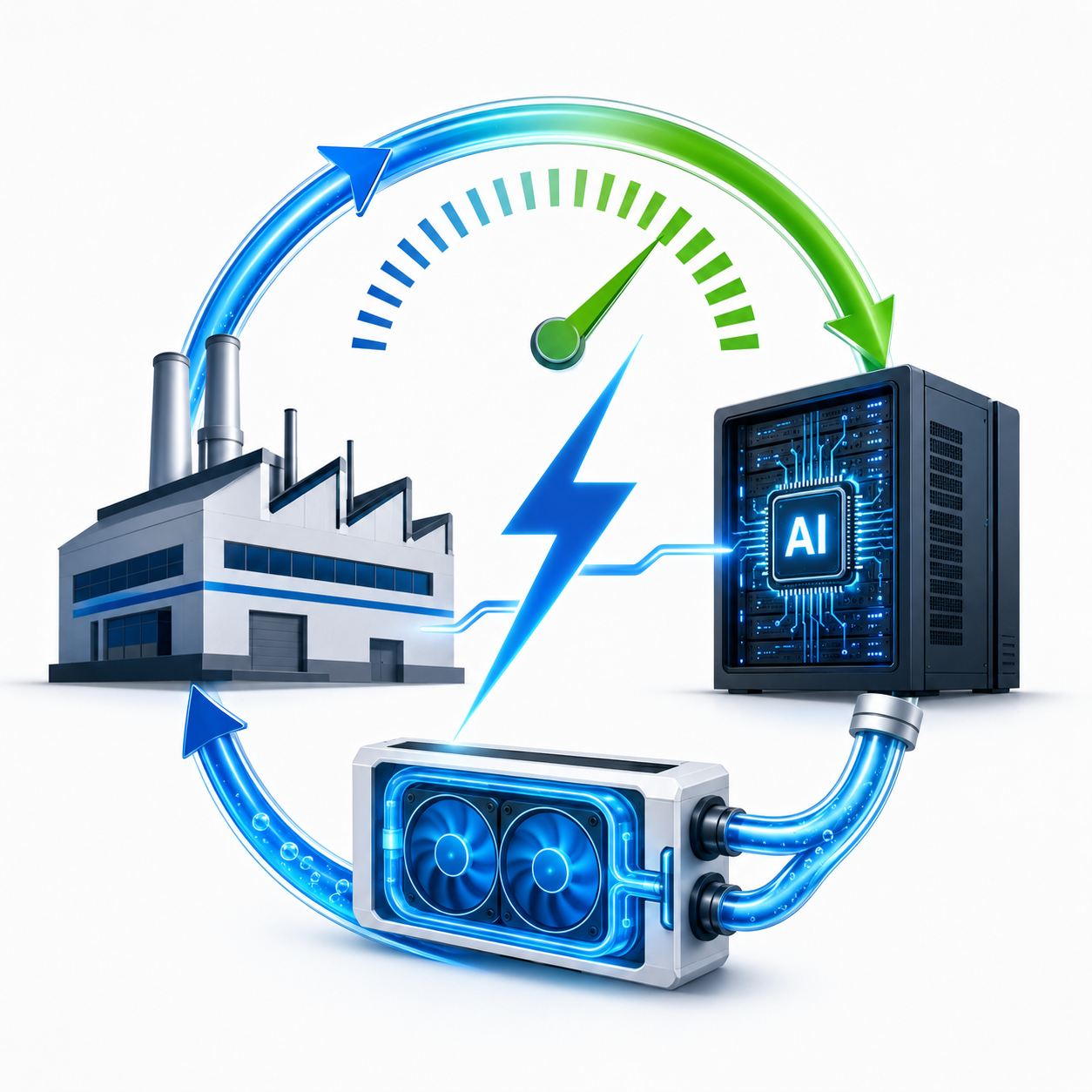
전력은 더 이상 공장과 데이터센터를 움직이는 단순한 운영비가 아니다. AI와 산업 전기화가 전력 수요를 끌어올리면서 전력 확보 능력과 사용 효율이 기업의 생산능력과 투자 속도를 결정하기 시작했다. 같은 전력으로 더 많은 제품과 연산을 만들어내는 기업이 비용과 탄소, 공급망 경쟁에서 앞서는 시대가 열리고 있다.
[Key Message]
* 전력 효율은 새로운 생산능력이다. 같은 전력으로 더 많은 제품과 연산을 만들어내는 능력이 기업의 성장 속도와 투자 여력을 결정한다.
* 산업현장의 작은 비효율이 큰 비용을 만든다. 모터, 펌프, 압축기, 공조설비의 누설과 과잉 운전을 바로잡는 것만으로도 상당한 전력 여유를 확보할 수 있다.
* 냉각은 첨단산업의 성장 한계를 결정한다. AI 데이터센터와 첨단 제조업에서는 발열을 얼마나 효율적으로 처리하느냐가 설비 성능과 생산능력을 좌우한다.
* 데이터가 전력 효율을 지속적인 운영능력으로 바꾼다. 센서와 디지털 트윈, AI를 활용하면 전력과 냉각, 생산설비를 실시간으로 통합 최적화할 수 있다.
* 전력 효율은 비용·탄소·공급망 경쟁력을 함께 높인다. 에너지 소비를 줄이는 기업은 원가와 탄소비용을 낮추고 강화되는 공급망 기준에도 유리하게 대응할 수 있다.
***
전력 제약과 효율의 재평가
산업화 이후 기업의 성장 방식은 비교적 단순했다. 공장을 넓히고 설비를 늘리며 원료와 에너지를 더 투입하면 생산량도 증가했다. 전력은 필요한 만큼 공급받을 수 있다는 믿음이 이러한 성장 방식을 떠받쳤다. 기업이 신경 써야 할 것은 전력을 확보하는 일보다 전기요금을 관리하는 일이었다. 에너지 효율 역시 경영 전략이라기보다 비용 절감이나 환경보호를 위한 부수적인 활동에 가까웠다.
그러나 산업을 둘러싼 전력 환경이 달라지고 있다. 반도체와 배터리, 전기차, 로봇, 자동화 설비, 데이터센터 등 미래 성장산업은 모두 막대한 전력을 필요로 한다. 탄소 감축을 위해 화석연료를 직접 사용하던 공정까지 전기로 전환되면서 전력 수요는 더욱 빠르게 늘고 있다. 운송과 난방, 산업용 열에너지까지 전기화되는 흐름 속에서 전력은 여러 에너지원 가운데 하나가 아니라 산업 전환 전체를 지탱하는 핵심 자원이 됐다.
생성형 AI의 확산은 이러한 변화를 더욱 선명하게 보여준다. 과거 데이터센터가 정보를 저장하고 인터넷 서비스를 제공하는 시설이었다면, AI 시대의 데이터센터는 거대한 계산 공장에 가깝다. 수많은 고성능 반도체가 쉬지 않고 연산을 수행하고, 그 과정에서 막대한 전력을 소비하며 강한 열을 내뿜는다. AI 모델의 규모와 사용량이 커질수록 서버뿐 아니라 전력 공급장치와 냉각설비도 함께 확장돼야 한다.
세계 데이터센터의 전력 소비량은 2024년 약 415테라와트시에서 2030년 약 945테라와트시로 두 배 이상 증가할 것으로 전망된다. 세계 전체로 보면 감당할 수 있는 수준처럼 보이지만 문제는 수요가 특정 지역에 집중된다는 데 있다. 대규모 데이터센터와 첨단 공장이 한곳에 몰리면 발전량이 충분하더라도 전기를 전달할 송전망과 변전소가 부족해질 수 있다. 전력망 연결을 기다리느라 공장과 데이터센터의 완공 일정이 늦어지는 상황도 더 이상 낯설지 않다.
기업에는 전기요금 인상보다 전력을 제때 공급받지 못하는 일이 더 큰 위험이다. 공장을 지어도 전력이 들어오지 않으면 생산설비를 돌릴 수 없고, 데이터센터를 완공해도 서버를 충분히 설치할 수 없다. 전력망 연결에 수년이 걸리는 지역에서는 전력 사용권 자체가 희소한 산업 자원이 된다. 기업이 던져야 할 질문도 “전기를 얼마에 살 수 있는가”에서 “필요한 전력을 안정적으로 확보할 수 있는가”로 바뀌고 있다.
이러한 변화는 전력 효율의 의미도 바꾼다. 과거에는 전력 사용량을 5% 줄이면 전기요금도 그만큼 절감된다는 식으로 계산했다. 이제 절약한 전력은 다른 설비를 가동하거나 서버를 추가하는 데 사용할 수 있다. 전력 효율 개선이 비용을 줄이는 데 그치지 않고 새로운 생산능력을 확보하는 효과를 내는 것이다.
공장에 공급할 수 있는 전력이 100인데 기존 생산설비와 냉각설비가 모두 100을 사용한다면 신규 설비를 추가하기 위해 수전설비와 변압기부터 증설해야 한다. 그러나 공정과 냉각의 효율을 높여 기존 사용량을 85로 낮추면 남은 15를 증산에 활용할 수 있다. 발전소나 송전망을 새로 건설하지 않고도 공장의 생산 여력을 늘릴 수 있는 셈이다. 절약된 전력이 일종의 가상 발전소이자 보이지 않는 증설 설비로 기능하는 것이다.
전력 효율은 에너지 가격의 변동에 대응하는 방어력도 높인다. 같은 제품을 만들 때 전력을 적게 사용하는 기업은 전기요금이 올라도 원가 충격을 상대적으로 적게 받는다. 전력 공급이 불안해져 사용량을 조정해야 할 때도 생산량을 더 안정적으로 유지할 수 있다. 탄소 규제와 공급망의 환경 기준이 강화될 때 필요한 대응 비용도 줄어든다.
효율은 생산을 줄여 에너지를 아끼는 소극적인 절약과 다르다. 필요한 생산량과 품질을 유지하면서 투입되는 전력을 줄이고, 확보된 여유를 새로운 부가가치로 전환하는 능력이다. 전력이 풍부하고 저렴하다는 전제가 흔들리면서 전력 효율은 환경 부서의 관리 항목을 넘어 기업의 성장 속도와 투자 가능성을 결정하는 경영 변수가 되고 있다.
산업현장의 숨은 전력 비용
공장의 전력 소비는 거대한 생산설비 몇 대에서만 발생하지 않는다. 모터와 펌프, 팬, 압축기, 냉동기, 집진기, 컨베이어, 공조장치처럼 눈에 잘 띄지 않는 장비들이 공장 곳곳에서 끊임없이 전기를 사용한다. 장비 하나의 소비량은 크지 않아 보여도 수백 대와 수천 대가 장시간 가동되면 전체 전력 사용량에서 상당한 비중을 차지한다.
특히 모터 구동 시스템은 산업 전력 효율의 중심에 있다. 모터는 펌프를 돌리고 팬으로 공기를 이동시키며 압축기를 가동하고 생산라인과 운반장비를 움직인다. 공장의 거의 모든 움직임 뒤에 모터가 있다고 해도 과언이 아니다. 그럼에도 많은 기업은 모터의 효율등급만 확인할 뿐 모터와 연결된 시스템 전체가 실제 수요에 맞게 작동하는지는 충분히 살피지 않는다.
고효율 모터를 설치했다고 해서 반드시 전력이 절약되는 것은 아니다. 필요한 용량보다 지나치게 큰 모터를 선택하거나 항상 최대 속도로 가동한 뒤 밸브와 댐퍼로 흐름을 억제하면 상당한 전력이 낭비된다. 최대 생산량을 기준으로 설계된 장비가 평상시에도 같은 속도로 작동하는 것이다. 자동차의 가속페달을 계속 밟아놓고 브레이크로 속도를 조절하는 것과 다르지 않다.
가변속 구동장치는 공정 수요에 맞춰 모터의 회전속도를 조절함으로써 이러한 낭비를 줄인다. 생산량이 적을 때는 펌프와 팬의 속도를 낮추고, 수요가 늘어날 때만 출력을 높이는 방식이다. 펌프와 팬처럼 물이나 공기를 이동시키는 장비는 회전속도를 조금만 낮춰도 필요한 동력이 크게 줄어들 수 있다. 설비를 무조건 끄는 것이 아니라 필요한 만큼만 움직이게 만드는 것이 효율의 핵심이다.
압축공기도 대표적인 숨은 비용이다. 압축공기는 불꽃이 발생하지 않고 사용이 편리해 세척과 건조, 이송, 공구 작동 등 다양한 작업에 이용된다. 하지만 공기를 압축하는 과정에는 많은 전력이 들어간다. 배관에 생긴 작은 틈으로 공기가 새면 압축기는 손실을 보충하기 위해 더 오래 작동한다. 생산라인에서 들리는 미세한 공기 누출음은 단순한 소음이 아니라 전기가 계속 빠져나가고 있다는 신호다.
필요 이상의 압력도 문제다. 특정 장비의 압력이 부족하다는 이유로 전체 압축공기 시스템의 설정값을 높이면 모든 설비가 더 많은 전력을 사용한다. 실제 원인은 좁은 배관이나 막힌 필터, 누설, 부적절한 장비 배치에 있을 수 있다. 일부 작업은 저압 송풍기로도 충분하지만 관행적으로 고압 압축공기를 사용한다. 장비 한 대를 교체하기 전에 공기가 만들어지고 이동하며 사용되는 전체 경로부터 점검해야 하는 이유다.
냉동기와 공조설비도 생산과 직접 관련이 없는 보조시설처럼 보이지만 제품의 품질과 수율을 좌우한다. 반도체와 디스플레이, 의약품, 정밀화학, 식품 산업은 온도와 습도, 청정도를 일정하게 유지해야 한다. 생산설비에서 발생하는 열을 제거하고 작업환경을 관리하는 데 많은 전력이 투입된다. 생산량이 늘어날수록 냉각 부담도 증가하므로 냉각설비를 생산 시스템과 분리해 관리하면 전체 효율을 제대로 파악하기 어렵다.
열은 산업현장에서 가장 많이 버려지는 자원 가운데 하나다. 가열로와 보일러, 건조기, 압축기, 냉동기, 서버는 모두 열을 방출한다. 한쪽에서는 열을 제거하기 위해 전력을 사용하고 다른 쪽에서는 물과 공기를 데우기 위해 다시 연료를 태운다. 폐열의 온도가 낮거나 발생 시간과 사용 시간이 달라 활용하기 어려운 경우도 있지만, 열교환기와 히트펌프, 축열설비를 적절히 조합하면 상당 부분을 공정 예열이나 난방에 다시 사용할 수 있다.
노후 장비만이 비효율의 원인은 아니다. 새 공장에서도 생산량과 초기 구매가격에만 집중하면 에너지 낭비가 발생한다. 가장 저렴한 펌프와 모터를 선택한 뒤 수십 년 동안 높은 전기요금을 부담하거나, 각 부서가 개별적으로 장비를 구입하면서 전체 시스템의 균형이 깨지기도 한다. 장비 구매가격은 한 번 지불하지만 전력비와 유지보수비는 설비가 가동되는 동안 계속 발생한다.
생산이 멈춘 시간의 전력 소비도 놓치기 쉽다. 설비가 대기 상태인데도 팬과 펌프가 그대로 작동하고, 주말과 야간에도 공조설비가 평일과 같은 조건으로 운전되는 공장이 적지 않다. 자동화가 확대되면서 제어기와 센서, 통신장비, 전원공급장치의 상시 전력도 늘고 있다. 장비별 소비량은 작아도 공장 전체에 누적되면 무시하기 어려운 기저부하가 된다.
문제는 이러한 낭비가 전기요금 고지서만으로는 드러나지 않는다는 점이다. 공장의 총전력 사용량이 늘었더라도 생산량이 증가한 결과인지, 설비가 비효율적으로 작동한 결과인지 구분하기 어렵다. 생산라인과 공정, 주요 장비별로 전력 사용량을 측정하고 생산량과 가동시간, 압력, 유량, 온도를 함께 살펴야 에너지가 새는 지점을 찾을 수 있다.
산업현장의 효율 개선은 하나의 혁신적인 장비로 완성되지 않는다. 압축공기 누설을 막고, 설정값을 조정하며, 과도하게 큰 장비를 바로잡고, 모터의 속도를 수요에 맞추는 작은 변화가 쌓일 때 큰 효과가 나타난다. 설비 효율은 전기를 적게 사용하는 장비를 구매하는 데만 달려 있지 않다. 필요한 일을 가장 적은 에너지로 수행하도록 생산 시스템 전체를 설계하고 운영하는 능력에서 결정된다.
AI 시대의 냉각 기술 혁신
냉각은 오랫동안 산업의 뒤편에 놓여 있었다. 생산설비와 서버가 주인공이라면 냉각장치는 장비가 고장 나지 않도록 온도를 유지하는 보조수단으로 취급됐다. 그러나 AI 반도체의 전력 밀도가 높아지고 제조공정이 정밀해지면서 냉각은 설비의 성능과 생산능력을 결정하는 핵심 기술로 올라섰다.
전기를 사용하는 장비는 투입된 에너지의 상당 부분을 열로 방출한다. 서버가 더 많은 계산을 수행하고 반도체 제조장비가 더 정교하게 움직일수록 열 발생량도 증가한다. 열을 충분히 제거하지 못하면 장비는 스스로 성능을 낮추거나 작동을 멈춘다. 부품의 수명이 짧아지고 고장 가능성도 커진다. 결국 냉각 능력이 고성능 설비를 얼마나 촘촘하게 배치하고 오랫동안 가동할 수 있는지를 결정한다.
전통적인 데이터센터는 차가운 공기를 서버실에 공급하고 뜨거워진 공기를 회수하는 공랭식 냉각에 크게 의존했다. 기술이 성숙하고 유지보수가 비교적 쉽다는 장점이 있지만, 고성능 AI 가속기가 한곳에 밀집되면 공기만으로 열을 제거하기 어려워진다. 공기는 열을 운반하는 능력이 액체보다 낮다. 많은 열을 제거하려면 대량의 공기를 빠르게 순환시켜야 하고, 그만큼 팬과 냉동기의 전력 소비도 늘어난다.
서버의 발열 부품에 냉각판을 직접 접촉시키고 액체를 순환시키는 직접수랭 방식이 주목받는 배경이다. 액체는 공기보다 열을 효과적으로 흡수하고 이동시킬 수 있어 고밀도 서버의 온도를 안정적으로 관리하는 데 유리하다. 서버나 주요 부품을 절연성 냉각액에 담그는 액침냉각도 대안으로 떠오르고 있다. 냉각액이 부품의 열을 직접 흡수하므로 공기 흐름을 만들기 위한 넓은 공간과 강력한 팬의 필요성을 줄일 수 있다.
다만 모든 데이터센터에 동일한 냉각 방식이 적합한 것은 아니다. 직접수랭은 배관과 연결부의 신뢰성, 누수 감지, 유지보수 체계를 새롭게 갖춰야 한다. 액침냉각은 냉각액과 부품 소재의 호환성, 장비 교체 방식, 기술 표준 문제를 해결해야 한다. 기존 데이터센터를 전환하려면 서버뿐 아니라 건물 구조와 배관, 랙, 전력설비까지 손봐야 할 수 있다. 냉각 성능만 보고 기술을 선택하면 예상하지 못한 운영비와 전환 비용이 발생한다.
물 사용량도 중요한 판단 기준이다. 물이 증발하면서 열을 빼앗는 증발식 냉각은 전력 소비를 낮출 수 있지만 많은 물을 필요로 한다. 물이 부족하거나 가뭄 위험이 큰 지역에서는 전력 효율을 높이기 위해 물 부담을 키우는 선택이 지역사회와 충돌할 수 있다. 물 사용을 최소화하는 건식 냉각은 무더운 날씨에 더 많은 전력을 소비할 수 있다. 냉각 기술은 전력만이 아니라 기후와 물 사정, 전력가격, 탄소 배출을 함께 고려해 선택해야 한다.
냉각 효율을 하나의 숫자로 판단하기 어려운 이유도 여기에 있다. 데이터센터 전체 전력 가운데 실제 서버와 저장장치에 투입되는 비율은 중요한 지표지만 물 사용량이나 서버 이용률, 전력의 탄소집약도까지 보여주지는 못한다. 냉각 전력을 줄였더라도 물 사용량이 크게 늘거나 서버가 충분히 활용되지 않는다면 전체 자원 효율이 높다고 말하기 어렵다.
온도를 무조건 낮게 유지하는 것이 안전한 운영이라는 생각도 재검토할 필요가 있다. 실제 필요한 수준보다 지나치게 낮은 온도를 설정하면 냉동기는 더 많은 전력을 소비한다. 서버실 내부에서 차가운 공기와 뜨거운 공기가 뒤섞이면 냉각 효과는 떨어진다. 냉기와 열기의 이동 경로를 분리하고 장비가 허용하는 범위 안에서 온도를 조정하면 대규모 교체 없이도 냉각 부담을 줄일 수 있다.
냉각 과정에서 버려지는 열을 활용하면 비용을 새로운 자원으로 바꿀 수 있다. 데이터센터와 산업용 냉동기에서 회수한 열은 온도가 낮아 고온 공정에 바로 사용하기 어렵지만 인근 건물의 난방과 온수, 농업시설, 양식장, 저온 공정에는 활용할 수 있다. 히트펌프로 온도를 높이면 적용 범위도 넓어진다. 폐열을 사용할 시설이 가까이 있고 열이 필요한 시간과 발생하는 시간이 맞는지가 사업성을 결정한다.
공장에서도 냉각과 가열을 별개의 시스템으로 관리하던 관행에서 벗어나야 한다. 냉동기가 제거한 열을 외부로 버리면서 보일러가 다른 공정의 물을 데우고 있다면 두 시스템을 연결할 여지가 있다. 생산공정과 냉각, 폐열 회수, 히트펌프, 축열설비를 하나의 열에너지 시스템으로 설계하면 전력과 연료 소비를 동시에 줄일 수 있다.
AI 시대의 냉각 경쟁은 단순히 서버의 온도를 낮추는 기술 경쟁이 아니다. 더 높은 전력 밀도를 감당하면서 전력과 물 사용량을 줄이고, 장비의 성능과 수명을 유지하며, 버려지는 열까지 활용하는 종합적인 시스템 경쟁이다. 반도체의 성능이 아무리 발전해도 발생한 열을 처리하지 못하면 실제 연산능력을 충분히 사용할 수 없다. 냉각은 첨단산업의 보조 인프라가 아니라 성장의 상한선을 결정하는 기술이 됐다.
데이터 기반의 통합 최적화
전력 효율을 개선하기 어려운 가장 큰 이유는 에너지 소비가 눈에 보이지 않기 때문이다. 원료는 창고에 쌓이고 제품은 생산량으로 집계되지만 전력은 전선을 따라 흐른 뒤 즉시 사라진다. 월말에 전기요금 고지서를 받아보면 공장 전체가 얼마나 사용했는지는 알 수 있지만 어떤 설비에서 왜 낭비가 발생했는지는 알기 어렵다.
스마트 계측과 센서는 보이지 않던 에너지의 흐름을 드러낸다. 주요 설비에 전력계와 온도계, 압력계, 유량계, 진동센서를 설치하면 에너지 소비와 설비 상태를 동시에 확인할 수 있다. 생산량과 품질, 가동률, 외부 기온, 전력요금까지 결합하면 사용량이 얼마나 변했는지를 넘어 왜 변했는지 분석할 수 있다.
한 생산라인의 전력 사용량이 전월보다 10% 늘었더라도 생산량이 15% 증가했다면 제품 한 개를 만드는 데 필요한 전력은 오히려 감소한 것이다. 반대로 전체 사용량이 비슷해도 생산량이 줄었다면 효율은 악화됐을 가능성이 크다. 총전력 사용량보다 제품 한 개, 매출 1원, 연산 한 건을 만드는 데 필요한 전력을 측정해야 하는 이유다.
설비의 이상도 에너지 데이터에 먼저 나타날 수 있다. 정상적으로 작동하던 모터의 전력 소비와 진동이 서서히 증가한다면 베어링 마모나 축 정렬 불량을 의심할 수 있다. 같은 날씨와 운전조건에서 냉동기의 효율이 계속 낮아진다면 열교환기 오염이나 냉매 이상을 점검할 수 있다. 고장이 발생한 뒤 수리하는 방식에서 성능 저하의 징후를 미리 찾아 정비하는 방식으로 바뀌면 전력 낭비와 생산 중단을 함께 줄일 수 있다.
디지털 트윈은 실제 공장이나 데이터센터를 가상공간에 재현해 다양한 운영조건을 시험한다. 설비의 속도와 온도, 압력, 생산계획을 변경했을 때 전력 소비와 생산량, 품질이 어떻게 달라지는지 실제 공정을 멈추지 않고 분석할 수 있다. 냉각 온도를 높였을 때 서버의 성능과 전력 소비가 어떻게 변하는지, 여러 대의 냉동기를 어떤 조합으로 운전해야 가장 효율적인지도 사전에 검토할 수 있다.
AI는 사람이 일일이 계산하기 어려운 수많은 변수 사이에서 최적의 운전조건을 찾는다. 생산계획과 외부 기온, 전력가격, 설비 상태를 분석해 소비전력이 가장 낮은 조건을 제안할 수 있다. 데이터센터에서는 서버 부하와 온도 분포를 예측해 팬과 냉각장치의 출력을 조절하고, 급하지 않은 연산을 전력이 여유롭거나 탄소 배출이 적은 시간대로 옮길 수 있다.
그러나 AI를 도입한다고 효율이 저절로 높아지는 것은 아니다. 센서값이 부정확하거나 설비정보가 제대로 정리되지 않았다면 AI는 잘못된 데이터를 바탕으로 정교한 오판을 내릴 수 있다. 전력 데이터와 생산 데이터의 시간 단위가 다르거나 장비의 이름과 위치가 일치하지 않아도 분석의 신뢰성은 떨어진다. 현장의 계측 체계와 데이터 표준, 설비 목록을 정비하는 기본 작업이 먼저 이뤄져야 한다.
생산부서와 시설부서, 정보기술부서의 협력도 필요하다. 생산부서는 품질과 납기를 우선하고 시설부서는 안정적인 전력과 냉각 공급을 중시한다. 정보기술부서는 시스템의 안정성과 보안을 책임진다. 각 부서가 자신의 목표만 최적화하면 공장 전체에서는 오히려 비효율이 생길 수 있다. 생산 차질을 우려해 설비를 과도하게 가동하거나 고장을 걱정해 냉각을 필요 이상으로 강화하는 일이 대표적이다.
효율 목표를 단순한 사용량 감축으로 설정해서도 안 된다. 전력 소비를 일률적으로 줄이도록 요구하면 생산량을 낮추거나 필요한 환기와 냉각까지 줄이는 부작용이 나타날 수 있다. 전력 효율은 생산량과 품질, 안전, 가동률을 함께 놓고 평가해야 한다. 전력 소비가 줄었더라도 불량률이 높아져 재작업이 늘어난다면 공장 전체의 에너지 소비는 오히려 증가한다.
전기를 언제 사용하는지도 중요해지고 있다. 모든 설비가 전력 수요가 높은 시간에 동시에 가동되면 최대수요전력이 높아지고 전력망 부담도 커진다. 생산 일정과 냉동기 운전, 배터리 충전, 축열설비를 조정하면 생산량을 유지하면서 피크 수요를 낮출 수 있다. 전력가격이 낮은 시간에 전기나 냉열을 저장해 필요한 시간에 사용하면 비용과 전력망 부담을 함께 줄일 수 있다.
통합 최적화의 목표는 장비 한 대의 최고 효율이 아니다. 모터 한 대가 가장 효율적인 속도로 작동하더라도 다음 공정에서 병목과 대기가 발생하면 공장 전체의 효율은 낮아질 수 있다. 냉동기 한 대의 효율을 높이는 과정에서 다른 냉동기의 부담이 늘어날 수도 있다. 개별 장비와 생산공정, 전력 공급, 냉각, 생산계획을 하나의 시스템으로 보고 전체 비용과 에너지 소비를 줄여야 한다.
데이터는 효율 개선을 일회성 사업에서 지속적인 운영능력으로 바꾼다. 새 설비를 설치한 직후에는 높은 효율을 보이더라도 시간이 지나면 설정값이 달라지고 부품이 마모되며 생산조건도 변한다. 성능을 계속 측정하고 기준에서 벗어난 상태를 찾아야 개선 효과를 유지할 수 있다. 전력 효율은 한 번 달성하고 끝나는 목표가 아니라 생산성과 품질처럼 매일 관리해야 하는 지표다.
비용·탄소·생산성을 좌우하는 효율 경쟁
기업이 고효율 설비 투자를 미루는 가장 흔한 이유는 초기 비용이다. 기존 설비가 아직 작동하는데 더 비싼 장비로 교체하면 당장의 투자비가 늘어난다. 전기요금 절감액만 계산하면 투자 회수기간이 길게 보일 수도 있다. 그러나 효율의 경제성을 전기요금만으로 판단하면 실제 가치를 놓치게 된다.
설비의 경제성은 구매가격과 전력비, 유지보수비, 수명, 고장 위험, 생산성과 품질을 포함한 총소유비용으로 평가해야 한다. 펌프와 모터, 냉동기처럼 오랜 시간 작동하는 장비는 수명 기간에 지불하는 에너지 비용이 구매가격보다 훨씬 커질 수 있다. 저렴하지만 비효율적인 장비는 구입하는 순간 비용을 아낀 것처럼 보이지만 이후 매달 더 높은 전기요금을 발생시킨다.
효율 개선은 생산성에도 영향을 미친다. 설비의 열과 진동을 줄이면 부품 수명이 길어지고 고장과 정지시간이 감소한다. 냉각과 온습도 제어가 안정되면 불량률과 재작업이 줄어든다. 압축공기와 증기, 냉각수가 필요한 조건으로 안정적으로 공급되면 생산공정의 변동도 작아진다. 전력 효율 개선이 에너지 비용을 넘어 수율과 납기, 품질 경쟁력으로 이어지는 것이다.
전력 인프라 투자를 줄이는 효과도 계산해야 한다. 공장을 증설하려면 변압기와 수전설비를 확대하고 새로운 전력망 연결을 확보해야 할 수 있다. 기존 설비의 효율을 높여 전력 여유를 확보한다면 이러한 투자를 늦추거나 줄일 수 있다. 데이터센터에서는 냉각 전력을 절감해 확보한 용량만큼 서버를 추가로 설치할 수 있다. 절약된 전력이 새로운 매출을 만드는 생산자산이 되는 셈이다.
탄소 배출도 점차 실제 비용으로 전환되고 있다. 기업이 사용하는 전력이 화석연료 발전에서 생산될수록 전력 소비량은 더 많은 간접배출로 이어진다. 탄소가격과 배출권 비용, 재생에너지 조달비용이 높아지면 효율이 낮은 기업은 같은 제품을 생산하고도 더 많은 비용을 부담한다. 전력 소비를 줄이는 일은 간접배출을 낮추는 가장 직접적인 방법이다.
공급망의 요구도 달라지고 있다. 글로벌 기업은 자사 사업장의 배출량뿐 아니라 원료와 부품, 운송, 제품 사용단계에서 발생하는 배출량까지 관리하려 한다. 협력업체에 에너지 사용량과 탄소 배출정보를 요구하고 감축 실적을 구매 조건에 반영하는 움직임도 확대되고 있다. 가격과 품질이 비슷하다면 전력 효율이 높은 공급업체가 선택될 가능성이 커진다.
정확한 측정과 검증은 더욱 중요해진다. 공장 전체의 전력 사용량을 생산량으로 나누는 방식만으로는 제품별 효율과 탄소를 정밀하게 계산하기 어렵다. 서로 다른 제품이 같은 설비를 사용하고 냉각과 압축공기 같은 공용설비가 여러 생산라인을 지원하기 때문이다. 공용 에너지를 어떤 기준으로 배분할지, 가동률과 계절적 변화를 어떻게 반영할지에 따라 제품별 수치가 달라진다.
데이터센터도 마찬가지다. 냉각과 전력 변환 과정의 손실이 적다고 해서 반드시 전체 효율이 높은 것은 아니다. 시설 효율이 뛰어나더라도 서버 이용률이 낮다면 실제 연산 한 건에 투입되는 전력은 많을 수 있다. 반대로 시설 지표가 다소 불리해도 서버를 높은 이용률로 운영하고 더 많은 유용한 연산을 처리한다면 자원 생산성은 높을 수 있다. 시설과 서버, 소프트웨어, 연산 효율을 함께 평가해야 한다.
한국 산업에는 전력 효율이 특히 중요한 과제다. 반도체와 디스플레이, 철강, 석유화학, 배터리처럼 전력과 에너지 사용량이 많은 산업의 비중이 높기 때문이다. 주요 생산시설과 데이터센터가 수도권과 일부 산업단지에 집중돼 있어 국가 전체의 발전량이 충분하더라도 지역 송전망이 부족하면 신규 투자가 지연될 수 있다. 첨단 제조시설과 AI 데이터센터가 동시에 늘어나면 지역별 전력 확보 경쟁도 더욱 치열해질 수 있다.
중소기업은 노후 설비와 부족한 투자 여력, 전문인력 부족으로 효율 개선의 기회를 놓치기 쉽다. 전기요금이 원가에서 차지하는 비중은 높지만 어떤 장비가 얼마나 많은 전력을 사용하는지 측정할 계측 체계가 없는 경우도 많다. 단순한 장비 교체 지원을 넘어 에너지 진단과 투자금융, 운영 개선, 절감 성과 검증을 연결하는 체계가 필요하다.
기업 내부에서도 전력 효율을 시설관리팀의 업무에만 맡겨서는 안 된다. 최고경영진은 신규 설비의 생산량과 투자수익률뿐 아니라 필요한 전력과 냉각 용량, 물 사용량, 탄소비용, 전력망 연결 가능성을 함께 검토해야 한다. 공장과 데이터센터의 입지를 결정할 때도 현재 전기요금보다 장기적인 공급 안정성과 지역 전력망의 확장 가능성이 중요해진다.
효율 개선은 측정과 운영 조정에서 시작할 수 있다. 먼저 전력 흐름을 계측해 낭비가 발생하는 지점을 찾고 운전시간과 설정값을 조정한다. 다음으로 누설 보수와 단열, 가변속 장치, 제어시스템, 폐열 회수설비를 도입한다. 수명이 다했거나 구조적으로 비효율적인 장비는 고효율 설비로 교체한다. 모든 장비를 한꺼번에 바꾸기보다 투자비 대비 절감 효과와 생산성 향상이 큰 영역부터 단계적으로 추진하는 방식이 현실적이다.
설비를 선택할 때는 현재의 전기요금만이 아니라 미래의 생산방식까지 고려해야 한다. 생산설비는 한 번 설치하면 오랫동안 사용하고 공장의 구조도 쉽게 바꿀 수 없다. 신규 장비가 전력 수요에 맞춰 출력을 조정할 수 있는지, 폐열을 회수할 수 있는지, 재생에너지와 저장장치를 연계할 수 있는지까지 살펴야 한다. 당장의 구매비용만 낮춘 선택이 장기간의 높은 운영비로 돌아오지 않도록 해야 한다.
앞으로 산업 경쟁력은 얼마나 많이 생산하는가만으로 평가되지 않는다. 같은 제품을 얼마나 적은 전력과 물, 원료, 탄소로 생산하는지가 비용과 시장 접근성을 결정한다. 효율이 높은 공장은 에너지 가격이 오를 때 충격을 덜 받고 전력 공급이 제한될 때도 더 많은 생산량을 유지한다. 탄소 규제와 공급망의 감축 요구에도 더 낮은 비용으로 대응할 수 있다.
모터의 속도를 조정하고 압축공기 누설을 막으며 냉각 온도를 최적화하는 작업은 화려한 신사업처럼 보이지 않는다. 하지만 이러한 개선이 공장과 데이터센터 전체에 축적되면 새로운 발전설비를 확보한 것과 비슷한 여유를 만들어낸다. 작은 효율 개선이 생산능력을 확장하고, 투자 시기를 앞당기며, 탄소비용을 낮추는 기반이 된다.
산업의 기준은 전력을 더 많이 확보하는 경쟁에서 확보한 전력으로 더 많은 가치를 생산하는 경쟁으로 이동하고 있다. 전력 효율은 비용 절감과 탄소 감축을 동시에 이루면서 생산능력까지 넓힐 수 있는 전략이다. 냉각과 에너지 관리가 설비의 뒤편을 벗어나 경영의 중심으로 이동하는 이유도 여기에 있다. 이제 전력 효율은 아껴 쓰기 위한 기술이 아니라 더 안정적으로 생산하고 더 오래 성장하기 위한 산업 경쟁력이다.
Reference
International Energy Agency, April 2026, Key Questions on Energy and AI
International Energy Agency, November 2025, Energy Efficiency 2025
International Energy Agency, April 2025, Energy and AI
European Commission, July 2025, Assessment of the Energy Performance and Sustainability of Data Centres in the EU
ASHRAE, August 2024, ASHRAE Launches Comprehensive Data Center Resources Hub
US Department of Energy, February 2014, Improving Motor and Drive System Performance: A Sourcebook for Industry
Power Efficiency Re-emerges as a Source of Industrial Competitiveness
Electricity is no longer merely an operating expense that keeps factories and data centers running. As AI and industrial electrification drive up power demand, the ability to secure and use electricity efficiently has begun to determine companies’ production capacity and investment speed. An era is emerging in which companies that create more products and computing output with the same amount of electricity gain an advantage in cost, carbon, and supply chain competition.
[Key Message]
* Power efficiency is a new form of production capacity. The ability to generate more products and computing output with the same amount of electricity determines a company’s growth speed and investment capacity.
* Small inefficiencies across industrial facilities create significant costs. Correcting leaks and excessive operation in motors, pumps, compressors, and HVAC systems can release substantial power capacity.
* Cooling determines the growth limits of advanced industries. In AI data centers and advanced manufacturing, efficient heat management directly affects equipment performance and production capacity.
* Data transforms power efficiency into a continuous operational capability. Sensors, digital twins, and AI enable the integrated, real-time optimization of electricity, cooling, and production equipment.
* Power efficiency strengthens cost, carbon, and supply chain competitiveness. Companies that reduce energy consumption can lower production and carbon costs while responding more effectively to tightening supply chain requirements.
***
Power Constraints and the Reassessment of Efficiency
Since industrialization, the corporate formula for growth has been relatively straightforward. Expanding factories, adding equipment, and increasing inputs of raw materials and energy led to higher output. This model of growth was supported by the belief that electricity would be available whenever it was needed. Companies were more concerned with managing their electricity bills than securing a power supply. Energy efficiency was also treated less as a management strategy than as a secondary activity for reducing costs or protecting the environment.
The power environment surrounding industry is now changing. Future growth industries, including semiconductors, batteries, electric vehicles, robots, automated equipment, and data centers, all require enormous amounts of electricity. Power demand is rising even faster as processes that once directly used fossil fuels are electrified to reduce carbon emissions. With transportation, heating, and industrial thermal energy also moving toward electrification, electricity has become not just one energy source among many but a vital resource supporting the entire industrial transition.
The spread of generative AI makes this transformation even more visible. In the past, data centers were facilities that stored information and provided internet services. In the AI era, however, they resemble enormous computing factories. Countless high-performance chips perform calculations without interruption, consuming vast amounts of electricity and generating intense heat in the process. As AI models grow in scale and usage, not only servers but also power supply and cooling systems must expand with them.
Global electricity consumption by data centers is projected to more than double, from approximately 415 terawatt-hours in 2024 to around 945 terawatt-hours in 2030. At the global level, this may appear manageable, but the problem is that demand is concentrated in particular regions. When large data centers and advanced factories cluster in one location, transmission networks and substations may become insufficient even when total generating capacity is adequate. Delays in completing factories and data centers while they wait for grid connections are no longer unusual.
For companies, failing to receive electricity when it is needed poses a greater risk than an increase in power prices. A factory cannot operate its production equipment without electricity, and a completed data center cannot install enough servers if it lacks sufficient power. In regions where grid connections take years, the right to use electricity itself becomes a scarce industrial resource. The question companies must ask is shifting from “How much will electricity cost?” to “Can we secure the electricity we need reliably?”
This transformation is also changing the meaning of power efficiency. In the past, reducing electricity consumption by 5 percent was calculated simply as an equivalent reduction in electricity costs. Today, saved electricity can be used to operate other equipment or install additional servers. Improving power efficiency does more than cut costs; it also creates additional production capacity.
Suppose a factory can receive 100 units of electricity and its existing production and cooling equipment already consumes all 100 units. Before adding new equipment, the company would first have to expand its power receiving facilities and transformers. If it improves process and cooling efficiency and reduces existing consumption to 85 units, however, the remaining 15 can be used to increase production. The factory can expand its production capacity without building a new power plant or transmission network. The electricity saved effectively functions as a kind of virtual power plant and invisible capacity expansion.
Power efficiency also strengthens a company’s ability to withstand fluctuations in energy prices. A company that uses less electricity to manufacture the same product experiences a relatively smaller cost shock when electricity prices rise. It can also maintain production more reliably when power supplies become unstable and consumption must be adjusted. The cost of responding to stronger carbon regulations and environmental requirements across supply chains is reduced as well.
Efficiency is different from passive conservation that saves energy by reducing production. It is the ability to lower electricity inputs while maintaining the required output and quality, then convert the resulting capacity into new added value. As the assumption that electricity will remain abundant and inexpensive begins to weaken, power efficiency is moving beyond an item managed by environmental departments. It is becoming a management variable that determines the speed of corporate growth and the scope for future investment.
The Hidden Cost of Electricity in Industrial Operations
A factory’s electricity consumption does not come only from a handful of enormous production machines. Less visible equipment, including motors, pumps, fans, compressors, chillers, dust collectors, conveyors, and heating, ventilation, and air-conditioning systems, consumes electricity continuously throughout the plant. The consumption of each machine may appear modest, but when hundreds or thousands of units operate for long hours, they account for a substantial share of total power use.
Motor-driven systems lie at the heart of industrial power efficiency. Motors run pumps, move air through fans, operate compressors, and power production lines and material-handling equipment. It is no exaggeration to say that a motor stands behind almost every movement in a factory. Even so, many companies check only a motor’s efficiency rating without closely examining whether the entire system connected to it is operating in line with actual demand.
Installing a high-efficiency motor does not necessarily guarantee electricity savings. Considerable power is wasted when a motor is far larger than required or constantly runs at maximum speed while valves and dampers restrict the resulting flow. Equipment designed for maximum production continues operating at the same speed even under normal conditions. This is little different from keeping a car’s accelerator pressed while using the brakes to control its speed.
Variable-speed drives reduce this waste by adjusting motor speed to process demand. They lower the speed of pumps and fans when production is low and raise their output only when demand increases. For equipment that moves water or air, such as pumps and fans, even a small reduction in rotational speed can significantly reduce the power required. The essence of efficiency is not turning equipment off indiscriminately, but allowing it to operate only as much as necessary.
Compressed air is another major hidden cost. Because it does not generate sparks and is convenient to use, compressed air is employed for cleaning, drying, conveying, and operating tools, among many other tasks. Compressing air, however, requires large amounts of electricity. When air escapes through a small gap in a pipe, the compressor must operate longer to compensate for the loss. The faint sound of leaking air on a production line is not merely noise. It is a sign that electricity is continuously escaping.
Excessive pressure is another problem. If the setting of an entire compressed-air system is raised because one machine lacks sufficient pressure, every piece of connected equipment consumes more electricity. The true cause may be a narrow pipe, clogged filter, leak, or poor equipment layout. Some tasks can be handled adequately by low-pressure blowers, yet high-pressure compressed air is still used out of habit. This is why the entire path through which air is produced, transported, and consumed must be examined before a single machine is replaced.
Chillers and air-conditioning systems may appear to be auxiliary facilities unrelated to production, but they determine product quality and yield. Semiconductor, display, pharmaceutical, fine chemical, and food industries must maintain stable temperature, humidity, and cleanliness. Large amounts of electricity are used to remove heat from production equipment and control the working environment. As cooling loads rise with output, managing cooling equipment separately from production systems makes it difficult to understand overall efficiency properly.
Heat is one of the most frequently wasted resources in industrial facilities. Furnaces, boilers, dryers, compressors, chillers, and servers all release heat. Electricity is used on one side of a facility to remove heat, while fuel is burned again elsewhere to warm water and air. Waste heat can be difficult to use when its temperature is too low or when the times of generation and demand do not align. Even so, combining heat exchangers, heat pumps, and thermal storage systems appropriately can allow a considerable portion of it to be reused for process preheating or space heating.
Old equipment is not the only source of inefficiency. Energy can also be wasted in new factories when attention is focused solely on production volume and initial purchase prices. A company may choose the cheapest pumps and motors, only to bear high electricity costs for decades. The balance of the overall system can also be disrupted when individual departments purchase equipment independently. The purchase price is paid once, but electricity and maintenance costs continue throughout the operating life of the equipment.
Power consumption during production stoppages is also easy to overlook. In many factories, fans and pumps continue running while production equipment remains on standby, and air-conditioning systems operate under the same conditions at night and on weekends as they do on weekdays. As automation expands, the continuous power consumption of controllers, sensors, communications equipment, and power supplies is also increasing. The consumption of each device may be small, but when accumulated across an entire factory, it becomes a baseline load that cannot be ignored.
The problem is that such waste is not visible on an electricity bill alone. Even when a factory’s total power consumption rises, it is difficult to determine whether this resulted from increased production or inefficient equipment operation. To locate where energy is leaking away, companies must measure electricity consumption by production line, process, and major piece of equipment, then examine it alongside output, operating hours, pressure, flow, and temperature.
Industrial efficiency cannot be achieved with a single innovative machine. Significant results emerge when small changes accumulate: repairing compressed-air leaks, adjusting settings, correcting oversized equipment, and matching motor speeds to demand. Equipment efficiency does not depend solely on purchasing machines that consume less electricity. It is determined by the ability to design and operate the entire production system so that it performs the required work with the least possible energy.
Innovation in Cooling Technology in the AI Era
Cooling remained in the background of industry for a long time. If production equipment and servers were the main actors, cooling systems were treated as supporting devices that maintained temperatures and prevented equipment failure. As the power density of AI chips rises and manufacturing processes become more precise, however, cooling has emerged as a core technology that determines equipment performance and production capacity.
Equipment powered by electricity releases a substantial portion of its energy input as heat. As servers perform more calculations and semiconductor manufacturing equipment operates with greater precision, the amount of heat generated also increases. If this heat cannot be removed adequately, equipment reduces its own performance or stops operating. Component life is shortened and the likelihood of failure rises. Ultimately, cooling capacity determines how densely high-performance equipment can be installed and how long it can continue operating.
Traditional data centers have relied heavily on air cooling, which supplies cold air to server rooms and collects the heated air. The technology is mature and relatively easy to maintain, but when high-performance AI accelerators are concentrated in one location, air alone struggles to remove the heat. Air has less capacity to carry heat than liquid. Removing large amounts of heat requires rapid circulation of enormous volumes of air, increasing the electricity consumption of fans and chillers accordingly.
This is why direct-to-chip liquid cooling, which places cooling plates directly against heat-generating server components and circulates liquid through them, is attracting attention. Liquid can absorb and transport heat more effectively than air, making it advantageous for maintaining stable temperatures in high-density servers. Immersion cooling, in which servers or major components are submerged in a dielectric cooling fluid, is also emerging as an alternative. Because the fluid absorbs heat directly from components, it can reduce the need for large spaces and powerful fans to generate airflow.
The same cooling method, however, is not suitable for every data center. Direct liquid cooling requires new systems to ensure the reliability of pipes and connectors, detect leaks, and support maintenance. Immersion cooling must address compatibility between the cooling fluid and component materials, equipment replacement procedures, and technical standards. Converting an existing data center may require modifications not only to servers but also to building structures, pipes, racks, and electrical systems. Choosing a technology solely for its cooling performance can create unexpected operating and conversion costs.
Water consumption is another important consideration. Evaporative cooling, which removes heat as water evaporates, can lower electricity consumption but requires large quantities of water. In regions with water shortages or a high risk of drought, increasing the burden on local water supplies to improve power efficiency can create conflict with surrounding communities. Dry cooling, which minimizes water use, may consume more electricity during hot weather. Cooling technology must therefore be selected by considering not only electricity but also climate, water availability, power prices, and carbon emissions.
This is also why cooling efficiency cannot easily be judged by a single number. The share of a data center’s total electricity that is actually delivered to servers and storage devices is an important metric, but it does not reveal water consumption, server utilization, or the carbon intensity of electricity. Even if cooling power is reduced, it is difficult to claim that overall resource efficiency has improved when water use rises sharply or servers are not used sufficiently.
The belief that keeping temperatures as low as possible ensures safe operation also needs to be reconsidered. Setting temperatures far below the level actually required causes chillers to consume more electricity. Cooling effectiveness also declines when cold and hot air mix inside a server room. Separating the paths of cold and hot air and adjusting temperatures within the range permitted by equipment can reduce cooling loads without large-scale replacement.
Using heat that would otherwise be discarded during cooling can transform a cost into a new resource. Heat recovered from data centers and industrial chillers is generally too low in temperature to be used directly in high-temperature processes, but it can be applied to heating and hot-water systems in nearby buildings, agricultural facilities, fish farms, and low-temperature industrial processes. Heat pumps can raise its temperature and broaden the range of applications. Commercial viability depends on whether a suitable facility is located nearby and whether the timing of heat demand aligns with the timing of waste heat generation.
Factories must also move away from the practice of managing cooling and heating as separate systems. If a chiller releases removed heat outdoors while a boiler heats water for another process, there may be an opportunity to connect the two systems. Designing production processes, cooling, waste heat recovery, heat pumps, and thermal storage as a single thermal energy system can reduce both electricity and fuel consumption.
Competition in cooling in the AI era is not simply a technological contest to lower server temperatures. It is a comprehensive systems competition to handle higher power density while reducing electricity and water consumption, preserving equipment performance and service life, and even utilizing discarded heat. No matter how far semiconductor performance advances, actual computing capacity cannot be used fully if the resulting heat cannot be managed. Cooling has become not supporting infrastructure for advanced industries, but a technology that sets the upper limit of their growth.
Data-Driven Integrated Optimization
One of the greatest difficulties in improving power efficiency is that energy consumption is invisible. Raw materials are stacked in warehouses and finished goods are counted as output, but electricity flows through wires and disappears the instant it is consumed. A monthly electricity bill shows how much power the entire factory used, but it does not reveal which equipment caused waste or why.
Smart metering and sensors make previously invisible energy flows visible. Installing power meters, thermometers, pressure gauges, flow meters, and vibration sensors on major equipment makes it possible to monitor energy consumption and equipment condition simultaneously. When these data are combined with output, quality, utilization rates, outdoor temperature, and electricity prices, companies can analyze not only how much consumption changed but also why it changed.
Even if a production line’s electricity use rises by 10 percent from the previous month, the amount of electricity required to manufacture each product has actually fallen if output increases by 15 percent. Conversely, if total consumption remains similar while production declines, efficiency has probably deteriorated. This is why companies must measure the electricity needed to produce one item, generate one won in revenue, or complete one computation rather than focusing only on total power consumption.
Equipment abnormalities may also appear first in energy data. If the electricity consumption and vibration of a normally operating motor gradually increase, bearing wear or shaft misalignment may be the cause. If a chiller’s efficiency continues to decline under the same weather and operating conditions, the heat exchanger may be contaminated or the refrigerant system may have a problem. Shifting from repairing machinery after failure to detecting and servicing early signs of performance deterioration can reduce both power waste and production stoppages.
A digital twin recreates an actual factory or data center in a virtual environment and tests different operating conditions. It can analyze how electricity consumption, output, and quality would change when equipment speed, temperature, pressure, or production plans are adjusted, without stopping the actual process. It can also examine in advance how server performance and power consumption would change if cooling temperatures were raised, or which combination of multiple chillers would operate most efficiently.
AI identifies optimal operating conditions among countless variables that would be difficult for people to calculate individually. By analyzing production schedules, outdoor temperatures, electricity prices, and equipment conditions, it can recommend the operating conditions that minimize power consumption. In data centers, AI can predict server loads and temperature distributions, adjust the output of fans and cooling systems, and move non-urgent computing tasks to times when power is more readily available or carbon emissions are lower.
Introducing AI, however, does not automatically improve efficiency. If sensor readings are inaccurate or equipment information is poorly organized, AI may make sophisticated misjudgments based on faulty data. Analytical reliability also declines when electricity and production data use different time intervals or when equipment names and locations do not match. The basic work of organizing on-site metering systems, data standards, and equipment inventories must come first.
Cooperation among production, facilities, and information technology departments is also essential. Production departments prioritize quality and delivery schedules, while facilities departments emphasize stable supplies of electricity and cooling. Information technology departments are responsible for system stability and security. If each department optimizes only its own objectives, the factory as a whole may become less efficient. Typical examples include operating equipment excessively out of concern over production disruptions or providing more cooling than necessary out of fear of equipment failure.
Efficiency targets should not be defined simply as reductions in consumption. Requiring a uniform decrease in electricity use can create side effects, such as lowering output or reducing essential ventilation and cooling. Power efficiency must be evaluated alongside output, quality, safety, and equipment utilization. Even if electricity consumption falls, total factory energy use may actually rise when higher defect rates lead to more rework.
The timing of electricity use is also becoming increasingly important. When every piece of equipment operates simultaneously during periods of high power demand, peak demand rises and places a greater burden on the grid. Adjusting production schedules, chiller operation, battery charging, and thermal storage can lower peak demand while maintaining output. Storing electricity or cooling energy when power prices are low and using it when needed can reduce both costs and grid pressure.
The goal of integrated optimization is not to achieve the highest efficiency for a single machine. Even if one motor operates at its most efficient speed, bottlenecks and waiting time in the next process may reduce the efficiency of the entire factory. Improving the efficiency of one chiller may increase the burden on another. Individual machines, production processes, electricity supply, cooling, and production planning must be treated as one system so that total costs and energy consumption can be reduced.
Data transforms efficiency improvement from a one-time project into a lasting operational capability. New equipment may show high efficiency immediately after installation, but settings change, parts wear out, and production conditions shift over time. Performance must be measured continuously and deviations from standards identified if improvements are to be sustained. Power efficiency is not a target achieved once and then forgotten. Like productivity and quality, it is a metric that must be managed every day.
Efficiency Competition That Determines Cost, Carbon, and Productivity
The most common reason companies postpone investment in high-efficiency equipment is the initial cost. Replacing existing equipment that still functions with more expensive machinery increases immediate capital expenditure. If only electricity bill savings are considered, the payback period may also appear long. Evaluating the economics of efficiency solely through electricity costs, however, causes companies to overlook its true value.
Equipment economics must be assessed through total cost of ownership, including purchase price, electricity expenses, maintenance costs, service life, failure risk, productivity, and quality. For equipment that operates for long periods, such as pumps, motors, and chillers, lifetime energy expenses can greatly exceed the original purchase price. Cheap but inefficient machinery may appear to save money at the moment of purchase, but it generates higher electricity bills every month thereafter.
Efficiency improvements also affect productivity. Reducing equipment heat and vibration can extend component life and decrease breakdowns and downtime. Stable cooling and temperature and humidity control can reduce defect rates and rework. When compressed air, steam, and cooling water are supplied reliably under the required conditions, fluctuations in production processes also decline. Improvements in power efficiency therefore extend beyond energy expenses to yield, delivery performance, and quality competitiveness.
The ability to reduce investment in power infrastructure must also be included in the calculation. Expanding a factory may require larger transformers and power receiving facilities, as well as a new grid connection. If greater efficiency in existing equipment creates spare power capacity, these investments can be delayed or reduced. In a data center, servers can be added using the capacity released by reducing cooling power. Saved electricity effectively becomes a productive asset that generates new revenue.
Carbon emissions are also gradually becoming a real cost. The more a company’s electricity is generated from fossil fuels, the greater the indirect emissions associated with its power consumption. As carbon prices, emissions allowance costs, and renewable energy procurement expenses rise, inefficient companies bear higher costs to produce the same products. Reducing electricity consumption is the most direct way to lower indirect emissions.
Supply chain requirements are also changing. Global corporations are seeking to manage not only emissions from their own operations but also those generated through raw materials, components, transportation, and product use. They are increasingly asking suppliers to disclose energy consumption and carbon emissions and incorporating reduction performance into purchasing requirements. When prices and quality are comparable, suppliers with higher power efficiency are more likely to be selected.
Accurate measurement and verification are becoming even more important. Simply dividing a factory’s total electricity use by output cannot precisely calculate efficiency and carbon emissions for each product. Different products may use the same equipment, while shared facilities such as cooling and compressed-air systems support several production lines. Product-level figures vary depending on how shared energy is allocated and how utilization rates and seasonal changes are reflected.
The same principle applies to data centers. Low losses during cooling and power conversion do not necessarily indicate high overall efficiency. Even when facility efficiency is excellent, a low server utilization rate can mean that a large amount of electricity is consumed for each actual computation. Conversely, even if facility metrics are somewhat less favorable, resource productivity may be higher when servers maintain high utilization and process more useful computing tasks. Facility, server, software, and computational efficiency must all be assessed together.
Power efficiency is a particularly important challenge for Korean industry because energy- and electricity-intensive sectors such as semiconductors, displays, steel, petrochemicals, and batteries account for a large share of the economy. Major production facilities and data centers are concentrated in the Seoul metropolitan area and a limited number of industrial complexes. As a result, new investment may be delayed by insufficient regional transmission capacity even when the country’s total electricity generation is adequate. If advanced manufacturing facilities and AI data centers expand simultaneously, competition for electricity in individual regions could become even more intense.
Small and medium-sized enterprises can easily miss opportunities for efficiency improvements because of aging equipment, limited investment capacity, and shortages of specialized personnel. Electricity bills may represent a large share of costs, yet many companies lack the metering systems needed to determine which equipment consumes how much power. A framework is required that goes beyond simple support for equipment replacement and connects energy audits, investment financing, operational improvements, and verification of savings.
Within companies, power efficiency should not be left solely to facilities management teams. Senior executives must consider not only the output and return on investment of new equipment but also its required power and cooling capacity, water consumption, carbon costs, and prospects for grid connection. When selecting locations for factories and data centers, long-term supply stability and the potential for regional grid expansion are becoming more important than current electricity prices.
Efficiency improvements can begin with measurement and operational adjustments. Companies should first measure power flows, identify where waste occurs, and adjust operating hours and settings. They can then repair leaks and improve insulation, introduce variable-speed drives and control systems, and install waste heat recovery equipment. Machinery that has reached the end of its life or is structurally inefficient can be replaced with high-efficiency equipment. Rather than replacing everything at once, it is more practical to proceed in stages, beginning with areas that offer the greatest savings and productivity gains relative to investment.
When selecting equipment, companies must consider not only current electricity prices but also future production methods. Production equipment remains in use for a long time once installed, and factory structures cannot easily be changed. New machinery should be evaluated for whether it can adjust output to power demand, recover waste heat, and integrate with renewable energy and storage systems. A decision that lowers the immediate purchase price should not lead to high operating expenses over many years.
Industrial competitiveness will no longer be judged solely by how much a company produces. The amount of electricity, water, raw materials, and carbon required to manufacture the same product will determine both costs and access to markets. Efficient factories experience smaller shocks when energy prices rise and maintain more output when power supplies are constrained. They can also respond to carbon regulations and supply chain reduction requirements at a lower cost.
Adjusting motor speeds, repairing compressed-air leaks, and optimizing cooling temperatures do not look like glamorous new businesses. When such improvements accumulate across factories and data centers, however, they create capacity comparable to securing new power generation facilities. Small efficiency gains become the foundation for expanding production capacity, accelerating investment, and lowering carbon costs.
The standard of industrial competition is shifting from securing more electricity to creating more value with the electricity already secured. Power efficiency is a strategy that can reduce costs and carbon emissions while expanding production capacity at the same time. This is also why cooling and energy management are moving out from behind the equipment and into the center of corporate management. Power efficiency is no longer a technology for simply using less electricity. It is an industrial capability for producing more reliably and sustaining growth for longer.
Reference
International Energy Agency, April 2026, Key Questions on Energy and AI
International Energy Agency, November 2025, Energy Efficiency 2025
International Energy Agency, April 2025, Energy and AI
European Commission, July 2025, Assessment of the Energy Performance and Sustainability of Data Centres in the EU
ASHRAE, August 2024, ASHRAE Launches Comprehensive Data Center Resources Hub
US Department of Energy, February 2014, Improving Motor and Drive System Performance: A Sourcebook for Industry