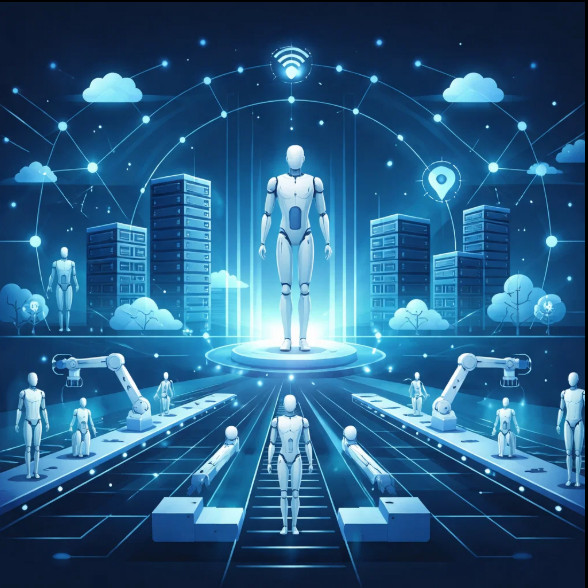
AI는 이제 말을 잘하는 기술을 넘어, 현장에서 일을 끝내는 기술로 이동한다. 휴머노이드는 그 이동의 결과물이고, 그래서 로봇 산업의 논의는 성능보다 양산과 운영으로 옮겨 간다. 지금 벌어지는 변화는 “가능해 보인다”가 아니라 “언제부터, 어디에, 얼마나”라는 달력이 생기는 국면이다.
휴머노이드의 귀환은 데모가 아니라 ‘달력’이다
휴머노이드가 다시 주목받는 이유를 “사람처럼 생겨서”라고 설명하면 핵심을 놓친다. 중요한 것은 휴머노이드가 인간을 닮은 외형을 통해, 인간이 만들어 놓은 환경을 그대로 사용하면서 자동화를 밀어붙일 수 있다는 점이다. 공장과 물류센터는 바닥부터 로봇을 위해 설계된 공간이 아니다. 문 손잡이, 공구 규격, 작업대 높이, 부품 상자와 파렛트의 표준이 모두 사람 기준으로 맞춰져 있다. 이 환경을 바꾸는 비용이 크면 클수록, 결국 로봇이 환경에 맞추는 방향이 유리해진다. 휴머노이드는 바로 그 “환경을 뜯어고치지 않고도 들어갈 수 있는” 카드다.
그래서 지금 시장에서 가장 설득력 있는 신호는 화려한 퍼포먼스가 아니다. 일정표가 잡히는 순간이 진짜 신호다. 예를 들어 Boston Dynamics가 2026년 초에 “제품 버전의 제조를 즉시 시작하고, 2026년 배치를 예정했다”는 식의 메시지를 내면, 그건 연구실 이야기에서 생산·영업 이야기로 넘어갔다는 뜻이 된다. 그 배치의 첫 무대가 Hyundai Motor Group 같은 제조 현장이라는 점은 더 중요하다. 휴머노이드는 결국 ‘일’을 해야 한다. 자동차 산업처럼 공정이 길고 반복이 많고 안전 규정이 촘촘한 곳은, 휴머노이드를 쓸 명분이 강하고 검증 기준도 분명하다. 다시 말해, 여기서 성공하면 다른 산업으로 옮겨갈 수 있는 레퍼런스가 생긴다.
한편 “공장에 휴머노이드가 실제로 들어간다”는 이야기는 특정 기업의 홍보만으로도 굴러가지 않는다. 제조 파트너, 공정 설계, 품질 기준, 안전 프로토콜, 유지보수 체계가 한꺼번에 맞아야 한다. 그래서 최근에 눈에 띄는 장면은 제조 생태계에서 나온다. Foxconn과 NVIDIA가 휴스턴 AI 서버 공장 라인에 휴머노이드를 투입하는 방안을 논의하며 일정까지 언급되는 식의 소식은, 로봇이 ‘미래 산업’이 아니라 ‘생산 기술’로 취급되기 시작했다는 신호다. 이 단계에서 논의되는 작업은 대개 공상과학이 아니다. 케이블 삽입, 부품 핸들링, 조립 보조처럼 “사람이 하던 손작업 중 반복이 많고 표준화가 가능한 구간”이 먼저 타깃이 된다.
휴머노이드의 확산 경로도 이 논리에서 결정된다. 첫 확산은 대체가 아니라 보완이다. 야간·반복·위험 작업, 구인난이 심한 공정, 품질 편차가 큰 단계가 먼저 자동화된다. 그리고 그 다음은 인간과의 공존이다. 휴머노이드는 단독으로 일하는 기계가 아니라, 사람 옆에서 사람과 같은 도구를 쓰며 일할 가능성이 높다. 그러려면 ‘똑똑함’보다 ‘예측 가능함’이 중요해진다. 현장이 원하는 것은 최고 성능이 아니라 가동률과 안전, 그리고 사고가 나지 않는 습관이다. 이때부터 로봇 산업은 기술 경쟁이 아니라 산업공학 경쟁이 된다.
로봇의 두뇌는 모델이 아니라 ‘학습 공정’이다
휴머노이드가 갑자기 가능해진 이유를 하나로만 꼽기 어렵지만, 가장 큰 축은 학습 방식의 변화다. 과거에는 로봇이 잘하는 일을 늘리려면 사람이 직접 규칙을 작성하거나, 작업마다 별도의 알고리즘과 센서 구성을 붙여야 했다. 그 방식은 확장성이 약했다. 현장마다 변수가 다르고, 물체의 형태와 재질이 다르고, 조명과 바닥 상태가 다르기 때문이다. 그래서 휴머노이드가 현실로 오기 위해서는 “환경이 바뀌어도 일을 이어갈 수 있는 일반성”이 필요했고, 그 일반성을 만드는 방법이 최근 몇 년 사이에 급격히 바뀌었다.
여기서 핵심 단어가 파운데이션 모델이다. 로봇에 대한 파운데이션 모델은 단순히 더 큰 신경망을 의미하지 않는다. 데이터의 스케일과 다양성, 그리고 학습 파이프라인 전체를 산업적으로 굴릴 수 있는 형태를 뜻한다. 로봇에게 일을 가르칠 때 가장 비싼 것은 시행착오다. 사람은 넘어지고 부딪히며 배운다. 하지만 로봇을 현장에서 그렇게 배우게 하면 비용이 폭발한다. 그래서 산업은 시행착오의 대부분을 시뮬레이션과 합성데이터로 옮겨 심는다. 로봇이 ‘현장에서 배운다’는 말의 많은 부분은, 사실 ‘현장과 비슷한 가상환경에서 먼저 배운다’로 바뀌는 중이다.
이 변화는 “데이터가 공장이다”라는 문장을 현실로 만든다. 공장이 부품을 투입해 제품을 뽑아내듯, 학습 공정은 데이터와 로그를 투입해 능력을 뽑아낸다. 그리고 이 공정이 고도화될수록, 경쟁력은 모터 토크보다 실패 관리에서 나온다. 로봇이 일을 하다 실수하는 것은 피할 수 없다. 중요한 것은 실수했을 때 멈추는지, 안전하게 물러나는지, 사람에게 넘기는지, 다시 시도하는지, 그리고 그 실패가 얼마나 빠르게 학습으로 되돌아가는지다. “성공 장면”보다 “실패 장면”이 더 많은 산업에서, 실패를 자산으로 바꾸는 시스템이 곧 경쟁력이 된다.
여기서 Google DeepMind 같은 조직이 로봇용 모델을 공개하고, 물체 조작과 공간 추론을 강조하는 흐름은 한 가지를 시사한다. 로봇의 지능은 대화 능력의 연장이 아니라, 공간과 물성에 대한 이해를 포함해야 한다는 점이다. 물건을 집는다는 것은 단순히 좌표를 맞추는 일이 아니다. 미끄러짐, 반사, 탄성, 접착 같은 ‘물성’이 들어오고, 로봇은 그 물성을 예측하지 못하면 매번 다른 실패를 한다. 그래서 로봇 산업이 당면한 과제는 “말을 알아듣는 로봇”이 아니라 “물리 세계에서 안정적으로 성공률을 쌓는 로봇”이다.
이 지점에서 휴머노이드의 핵심 역량도 달라진다. 달리기나 점프 같은 극단적 동작은 홍보에는 좋지만, 현장 생산성은 손과 팔에서 나온다. 케이블을 정리하고, 부품을 방향 맞춰 끼우고, 포장재를 다루는 데서 ROI가 생긴다. 결국 휴머노이드 경쟁의 절반은 ‘손의 산업화’다. 손이 산업화되려면, 손 자체의 하드웨어만으로는 부족하다. 시각과 촉각, 그리고 실패했을 때의 복구 전략까지 합쳐져야 한다. 그래서 앞으로 2~3년 동안 눈에 띄게 뜨는 트렌드는 “손의 묘기”보다 “손의 반복”이 될 가능성이 크다. 같은 일을 하루에 수천 번, 편차 없이 해내는 능력이 시장을 연다.
양산의 본체는 원가표와 품질관리, 그리고 안전이다
휴머노이드가 연구실에서 나와 산업으로 들어가는 순간, 질문은 하나로 수렴한다. 얼마에 만들 수 있나. 그리고 얼마나 고장 나지 않나. 여기서 ‘얼마’는 단순한 부품 단가가 아니다. 공정 설계, 테스트, 불량률, 부품 수급 안정성, 수리 체계까지 포함한 총비용이다. 휴머노이드는 구성 요소가 많다. 구동계(모터·감속기), 배터리와 열관리, 센서, 온보드 컴퓨팅, 하니스(배선), 프레임과 외장, 안전 장치가 모두 비용을 만든다. 이때 한 번의 성능 향상은 종종 비용을 올리고, 한 번의 단가 절감은 종종 성능을 깎는다. 양산이란 이 상충을 조정해 “현장이 납득하는 균형점”을 찾아내는 과정이다.
특히 중국의 움직임은 이 양산 논리를 가장 빠르게 밀어붙이는 방향으로 읽힌다. 중국은 하드웨어 제조 생태계가 촘촘하고, 부품 조달과 가공, 조립과 물류까지의 속도가 빠르다. 여기에 정부 차원의 지원과 조달 정책이 결합되면, 특정 카테고리에서 가격이 급격히 내려갈 수 있다. 이런 구조는 전기차에서 한 번 현실이 된 바 있다. 그리고 휴머노이드에서도 비슷한 장면이 재현될 가능성이 높다. 결과적으로 세계 시장은 “최고 성능”과 “최저 단가”가 서로 다른 진영에서 동시에 압박하는 구도로 들어갈 수 있다.
다만 양산은 가격만으로 끝나지 않는다. 품질은 더 큰 벽이다. 휴머노이드는 단순한 기계가 아니라, 사람과 같은 공간에서 움직이는 기계다. 이 말은 곧 안전이 제품의 일부가 아니라 제품 그 자체라는 뜻이다. 어떤 속도로 움직일지, 어떤 힘으로 접촉을 제한할지, 어떤 상황에서 멈출지, 충돌을 어떻게 감지할지, 긴급 정지의 조건은 무엇인지가 설계의 핵심이 된다. 그리고 사고가 나면 책임이 흐른다. 제조사, 운영사, 현장 관리자, 작업 지시 체계가 어디까지 책임을 지는지, 보험이 어떻게 붙는지, 규제기관이 어떤 조건을 요구하는지가 시장의 속도를 결정한다. 휴머노이드가 기술적으로 “가능”해도 사회적으로 “허용”되지 않으면 확산은 늦다.
품질과 안전이 맞물리면, “표준화된 산업 환경”이 가장 먼저 열린다. 공장은 변수가 많아 보이지만, 사실 가정이나 거리보다 훨씬 표준화되어 있다. 안전구역을 설정할 수 있고, 바닥 상태를 관리할 수 있고, 조명을 통제할 수 있고, 작업 프로세스를 문서화할 수 있다. 그래서 휴머노이드의 초기 확산은 공장과 물류처럼 제어 가능한 공간에서 시작할 가능성이 높다. 반대로 가정은 마지막 시장이 될 수 있다. 집은 변수가 너무 많고, 아이와 반려동물 같은 예측 불가능한 요소가 많고, 사고의 사회적 비용이 크다.
이때 Hyundai Motor Group이 Boston Dynamics의 휴머노이드를 제조 현장에 투입하려는 그림은 상징성이 크다. 자동차 제조는 안전과 품질, 공정 표준이 극단적으로 높은 산업이다. 그곳에서 휴머노이드가 반복 업무를 맡아 가동률을 쌓으면, 휴머노이드는 ‘멋진 로봇’에서 ‘생산 장비’로 신분이 바뀐다. 그 순간부터 경쟁은 하드웨어 스타트업의 경쟁이 아니라 제조업의 경쟁이 된다. 부품 수급, 테스트 자동화, 불량 분석, 수리·부품 공급망이 승패를 가른다.
로봇은 팔리는 것이 아니라 굴러간다
휴머노이드 시대의 비즈니스 모델을 “몇 대 팔았나”로만 보면 시장을 오해하기 쉽다. 초기 휴머노이드의 고객이 진짜로 사고 싶은 것은 로봇이 아니라 생산성이다. 그래서 로봇은 점점 제품에서 운영 서비스로 이동한다. 로봇을 사서 끝내는 것이 아니라, 가동률을 계약하고 성과를 계약하는 모델이 힘을 얻는다. 흔히 RaaS(로봇-애즈-어-서비스)라는 말로 표현되지만, 핵심은 단순하다. 고객은 자산을 늘리고 싶지 않다. 비용 구조를 예측 가능하게 만들고 싶다. 유지보수와 업그레이드의 불확실성을 제조사가 떠안길 원한다. 로봇이 고장 나면 생산라인이 멈추는 만큼, 고객은 “최고 성능”보다 “멈추지 않는 시스템”을 산다.
이 구조에서는 관제와 운영 소프트웨어가 사실상 제품의 절반이 된다. 로봇이 몇 대 들어가든, 작업을 어떻게 할당할지, 안전 구역을 어떻게 설정할지, 사람과의 동선 충돌을 어떻게 막을지, 업데이트를 언제 배포할지, 실패 로그를 어떻게 회수해 학습에 반영할지가 성패를 가른다. 휴머노이드는 단독 기계가 아니라 네트워크로 연결된 플릿(무리)로 운영된다. 여기서 중요한 지표는 성능이 아니라 가동률, 평균복구시간, 사고율, 작업 성공률의 일관성이다. 다시 말해, 로봇 산업은 점점 항공기 엔진이나 산업 설비처럼 “운영 산업”이 된다.
여기서 NVIDIA 같은 기업이 로봇 파운데이션 모델과 시뮬레이션 프레임워크를 묶어 내놓는 흐름은, 로봇을 제품이 아니라 스택으로 보려는 시도에 가깝다. 개발 스택이 표준화되면, 로봇의 운영도 표준화된다. 그리고 운영이 표준화되면, 로봇은 ‘개별 기계’가 아니라 ‘인프라 단말’이 된다. 이때부터는 업데이트가 핵심이 된다. 어떤 로봇이든 현장에 배치된 뒤에도 소프트웨어로 능력이 조금씩 올라가고, 실패 로그를 먹고 성공률이 개선되는 구조가 만들어진다. 고객 입장에서는 “새 모델”보다 “새 업데이트”가 더 중요해질 수 있다.
이 운영 산업의 관점에서 Tesla의 휴머노이드는 또 다른 의미를 가진다. Elon Musk가 휴머노이드를 강하게 밀어붙이는 이유는, 로봇을 하나의 제품 라인이 아니라 회사의 미래 성장축으로 두기 때문이다. 물론 대중 노출이 큰 만큼 ‘데모와 현실의 간극’ 논쟁도 따른다. 하지만 트렌드 리포트에서 더 중요한 포인트는, 이 분야가 이제 기술 과시가 아니라 생산 전략과 자본 배분의 영역으로 넘어왔다는 사실이다. 대기업이 “양산 가능한 버전”을 언급하고, 세대 교체 로드맵을 이야기하기 시작하면, 로봇은 연구개발 프로젝트가 아니라 사업 포트폴리오가 된다.
그리고 이 흐름은 현장 노동의 정의를 바꾼다. 휴머노이드가 늘수록 사람이 사라진다는 단선적 결론은 현실을 놓친다. 현장에서는 로봇을 관리하고, 안전 규칙을 설계하고, 예외 상황을 처리하고, 품질을 점검하는 일이 늘어난다. 작업자는 손으로 하는 사람에서, 로봇의 작업을 조정하는 사람으로 이동한다. 로봇이 늘수록 사람은 더 고도화된 역할로 재배치된다. 결국 로봇 산업은 고용을 단순히 대체하는 산업이 아니라, 직무의 형태를 바꾸는 산업이다.
미국의 스택, 중국의 스케일, 한국의 레퍼런스
휴머노이드 경쟁을 “누가 가장 멋진 로봇을 만들었나”로 보면 초점을 잃는다. 앞으로의 경쟁은 플랫폼 경쟁이고, 플랫폼 경쟁은 세 가지로 갈린다. 스택, 스케일, 레퍼런스다.
미국은 스택에서 강점을 만든다. 칩, 시뮬레이션, 모델, 개발 프레임워크, 운영 툴체인이 하나의 방향으로 모이면 생태계가 만들어진다. 이 생태계 위에서는 다양한 하드웨어가 나오고 사라지지만, 핵심 스택은 남는다. 결국 로봇 산업의 ‘앱스토어’가 생길 수 있다는 의미다. 이 경우 승자는 반드시 로봇 제조사만이 아니다. 로봇용 운영체제, 시뮬레이션, 데이터 파이프라인을 가진 쪽이 지배력을 얻는다.
중국은 스케일에서 강점을 만든다. 하드웨어 제조 생태계와 정부 지원이 결합되면, 단가가 빠르게 내려간다. 단가가 내려가면 실사용이 늘고, 실사용이 늘면 운영 데이터가 쌓이고, 데이터가 쌓이면 다시 성능이 올라간다. 이 선순환이 빠르게 돌면, 초기 성능 격차를 가격과 물량으로 좁힐 수 있다. 또 중국은 제조 현장 자체가 거대한 테스트베드가 된다. 수많은 공장과 물류 거점에서 작은 파일럿이 동시에 돌아갈 수 있다. 그 과정에서 “잘 안 되던 문제”가 빠르게 고쳐지고, 그 수정이 다시 다음 물량에 반영된다.
한국은 레퍼런스에서 강점을 만들 여지가 크다. 이유는 단순하다. 한국은 제조 현장의 밀도가 높고, 공정 자동화 경험이 깊고, 품질 기준이 높다. 휴머노이드는 “되는지”보다 “안정적으로 굴러가는지”가 중요해지는 산업이다. 이때 레퍼런스는 곧 신뢰다. 로봇이 한국의 까다로운 제조 현장에서 가동률을 증명하면, 해외 고객은 그 레퍼런스를 안전하게 구매할 수 있다. 특히 Hyundai Motor Group처럼 글로벌 제조 네트워크를 가진 기업이 현장 실증과 확산을 동시에 설계할 수 있으면, 레퍼런스는 더 빠르게 쌓인다.
이 세 축이 겹치면서, 향후 5~10년은 “휴머노이드 한 종”이 시장을 독점하는 그림으로 흘러갈 가능성이 낮다. 오히려 두 층으로 나뉠 가능성이 크다. 위층에는 모델·시뮬레이션·운영 소프트웨어 같은 범용 플랫폼이 자리 잡고, 아래층에는 각 산업과 현장에 맞춘 다양한 하드웨어가 깔린다. 어떤 회사는 위층을 잡고, 어떤 회사는 아래층을 잡는다. 그리고 장기적으로는 서로를 잠식하려 든다. 하드웨어가 데이터와 운영을 독점하면 플랫폼을 흡수하려 하고, 플랫폼이 생태계를 장악하면 하드웨어를 ‘교체 가능한 부품’으로 만들려 한다. 이 힘의 균형이 로봇 산업의 권력을 만든다.
여기서 중요한 것은, 휴머노이드의 미래를 단정하지 않는 태도다. 휴머노이드는 분명 커질 가능성이 크지만, 그 속도와 규모는 “기술의 승리”로만 결정되지 않는다. 원가와 안전, 운영과 신뢰, 규제와 보험, 노동시장과 사회적 합의가 동시에 정렬되어야 한다. 다만 지금의 흐름은 과거와 다르다. 과거에는 휴머노이드가 ‘가능해 보이는 기술’이었다면, 지금은 ‘산업이 쓸 이유를 찾는 기술’이 됐다. 그리고 일정표가 생기고, 양산 언어가 등장하고, 운영 지표가 논의되기 시작한 순간부터, 이 산업은 되돌리기 어려운 방향으로 움직인다.
마지막으로, 이 변화가 던지는 가장 큰 질문은 이것이다. 휴머노이드는 사람을 대체하는가, 아니면 산업을 재설계하는가. 대체는 공포를 만들고, 재설계는 전략을 만든다. 지금 우리가 보는 장면은 대체의 공포보다 재설계의 전략에 가깝다. 로봇이 인간을 밀어내는 것이 아니라, 인간이 버티기 어려운 구간을 로봇이 맡고, 인간은 설계·감독·품질·예외 처리로 이동한다. 산업은 더 적은 사람으로 더 많은 일을 하게 되고, 그 과정에서 조직의 형태와 직무의 정의가 바뀐다. 휴머노이드의 양산은 로봇 산업의 결승점이 아니다. ‘몸을 가진 AI’가 산업의 표준 도구가 되는 출발선이다.
Reference
Boston Dynamics, 2026-01-05, “Boston Dynamics Unveils New Atlas Robot to Revolutionize Industry”, Blog
Reuters, 2025-06-20, “Nvidia, Foxconn in talks to deploy humanoid robots at Houston AI server making plant”
NVIDIA Newsroom, 2025-03-18, “NVIDIA Announces Isaac GR00T N1 — the World’s First Open Humanoid Robot Foundation Model — and Simulation Frameworks…”
Reuters, 2025-05-13, “China's AI-powered humanoid robots aim to transform manufacturing”
The Verge, 2026-01-28, “Tesla says production-ready Optimus robot is coming soon”
On the eve of humanoid mass production, the robotics industry shifts from “products” to “operational infrastructure”
AI is now moving beyond a technology that speaks well to a technology that gets work done on site. Humanoids are the result of that shift, and that’s why discussion in the robotics industry is moving from performance to mass production and operations. What is happening now is not “it seems possible,” but a phase in which a calendar appears—“from when, where, and how much.”
The return of humanoids is not a demo but a “calendar”
If you explain why humanoids are drawing attention again as “because they look like people,” you miss the point. What matters is that, through a humanlike form, humanoids can push automation while using the environment humans have already built as it is. Factories and logistics centers are not spaces designed from the ground up for robots. The standard heights of door handles, the specifications of tools, the height of workbenches, and the standards for parts boxes and pallets are all set to human standards. The higher the cost of changing that environment, the more advantageous it becomes for robots to adapt to the environment. Humanoids are precisely the card that can “enter without tearing the environment apart.”
That’s why the most convincing signal in the market right now is not flashy performance. The real signal is the moment a schedule gets set. For example, if Boston Dynamics puts out a message like “we are immediately starting production of the product version, and deployment is planned for 2026,” that means the story has moved from the lab to manufacturing and sales. The fact that the first stage for that deployment is a manufacturing site like Hyundai Motor Group is even more important. Humanoids ultimately have to “work.” Places like the automotive industry—where processes are long, repetition is high, and safety rules are tight—have strong reasons to use humanoids and clear verification standards. In other words, if it succeeds there, it creates a reference that can be carried into other industries.
Meanwhile, the story that “humanoids actually enter factories” cannot run on a single company’s promotion alone. Manufacturing partners, process design, quality standards, safety protocols, and maintenance systems all have to align at once. That’s why the recent scenes that stand out are coming from the manufacturing ecosystem. News such as Foxconn and NVIDIA discussing deploying humanoids on a Houston AI server factory line—and even mentioning a schedule—signals that robots are beginning to be treated not as a “future industry” but as a “production technology.” At this stage, the tasks being discussed are generally not science fiction. Targets tend to be “handwork segments that have high repetition and can be standardized,” such as cable insertion, parts handling, and assembly assistance.
The diffusion path of humanoids is also determined by this logic. The first diffusion is not replacement but supplementation. Night, repetitive, and hazardous work; processes where hiring is difficult; and stages with large quality variance become the first automation targets. And then comes coexistence with humans. Humanoids are likely to work not as standalone machines, but next to humans, using the same tools humans use. For that, “predictability” becomes more important than “smartness.” What the field wants is not peak performance but uptime, safety, and habits that prevent accidents. From this point on, the robotics industry becomes not a technology competition but an industrial engineering competition.
The robot’s brain is not the model but the “learning process”
It is difficult to pinpoint a single reason humanoids suddenly became feasible, but the biggest axis is the change in how they learn. In the past, to increase what a robot could do well, humans had to write rules directly or attach separate algorithms and sensor configurations for each task. That approach had weak scalability. Variables differ by site, the shapes and materials of objects differ, and lighting and floor conditions differ. So for humanoids to become real, they needed “generality that allows them to keep working even when the environment changes,” and the method of creating that generality has changed rapidly over the past few years.
The key word here is the foundation model. A foundation model for robots does not simply mean a larger neural network. It means a form in which the scale and diversity of data—and the entire learning pipeline—can be run industrially. When teaching a robot a job, the most expensive thing is trial and error. Humans learn by falling and bumping into things. But if a robot learns like that in the field, costs explode. So the industry transplants most trial and error into simulation and synthetic data. Much of what it means to say a robot “learns in the field” is, in fact, changing into “it first learns in a virtual environment similar to the field.”
This change makes the sentence “data is a factory” real. Just as a factory inputs parts to output products, a learning process inputs data and logs to output capability. And the more sophisticated this process becomes, the competitive edge comes from failure management rather than motor torque. It is unavoidable that a robot will make mistakes while working. What matters is whether it stops when it fails, whether it retreats safely, whether it hands off to a human, whether it retries, and how quickly that failure returns to learning. In an industry where there are more “failed scenes” than “successful scenes,” a system that turns failure into an asset becomes the competitive edge.
At this point, when organizations like Google DeepMind release robot-oriented models and emphasize object manipulation and spatial reasoning, it implies one thing. A robot’s intelligence is not an extension of conversational ability, but must include understanding of space and physical properties. Picking up an object is not simply matching coordinates. Physical properties like slipping, reflection, elasticity, and adhesion come in, and if the robot cannot predict those properties, it fails differently every time. So the challenge the robotics industry faces is not “a robot that understands speech,” but “a robot that steadily accumulates success rates in the physical world.”
Here, the core capabilities of humanoids also change. Extreme motions like running or jumping are good for publicity, but on-site productivity comes from hands and arms. ROI is created in organizing cables, inserting parts with proper orientation, and handling packaging materials. Ultimately, half of humanoid competition is “industrializing the hand.” To industrialize the hand, hardware alone is not enough. Vision and touch, and recovery strategies when things go wrong, must be combined. That’s why a trend likely to stand out over the next 2–3 years is not “hand tricks” but “hand repetition.” The ability to do the same thing thousands of times a day without variance is what opens the market.
The essence of mass production is the cost sheet, quality control, and safety
The moment humanoids leave the lab and enter industry, the question converges to one. At what cost can you make them. And how rarely do they break down. Here, “cost” is not simply the unit price of parts. It is total cost, including process design, testing, defect rates, supply stability, and repair systems. Humanoids have many components. The drive train (motors and reducers), batteries and thermal management, sensors, onboard computing, harnessing (wiring), frames and exterior, and safety devices all create costs. In this context, one performance improvement often raises costs, and one cost reduction often cuts performance. Mass production is the process of adjusting these tensions to find a “balance point the field can accept.”
In particular, China’s momentum can be seen as pushing this mass-production logic the fastest. China has a dense hardware manufacturing ecosystem, and the speed of procurement, machining, assembly, and logistics is fast. When this combines with government-level support and procurement policies, prices can drop sharply in certain categories. This structure once became real in electric vehicles. And a similar scene could be recreated in humanoids. As a result, the global market can enter a structure where “top performance” and “lowest unit cost” simultaneously apply pressure from different camps.
However, mass production does not end with price. Quality is a bigger wall. A humanoid is not a simple machine; it is a machine that moves in the same space as humans. This means safety is not a part of the product—it is the product itself. What speed it moves at, what force it limits contact to, under what conditions it stops, how it detects collisions, and what the emergency stop conditions are become the core of design. And if an accident happens, responsibility flows. Which parties—manufacturer, operator, site manager, and the task instruction system—bear responsibility, how insurance attaches, and what conditions regulators require determine the speed of the market. Even if humanoids are technologically “possible,” if they are not socially “permitted,” diffusion is slow.
When quality and safety mesh, “standardized industrial environments” open first. A factory may seem variable, but in fact it is far more standardized than a home or a street. Safety zones can be set, floor conditions can be managed, lighting can be controlled, and processes can be documented. That’s why early diffusion of humanoids is likely to begin in controllable spaces like factories and logistics. Conversely, the home may become the last market. Homes have too many variables, too many unpredictable elements like children and pets, and the social cost of accidents is high.
In that sense, Hyundai Motor Group trying to deploy Boston Dynamics’ humanoid to manufacturing sites is highly symbolic. Automotive manufacturing is an industry with extremely high safety and quality, and strict process standards. If humanoids accumulate uptime there while taking on repetitive tasks, humanoids change status from “cool robots” to “production equipment.” From that moment, competition becomes not a hardware startup competition but a manufacturing competition. Parts supply, test automation, defect analysis, and repair/parts supply chains determine victory.
Robots are not sold; they are operated
If you only look at the business model of the humanoid era through “how many units were sold,” it’s easy to misunderstand the market. What early humanoid customers truly want to buy is not the robot, but productivity. So robots increasingly move from products to operational services. It’s not “buy a robot and finish,” but a model that contracts uptime and results. It is often expressed as RaaS (Robots-as-a-Service), but the core is simple. Customers do not want to increase assets. They want to make their cost structure predictable. They want manufacturers to absorb the uncertainty of maintenance and upgrades. Since a robot breakdown can stop a production line, customers buy not “peak performance” but “a system that does not stop.”
In this structure, control and operations software becomes effectively half the product. No matter how many robots enter, how tasks are assigned, how safety zones are set, how path conflicts with humans are prevented, when updates are deployed, and how failure logs are collected and fed back into learning determines success or failure. Humanoids are not operated as standalone machines but as fleets (groups) connected over a network. Key metrics are not performance but uptime, mean time to recovery, incident rate, and consistency of task success. In other words, the robotics industry increasingly becomes an “operations industry,” like aircraft engines or industrial facilities.
From that perspective, the trend of companies like NVIDIA bundling a robotics foundation model with simulation frameworks is closer to an attempt to see robots as a stack, not a product. When the development stack is standardized, robot operations are standardized. And when operations are standardized, robots become “infrastructure terminals” rather than “individual machines.” At this point, updates become core. Even after being deployed in the field, any robot gradually improves through software, and as it consumes failure logs its success rate improves. For customers, “a new update” may become more important than “a new model.”
In this operations-industry view, Tesla’s humanoid has another meaning. The reason Elon Musk pushes humanoids strongly is because he positions robots not as a single product line but as the company’s future growth axis. Of course, with high public exposure comes debate about the “gap between demos and reality.” But the more important point for a trend report is that this field has moved from technical display to production strategy and capital allocation. When large companies start discussing “production-ready versions” and talking about generation roadmaps, robots are no longer an R&D project; they become a business portfolio.
And this trend changes the definition of on-site labor. A simplistic conclusion that “as humanoids increase, people disappear” misses reality. On site, the work of managing robots, designing safety rules, handling exceptions, and checking quality increases. Workers move from people who do things with their hands to people who coordinate the robot’s work. The more robots, the more people are reassigned into more advanced roles. Ultimately, the robotics industry is not an industry that simply replaces employment; it is an industry that changes the shape of jobs.
The U.S. stack, China’s scale, Korea’s references
If you view humanoid competition as “who made the coolest robot,” you lose focus. The competition ahead is a platform competition, and platform competition splits into three things: stack, scale, and references.
The United States builds strengths in the stack. If chips, simulation, models, development frameworks, and operations toolchains converge in one direction, an ecosystem is created. On top of this ecosystem, diverse hardware appears and disappears, but the core stack remains. It means an “app store” for the robotics industry can emerge. In that case, the winner is not necessarily only robot manufacturers. The side that has the robot OS, simulation, and data pipeline gains dominance.
China builds strengths in scale. If the hardware manufacturing ecosystem and government support combine, unit costs drop quickly. When unit costs drop, real use increases; when real use increases, operational data accumulates; when data accumulates, performance rises again. If this virtuous cycle spins quickly, initial performance gaps can be narrowed through price and volume. Also, China’s manufacturing sites themselves become a massive testbed. Many small pilots can run simultaneously across countless factories and logistics hubs. In that process, “problems that didn’t work well” get fixed quickly, and those fixes are reflected in the next volume.
Korea can build strengths in references. The reason is simple. Korea has high density of manufacturing sites, deep experience in process automation, and high quality standards. Humanoids are an industry where “does it work” becomes less important than “does it run stably.” At that point, references become trust. If robots prove uptime in Korea’s demanding manufacturing environment, overseas customers can purchase that reference safely. In particular, if a company like Hyundai Motor Group that has a global manufacturing network can design on-site validation and expansion simultaneously, references can accumulate even faster.
As these three axes overlap, over the next 5–10 years it is unlikely that “one humanoid type” will monopolize the market. Rather, it is likely to split into two layers. On the upper layer sit general-purpose platforms such as models, simulation, and operations software; on the lower layer lie diverse hardware tailored to each industry and site. Some companies capture the upper layer, others the lower layer. And over the long run, they try to encroach on each other. If hardware monopolizes data and operations, it tries to absorb the platform; if the platform dominates the ecosystem, it tries to make hardware “replaceable parts.” This balance of power creates the power of the robotics industry.
What matters here is an attitude that does not overstate the future of humanoids. Humanoids are very likely to grow, but the speed and scale are not determined only by “victory of technology.” Cost and safety, operations and trust, regulation and insurance, labor markets and social agreement all must align simultaneously. Still, today’s trajectory is different from the past. In the past, humanoids were “a technology that seems possible.” Now they have become “a technology for which industry searches for reasons to use.” The moment schedules appear, the language of mass production emerges, and operational metrics begin to be discussed, this industry moves in a direction that is hard to reverse.
Finally, the biggest question this change raises is this. Do humanoids replace people, or do they redesign industry. Replacement creates fear; redesign creates strategy. What we are seeing now is closer to the strategy of redesign than the fear of replacement. Robots do not push humans out; robots take on the segments humans struggle to endure, and humans move to design, supervision, quality, and exception handling. Industry does more work with fewer people, and in the process organizational forms and job definitions change. Humanoid mass production is not the finish line of the robotics industry. It is the starting line for an era in which “AI with a body” becomes a standard tool of industry.
Reference
Boston Dynamics, 2026-01-05, “Boston Dynamics Unveils New Atlas Robot to Revolutionize Industry”, Blog
Reuters, 2025-06-20, “Nvidia, Foxconn in talks to deploy humanoid robots at Houston AI server making plant”
NVIDIA Newsroom, 2025-03-18, “NVIDIA Announces Isaac GR00T N1 — the World’s First Open Humanoid Robot Foundation Model — and Simulation Frameworks…”
Reuters, 2025-05-13, “China's AI-powered humanoid robots aim to transform manufacturing”
The Verge, 2026-01-28, “Tesla says production-ready Optimus robot is coming soon”