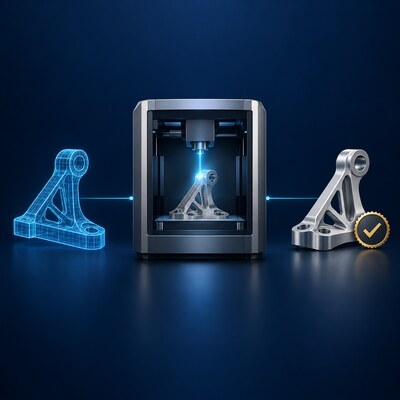
3D프린팅의 다음 시장은 책상 위 모형이 아니라 하늘을 나는 부품이다. 단종된 항공기 부품과 긴급한 군수품을 필요한 곳에서 생산하려면 프린터보다 까다로운 인증체계가 먼저 움직여야 한다. 제조업의 경쟁은 완성품을 운반하는 공급망에서 검증된 도면과 공정을 전송하는 공급망으로 이동하고 있다.
[Key Message]
* 적층제조의 산업화는 프린터의 성능보다 반복 가능한 품질에서 결정된다. 같은 도면을 여러 장비와 장소에서 출력해도 같은 부품이 나온다는 증거가 인증의 출발점이다.
* 항공과 방산의 첫 시장은 대량생산보다 단종 부품과 긴급 정비에 가깝다. 금형을 다시 만들기 어려운 소량 부품일수록 디지털 재고와 주문형 생산의 경제성이 커진다.
* 분산 생산은 파일을 이메일로 보내 현장에서 출력하는 방식이 아니다. 승인된 설계와 소재, 장비 상태, 작업자 자격, 후처리와 검사 기록이 하나의 디지털 흐름으로 연결돼야 한다.
* 인증 비용은 개별 부품마다 처음부터 반복하면 사업성을 무너뜨린다. 공정과 장비, 소재군을 묶어 검증하고 유사 부품에 재사용할 수 있는 자격 체계가 확산의 핵심이다.
* 한국 기업의 기회는 프린터 판매에만 있지 않다. 소재 데이터와 공정 모니터링, 비파괴검사, 디지털 추적성까지 결합한 인증 생산 플랫폼이 더 큰 시장을 만든다.
***
시제품을 넘어 비행 허가를 받는 부품
항공기 한 대가 정비 격납고에 멈춰 있다. 고장은 크지 않지만 필요한 금속 브래킷 하나가 없다. 원래 공급업체는 이미 생산을 중단했고, 창고에도 재고가 없다. 전통적인 방식이라면 새 금형을 만들거나 최소 주문량을 맞춰 생산라인을 다시 열어야 한다. 부품 가격보다 생산 재개 비용이 더 크고, 몇 주 또는 몇 달의 대기시간 동안 항공기는 운항하지 못한다.
적층제조가 매력적으로 보이는 순간이다. 디지털 도면을 불러와 금속 분말을 얇게 깔고 레이저로 필요한 부분을 녹이는 과정을 수천 번 반복하면 복잡한 형상의 부품이 만들어진다. 절삭가공처럼 큰 소재 덩어리에서 대부분을 깎아낼 필요가 없고, 주조용 금형도 필요하지 않다. 한 개나 열 개처럼 수요가 적은 부품을 만들 때 생산 준비 비용을 크게 낮출 수 있다.
그러나 모양이 같다고 항공 부품이 되는 것은 아니다. 책상 위 시제품은 치수가 조금 달라도 다시 출력하면 그만이지만, 엔진과 날개, 착륙장치 주변에 들어가는 부품은 피로와 진동, 열, 부식에 오랫동안 견뎌야 한다. 눈에 보이지 않는 기공 하나나 층 사이의 불완전한 결합이 수천 번의 비행 뒤 균열로 이어질 수 있다. 항공산업이 묻는 질문은 “출력할 수 있는가”가 아니라 “매번 같은 성능으로 출력됐음을 증명할 수 있는가”다.
미국 연방항공청은 2023년 항공기 엔진 부품에 쓰이는 분말베드융합 적층제조 공정의 적합성 입증 지침을 발표했다. 유럽항공안전청도 금속과 비금속 적층제조를 항공기와 회전익기, 엔진, 보조동력장치 등 폭넓은 인증 대상에 적용하는 지침을 발전시키고 있다. 적층제조가 특별한 실험기술로 머무는 것이 아니라 기존 감항인증 체계 안에서 다뤄지는 제조공정으로 들어오고 있다는 신호다.
프린터보다 긴 제조 사슬
적층제조 부품의 품질은 출력 버튼을 누르는 순간보다 훨씬 앞에서 결정된다. 금속 분말의 입자 크기와 모양, 산소 함량, 재사용 횟수가 달라지면 녹는 방식이 바뀐다. 장비 내부의 가스 흐름과 레이저 출력, 스캔 속도, 제작판의 온도도 미세구조에 영향을 준다. 같은 장비라도 어느 위치에 부품을 놓았는지, 어떤 방향으로 세웠는지에 따라 잔류응력과 강도가 달라질 수 있다.
출력이 끝나도 제조는 절반쯤 남아 있다. 제작판에서 부품을 분리하고 지지대를 제거한 뒤 열처리와 표면가공을 거친다. 내부 결함을 확인하기 위한 컴퓨터단층촬영이나 초음파검사, 치수검사와 재료시험도 필요하다. 항공용 부품은 프린터가 만들어낸 물체가 아니라 분말 관리부터 후처리와 검사까지 이어진 전체 공정의 결과물이다.
이 때문에 인증기관은 완성된 부품 한 개만 보지 않는다. 설계 허용치, 소재 규격, 장비의 성능, 공정 변수, 작업자 자격, 검사법과 기록관리까지 함께 본다. 국제표준화기구와 ASTM이 공동으로 마련한 항공용 레이저 금속 분말베드융합 장비의 성능·신뢰성 검증 표준도 같은 방향을 가리킨다. 장비를 처음 설치했을 때만 확인하는 것이 아니라 이동·수리·주요 변경 뒤 재검증할 기준이 필요하다.
공장 간 생산 이전도 복사 버튼 하나로 끝나지 않는다. 같은 제조사의 동일 모델 프린터라도 설치 환경과 장비 이력, 레이저의 실제 출력, 분말 공급장치의 상태가 다를 수 있다. 한 공장에서 승인받은 조건을 다른 공장에 옮기려면 기준 시편을 제작해 밀도와 강도, 표면 상태를 비교하고 장비 간 차이를 허용범위 안에 묶어야 한다. 그래서 분산 생산의 단위는 프린터 한 대가 아니라 자격을 갖춘 장비·소재·작업자·검사체계의 조합이다. 이 조합이 유지되는 동안에만 도면의 이동이 곧 생산능력의 이동이 된다.
여기서 적층제조의 역설이 생긴다. 겉으로는 금형을 없애고 공정을 단순화하지만, 실제 산업화 단계에서는 데이터와 품질관리의 양이 늘어난다. 전통 제조는 수십 년 동안 축적된 소재 규격과 공정 경험을 바탕으로 움직인다. 적층제조는 부품이 만들어지는 동안 레이저와 용융풀, 온도, 산소 농도에 관한 새로운 데이터를 쏟아낸다. 이 데이터를 품질의 증거로 바꾸지 못하면 센서는 많아져도 인증은 빨라지지 않는다.
단종 부품이 여는 첫 시장
적층제조가 모든 부품을 기존 방식보다 싸게 만드는 것은 아니다. 동일한 형상의 부품을 수십만 개 생산한다면 주조나 단조, 절삭가공이 여전히 유리할 수 있다. 프린터는 제작속도가 제한되고 고가의 분말과 후처리, 검사비용을 부담해야 한다. 그래서 첫 시장은 대량생산품보다 수요가 적고 조달이 어려우며, 재고 부족의 비용이 큰 부품에서 열린다.
Airbus의 서비스 계열사 Satair가 A320ceo용 윙팁 펜스 부품을 적층제조로 전환한 사례가 이를 보여준다. 기존 공급업체에서 더는 구할 수 없던 주조 부품이었고, 소량 주문을 위해 금형을 다시 만드는 방안은 비용과 시간이 맞지 않았다. Satair는 부품을 티타늄 적층제조에 맞게 전환하고 새로운 인증 절차를 거쳐 EASA Form 1과 함께 공급했다. 재인증에는 약 5주가 걸렸고, 한 번의 제작 작업에서 네 개를 동시에 출력하는 데 26시간이 걸렸다. 회사는 기존 대안과 비교해 비반복 비용을 45퍼센트 줄였다고 밝혔다.
중요한 것은 프린터 속도가 아니라 재고의 정의가 바뀌었다는 점이다. 과거에는 수요를 예측해 부품을 창고에 쌓아두었다. 앞으로는 승인된 설계 파일과 공정 조건, 검사 계획을 디지털 재고로 보관하고 주문이 발생하면 인증된 시설에서 생산할 수 있다. 부품이 아니라 생산 권한과 증거를 저장하는 셈이다.
노후 항공기와 선박, 발전설비처럼 운용기간이 긴 자산에서 이 모델의 가치가 크다. 수십 년 동안 사용되는 장비는 원래 공급업체가 사라지거나 도면이 불완전하고 최소 주문량이 지나치게 커지는 문제를 겪는다. 3차원 스캔과 역설계로 형상을 복원할 수 있지만, 모양을 복사하는 것만으로 설계 의도와 재료 성능이 복구되지는 않는다. 어떤 하중을 견뎌야 하는지, 어떤 고장 형태를 막아야 하는지까지 확인해야 비로소 인증 부품이 된다.
경제성도 부품 단가만으로 계산해서는 안 된다. 전통 부품이 개당 더 싸더라도 금형 재제작과 최소 주문, 장기 보관, 폐기 재고, 운항 중단 비용을 합치면 적층제조가 유리할 수 있다. 반대로 자주 교체되고 수요가 안정적인 부품은 기존 생산라인이 더 효율적이다. 적층제조 후보를 고르는 핵심은 “출력 가능한가”가 아니라 조달 실패가 만드는 전체 비용을 얼마나 줄일 수 있는가에 있다.
전선과 정비창으로 이동하는 생산
방산 분야에서 조달 지연은 비용을 넘어 임무 수행 능력의 문제다. 먼 지역에 배치된 항공기나 함정이 작은 부품 하나 때문에 멈추면 중앙 창고에서 운송될 때까지 기다려야 한다. 적층제조는 필요한 곳 가까이에서 생산해 대기시간을 줄일 가능성을 보여준다. 하지만 군이 원하는 것은 아무 부품이나 빠르게 출력하는 자유가 아니라 승인된 부품을 안전하게 재현하는 능력이다.
미 해군의 Fleet Readiness Center East는 2026년 금속 적층제조로 만든 비행용 부품을 처음 일선에 납품했다고 발표했다. AH-1Z 바이퍼의 무장 파일런 피팅, V-22 오스프리의 주착륙장치 수리 피팅, C-130 허큘리스의 블랭킹 플레이트가 포함됐다. 정비창은 장비와 공정을 입증하는 능력 검증을 6개월 안에 마쳤고, 출력 부품이 전통 제조품과 같은 안전·품질 요구를 충족한다는 공식 검증을 받았다.
이 사례는 분산 생산의 현실적인 순서를 보여준다. 처음부터 엔진 회전체처럼 가장 중요한 부품을 전방에서 출력하는 것이 아니다. 비행에 사용할 수 있으면서도 상대적으로 위험을 관리하기 쉬운 부품과 공구에서 시작해 장비, 작업자, 검사체계의 신뢰를 쌓는다. 이후 소재와 부품의 중요도를 단계적으로 확대한다. 프린터를 배치하는 일보다 승인 범위를 넓히는 일이 더 오래 걸린다.
또한 분산 생산은 중앙 통제가 사라진다는 뜻이 아니다. 오히려 어느 시설이 어떤 장비와 소재로 어떤 부품을 생산할 자격이 있는지 실시간으로 관리해야 한다. 장비 보정 상태가 만료됐거나 분말의 이력이 불분명하면 출력 명령을 내려서는 안 된다. 전장과 항만, 정비창에 프린터가 늘어날수록 중앙의 디지털 승인과 현장의 물리적 품질보증이 더 촘촘하게 연결돼야 한다.
디지털 재고의 진짜 자산은 신뢰다
도면 파일은 복사하기 쉽다. 바로 그 점이 분산 생산의 장점이자 위험이다. 승인되지 않은 버전이 출력되거나 파일이 변조되고, 허가받지 않은 업체가 같은 모양의 부품을 생산할 수 있다. 설계 지식재산권과 수출통제 정보가 네트워크를 통해 이동한다는 점도 새로운 보안 문제를 만든다.
따라서 디지털 재고에는 형상 파일만 들어가서는 안 된다. 설계의 개정번호, 허용 소재, 제작 방향, 장비 설정 범위, 후처리 절차, 검사 기준, 사용 가능한 생산시설 목록이 함께 묶여야 한다. 누가 파일을 열었고 어떤 장비에서 언제 출력했는지, 사용한 분말의 배치와 검사 결과가 무엇인지도 추적돼야 한다. 하나의 부품에는 물리적 일련번호뿐 아니라 제조 이력을 연결한 디지털 신분증이 필요하다.
공정 중 모니터링은 이 신뢰를 높일 수 있다. 카메라와 센서가 분말층과 용융풀의 상태를 실시간으로 관찰하면 이상 징후를 조기에 찾을 수 있다. 다만 센서 데이터가 많다는 사실만으로 결함이 없다고 단정할 수는 없다. 어떤 신호가 실제 기공이나 균열과 연결되는지 검증해야 하고, 다른 장비와 장소에서도 같은 판단이 가능한지 확인해야 한다. 항공 당국이 피로·손상허용, 비파괴검사, 공정 중 모니터링을 계속 논의하는 이유다.
인공지능은 수많은 제작 데이터를 비교해 이상 패턴을 찾고 품질을 예측하는 데 도움을 줄 수 있다. 그러나 인증에서 중요한 것은 정확도뿐 아니라 설명 가능성과 변경관리다. 모델을 업데이트했을 때 기존 승인 범위가 유지되는지, 잘못된 합격 판정이 나왔을 때 누가 책임지는지 정해야 한다. 제조업의 디지털 전환은 종이 성적서를 없애는 작업이 아니라, 모든 판단의 근거를 더 오래 추적할 수 있게 만드는 작업에 가깝다.
프린터가 아니라 인증 생산망을 파는 경쟁
적층제조의 확산을 막는 가장 큰 병목은 장비 부족보다 자격 검증 비용이다. 부품마다 소재 시험과 피로시험, 공정 검증을 처음부터 반복하면 소량 생산의 장점이 사라진다. 산업계가 주목하는 해법은 공통 소재와 장비, 공정 범위를 먼저 검증하고 그 안에 들어오는 유사 부품군에 증거를 재사용하는 방식이다. 한 부품의 인증을 넘어 생산체계 자체의 신뢰를 자산으로 만드는 전략이다.
기업의 도입도 단계적으로 진행할 필요가 있다. 첫째, 조달기간이 길고 단종 위험이 크며 고장 비용이 높은 부품 목록을 만든다. 둘째, 안전 중요도와 형상 복잡도, 예상 수요, 기존 금형 비용을 함께 평가해 후보를 고른다. 셋째, 승인된 서비스 업체에서 생산하며 소재와 검사 데이터를 축적한다. 넷째, 충분한 부품군과 반복 수요가 확인된 뒤 내부 또는 지역 거점에 인증 생산능력을 구축한다. 프린터부터 구매하고 출력할 부품을 찾는 순서는 실패 가능성이 높다.
한국은 항공과 방산, 조선, 원전, 자동차, 금속분말과 정밀가공 역량을 함께 갖고 있다. 그러나 장비 국산화만으로는 세계 시장의 높은 벽을 넘기 어렵다. 고객이 구매하는 것은 레이저 출력이 아니라 승인된 부품과 짧아진 정비시간이다. 소재 데이터베이스, 공정 센서, 비파괴검사, 보안이 적용된 설계 저장소, 인증 문서 자동화까지 하나의 서비스로 묶어야 한다.
3D프린팅이 공급망을 없애지는 않는다. 원료 분말과 열처리, 검사장비, 인증인력이라는 새로운 공급망을 만든다. 달라지는 것은 운송되는 대상이다. 모든 부품을 먼 창고에서 보내는 대신 검증된 설계와 제조 조건을 전송하고, 필요한 곳에서 물리적 부품으로 바꾼다. 미래의 강한 공급망은 프린터가 가장 많은 네트워크가 아니다. 어느 장소에서 만들어도 같은 품질이 나오며, 그 사실을 신속하게 증명할 수 있는 네트워크다.
Reference
Federal Aviation Administration, June 2023, AC 33.15-3: Powder Bed Fusion Additive Manufacturing Process for Aircraft Engine Parts
European Union Aviation Safety Agency, September 2025, CM-S-008 Issue 3: Additive Manufacturing
ASTM International, November 2020, ISO/ASTM 52941: Acceptance Tests for Laser Metal Powder-Bed Fusion Machines for Metallic Materials for Aerospace Application
Airbus Satair, October 2020, Satair Provided Metal Printed Flying Spare Part
United States Navy, April 2026, FRCE Delivers First Metal 3D Printed Parts to Fleet
When Drawings Fly and Parts Are Born On-Site
- Certified Additive Manufacturing Moves Beyond Prototypes into Aerospace, Defense, and Supply Chains
The next market for 3D printing is not a model sitting on a desk but a part flying in the sky. Producing discontinued aircraft components and urgent defense spares where they are needed requires a demanding certification system to move before the printer does. Manufacturing competition is shifting from supply chains that transport finished goods to supply chains that transmit verified designs and processes.
[Key Message]
* The industrialization of additive manufacturing depends more on repeatable quality than on printer performance. Certification begins with evidence that the same design produces the same component across different machines and locations.
* The first aerospace and defense market is closer to discontinued parts and urgent maintenance than to mass production. The economics of digital inventory and on-demand production become more compelling when low-volume parts are difficult to reproduce with new tooling.
* Distributed production is not a matter of emailing a file and printing it locally. Approved designs, materials, machine condition, operator qualifications, post-processing, and inspection records must form one continuous digital flow.
* Certification costs can destroy the business case if every component starts from zero. The key to expansion is a qualification framework that validates processes, machines, and material families and reuses the evidence for similar parts.
* The opportunity for Korean companies extends beyond printer sales. A certified production platform combining material data, process monitoring, nondestructive inspection, and digital traceability can create a much larger market.
***
From Prototype to Flight-Approved Part
An aircraft sits idle in a maintenance hangar. The failure is minor, but one metal bracket is missing. The original supplier has stopped making it, and no inventory remains. Under the traditional approach, a new mold must be created or a production line reopened to satisfy a minimum order. Restarting production costs more than the part itself, while the aircraft remains grounded for weeks or months.
This is the moment when additive manufacturing looks attractive. A digital design is loaded, a thin layer of metal powder is spread, and a laser melts only the required area. Repeating that process thousands of times creates a complex component. Unlike machining, there is no need to cut most of the material away from a large block, and no casting mold is required. Setup costs can fall sharply when demand is measured in ones or tens.
Yet matching the shape does not make an airworthy part. A desktop prototype can simply be printed again if its dimensions are slightly wrong, but a component near an engine, wing, or landing gear must endure fatigue, vibration, heat, and corrosion for years. A microscopic pore or incomplete bond between layers can become a crack after thousands of flights. The aerospace question is not “Can it be printed?” but “Can we prove that it was printed with the same performance every time?”
In 2023, the U.S. Federal Aviation Administration issued guidance for demonstrating compliance of powder-bed-fusion additive manufacturing processes used for aircraft engine parts. The European Union Aviation Safety Agency has also continued developing guidance for applying metallic and nonmetallic additive manufacturing across aircraft, rotorcraft, engines, and auxiliary power units. These developments signal that additive manufacturing is moving from an exceptional experiment into a manufacturing process governed within established airworthiness systems.
A Manufacturing Chain Longer Than the Printer
The quality of an additively manufactured part is determined long before the print button is pressed. Changes in particle size, shape, oxygen content, and the reuse history of metal powder alter how it melts. Gas flow inside the machine, laser power, scan speed, and build-plate temperature also affect the microstructure. Even on the same machine, residual stress and strength can vary according to the position and orientation of the part.
When printing ends, roughly half of the manufacturing work may remain. The component must be separated from the build plate, supports removed, and heat treatment and surface finishing completed. Computed tomography, ultrasonic inspection, dimensional checks, and material tests may be required to find internal defects. An aerospace component is not merely an object made by a printer. It is the outcome of a complete process extending from powder control to post-processing and inspection.
Certification authorities therefore examine more than one finished item. They assess design allowances, material specifications, machine performance, process variables, operator qualifications, inspection methods, and recordkeeping. The joint ISO and ASTM standard for performance and reliability testing of laser metal powder-bed-fusion machines for aerospace applications points in the same direction. Criteria are needed not only at initial installation but also after relocation, repair, or major changes.
Transferring production between factories is not completed with a copy command. Even identical printer models from the same manufacturer can differ because of installation conditions, machine history, actual laser output, and the condition of the powder-delivery system. Moving an approved process from one site to another requires reference specimens, comparisons of density, strength, and surface condition, and evidence that machine-to-machine variation remains within an accepted range. The real unit of distributed production is therefore not a printer but a qualified combination of machine, material, operator, and inspection system. Only while that combination remains controlled does moving a design file also move manufacturing capability.
This creates the paradox of additive manufacturing. It appears to remove tooling and simplify production, yet industrialization increases the volume of data and quality control. Traditional manufacturing relies on material specifications and process experience accumulated over decades. Additive manufacturing generates new data about lasers, melt pools, temperature, and oxygen concentration while a component is being built. More sensors will not accelerate certification unless those data can be converted into evidence of quality.
Discontinued Parts Open the First Market
Additive manufacturing does not make every component cheaper than established methods. Casting, forging, or machining may still be superior when hundreds of thousands of identical parts are required. Printers have limited build rates and must carry the cost of expensive powder, post-processing, and inspection. The first market therefore appears where demand is low, procurement is difficult, and the cost of a stockout is high.
Satair, an Airbus services company, demonstrated this logic when it converted an A320ceo wingtip-fence component to additive manufacturing. The cast part was no longer available from the original supplier, and recreating tooling for a small order did not make economic sense. Satair converted the component to titanium additive manufacturing, completed a new certification process, and supplied it with an EASA Form 1. Recertification took about five weeks, while four components could be printed together in a 26-hour build. The company reported a 45 percent reduction in nonrecurring costs compared with conventional alternatives.
The important change is not printing speed but the definition of inventory. In the past, companies forecast demand and stacked physical parts in warehouses. In the emerging model, approved design files, process conditions, and inspection plans are stored as digital inventory, and production begins at a qualified facility when an order arrives. What is stored is not simply a part but the authority and evidence required to manufacture it.
This model is particularly valuable for long-lived assets such as aging aircraft, ships, and power equipment. Equipment operated for decades often outlives its original supplier, loses complete drawings, or faces excessive minimum order quantities. Three-dimensional scanning and reverse engineering can restore geometry, but copying shape alone does not recover design intent or material performance. The required loads and failure modes must also be understood before the result becomes a certified component.
Economics should not be calculated from unit price alone. A conventionally manufactured item may cost less per piece, yet additive manufacturing can become preferable after the cost of recreating tooling, minimum orders, long-term storage, obsolete inventory, and operational downtime is included. Conversely, an item replaced frequently with stable demand may remain better suited to an established production line. The key question in selecting additive-manufacturing candidates is not whether a part can be printed, but how much total cost created by procurement failure can be removed.
Production Moves to the Front Line and Maintenance Depot
In defense, a delayed part is not merely a cost problem; it can limit mission capability. When an aircraft or ship deployed far from home stops because of one small component, crews may wait for delivery from a central warehouse. Additive manufacturing offers the possibility of producing closer to the point of need. Yet the military does not seek freedom to print anything quickly. It needs the ability to reproduce approved parts safely.
In 2026, the U.S. Navy's Fleet Readiness Center East announced its first delivery of flight-worthy metal additively manufactured parts to the fleet. They included a weapons-pylon fitting for the AH-1Z Viper, a main-landing-gear repair fitting for the V-22 Osprey, and a blanking plate for the C-130 Hercules. The depot completed a capability demonstration for its equipment and processes in less than six months and received formal validation that its printed components met the same safety and quality requirements as conventionally manufactured parts.
The case shows a realistic sequence for distributed production. Organizations do not begin by printing the most critical rotating engine component at a forward location. They start with tools and flight-worthy parts whose risks are comparatively manageable, building trust in machines, operators, and inspection systems. Materials and component criticality then expand step by step. Deploying printers takes less time than expanding the approved production envelope.
Distributed production also does not eliminate central control. Instead, the network must manage which facility is qualified to produce which component using which machine and material. A print order should not be released if machine calibration has expired or the powder history is unclear. As printers spread across battlefields, ports, and maintenance depots, central digital authorization and local physical quality assurance must become more tightly connected.
Trust Is the Real Asset in Digital Inventory
Design files are easy to copy. That is both the advantage and the risk of distributed manufacturing. An unapproved version may be printed, a file may be altered, or an unauthorized supplier may produce a component with the same appearance. Moving design intellectual property and export-controlled information across networks also creates new cybersecurity concerns.
Digital inventory therefore must contain more than geometry. The design revision, permitted material, build orientation, machine-setting ranges, post-processing procedures, inspection criteria, and approved production sites must travel together. The system must track who accessed the file, when and where it was printed, which powder batch was used, and what the inspection results showed. Each component needs a digital identity connecting its manufacturing history to its physical serial number.
In-process monitoring can strengthen that trust. Cameras and sensors can observe powder layers and melt-pool conditions in real time, identifying warning signs earlier. But the existence of abundant sensor data does not prove the absence of defects. The relationship between a signal and an actual pore or crack must be validated, and the same judgment must work across machines and sites. This is why aviation authorities continue to examine fatigue, damage tolerance, nondestructive inspection, and in-situ process monitoring.
Artificial intelligence can compare large volumes of build data, find unusual patterns, and predict quality. In certification, however, explainability and change control matter alongside accuracy. Organizations must determine whether an approved envelope remains valid when a model is updated and who is responsible for a false acceptance. Digital transformation in manufacturing is less about eliminating paper certificates than about preserving the evidence behind every decision for longer.
The Competition Is to Sell Certified Production Networks
The largest bottleneck to additive-manufacturing expansion is not a shortage of machines but the cost of qualification. If material testing, fatigue testing, and process validation begin from zero for every component, the advantage of low-volume production disappears. One emerging solution is to validate a common range of materials, machines, and processes first, then reuse that evidence for families of similar parts. The goal is to turn trust in the production system itself into an asset that extends beyond a single approval.
Corporate adoption should also proceed in stages. First, identify parts with long lead times, high obsolescence risk, and costly failures. Second, rank candidates by safety criticality, geometric complexity, expected demand, and existing tooling costs. Third, produce through qualified service providers while accumulating material and inspection data. Fourth, establish certified production capability internally or at regional hubs only after sufficient part families and repeat demand are confirmed. Buying a printer first and then looking for something to print is the sequence most likely to fail.
Korea combines capabilities in aerospace, defense, shipbuilding, nuclear power, automobiles, metal powders, and precision machining. Equipment localization alone, however, will not overcome the high barriers of global markets. Customers do not buy laser output; they buy an approved part and shorter maintenance downtime. Material databases, process sensors, nondestructive inspection, secure design repositories, and automated certification documentation must be bundled into one service.
3D printing will not eliminate supply chains. It creates a new supply chain of feedstock powder, heat treatment, inspection equipment, and certification expertise. What changes is the object being transported. Instead of shipping every component from a distant warehouse, companies transmit verified designs and manufacturing conditions and convert them into physical parts where they are needed. The strongest future supply chain will not be the network with the most printers. It will be the network that produces the same quality at every location and proves that fact quickly.
Reference
Federal Aviation Administration, June 2023, AC 33.15-3: Powder Bed Fusion Additive Manufacturing Process for Aircraft Engine Parts
European Union Aviation Safety Agency, September 2025, CM-S-008 Issue 3: Additive Manufacturing
ASTM International, November 2020, ISO/ASTM 52941: Acceptance Tests for Laser Metal Powder-Bed Fusion Machines for Metallic Materials for Aerospace Application
Airbus Satair, October 2020, Satair Provided Metal Printed Flying Spare Part
United States Navy, April 2026, FRCE Delivers First Metal 3D Printed Parts to Fleet