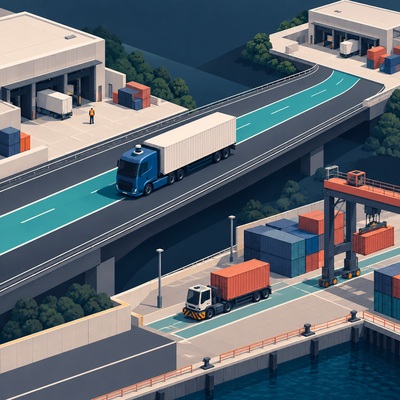
운전석이 빈 트럭을 보면 누구나 묻는다, 이제 운전자가 사라지는 것이냐고. 그러나 운송회사가 먼저 확인해야 할 것은 빈 운전석보다 그 트럭이 출발하고 도착하는 두 지점이다. 자율주행 화물운송의 사업성은 모든 도로를 달리는 능력보다, 정해진 구간에서 화물을 안전하게 옮기고 다음 작업자에게 정확히 넘기는 능력에서 먼저 드러난다.
[Key Message]
* 자율주행 화물운송은 고속도로의 거점 간 이동과 항만 내부의 반복 운송처럼 운행 조건을 정하기 쉬운 구간에서 먼저 사업이 된다. 제한된 구간을 선택하는 일은 안전 검증과 운영비 계산의 출발점이다.
* 자율주행 운송을 시작했다는 발표와 차 안에 사람이 없는 운행은 구분해야 한다. 안전운전자 동승, 운전에 개입하지 않는 관찰자 탑승, 무인 운행, 차량 인도와 현장 검증은 서로 다른 단계다.
* 운전자 비용이 줄어도 거점 운영, 원격 지원, 센서 관리, 정비와 비상 출동 비용이 새로 붙는다. 차량 한 대의 가격보다 화물을 실은 전체 여정의 비용과 정시 도착 성과를 비교해야 한다.
* 운전자가 하던 일에는 운전 외에도 적재 확인, 차량 점검, 서류 처리와 고객 응대가 포함된다. 주행을 자동화하려면 이 업무를 누구에게 넘길지 먼저 정해야 하며, 그 과정에서 현장 노동의 내용과 보상도 달라진다.
* 한국에서 먼저 필요한 것은 전국을 달리는 무인 트럭의 청사진보다 검증할 구간과 업무를 고르는 일이다. 실제 운송 수요, 허용 운행 조건, 작업 인계와 비상 대응을 함께 설계할 때 실증이 반복 가능한 서비스로 이어진다.
***
자율주행 트럭의 첫 번째 고객은 ‘정해진 길’이다
트럭 한 대가 물류센터를 나와 고속도로를 달리고, 도심 골목을 지나 거래처 창고에 들어간다고 생각해보자. 사람에게는 하나의 운송 업무지만 자동화 관점에서는 성격이 전혀 다른 문제들의 묶음이다. 고속도로 합류, 공사 구간 통과, 좁은 출입문 진입, 후진 주차와 하역장 직원의 손짓 이해까지 모두 풀어야 한 번의 배송이 끝난다.
이 문제를 한꺼번에 해결하려 하면 개발과 검증의 범위가 커진다. 반대로 여정을 나누면 선택지가 생긴다. 지역 운전자가 화물을 고속도로 인근 거점까지 옮기고, 자율주행 트럭이 거점 사이를 운송한 뒤, 도착지의 운전자가 마지막 구간을 맡는 방식이다. 출발지에서 목적지까지의 운송 서비스 안에 서로 다른 주행 방식을 연결하는 구조다.
볼보 자율주행 솔루션이 제시한 거점 간 운송 모델도 이 방향에 가깝다. 고속도로 구간은 자율주행 트럭이 맡고 지역 운송은 사람이 담당하도록 구상한다. 차량만 공급하는 방식에서 나아가 하드웨어, 소프트웨어와 운영 서비스를 함께 설계한다는 점이 핵심이다. 운송회사가 구매하려는 것은 특별한 트럭 한 대보다 약속한 시간에 도착하는 운송 능력이기 때문이다.
여기서 중요한 개념이 운행설계영역(ODD)이다. 어느 도로에서, 어떤 속도와 날씨 조건으로, 어느 시간대에 시스템이 작동하도록 설계됐는지를 정한 범위다. 미국 도로교통안전국의 자율주행 안전 지침도 이 범위의 정의와 함께 시스템이 이를 벗어났을 때 위험을 줄이는 대응을 주요 검토 요소로 다룬다. 지도에 노선을 긋는 것만으로 운행 조건이 완성되지는 않는다.
같은 도로도 맑은 낮과 폭우가 내리는 밤에는 다른 시험지가 된다. 지워진 차선, 임시 통제, 갓길의 고장 차량은 주행 판단을 바꾼다. 따라서 “이 고속도로를 달릴 수 있다”는 설명에는 어떤 조건에서 가능하고 언제 출발을 보류하는지가 따라붙어야 한다. 운행을 멈추는 기준까지 있어야 실제 배차표에 올릴 수 있다.
고속도로를 먼저 고른다고 쉬운 문제가 되는 것도 아니다. 속도가 높고 차가 무거우면 작은 판단 오류의 결과도 커질 수 있다. 반복되는 경로가 검증을 돕는다는 것과 그 경로가 안전하다는 것은 별개의 주장이다. 제한 구간 상용화의 의미는 위험이 사라진다는 데 있지 않고, 검증해야 할 조건과 운영 책임을 구체적으로 정할 수 있다는 데 있다.
이렇게 보면 자율주행의 초기 상품은 ‘어디든 가는 운전 능력’보다 ‘이 조건에서 이 두 거점을 연결하는 서비스’에 가깝다. 항공사가 모든 공항과 모든 기상 조건을 한꺼번에 상대하지 않고 노선과 운항 기준을 정하듯, 운송기업도 노선 단위의 운영 능력을 쌓는다. 기술의 적용 범위를 좁히는 선택이 오히려 서비스의 설명을 명확하게 만든다.
텍사스의 빈 운전석, 발표문을 끝까지 읽어야 하는 이유
2025년 5월, 오로라는 미국 텍사스의 댈러스와 휴스턴을 잇는 상업용 무인 화물운송 개시를 발표했다. 고객 화물을 정기적으로 운송하기 시작했고, 발표 당시 운전자 없이 달린 거리가 1,200마일을 넘었다고 밝혔다. 자율주행 트럭이 기술 시연에서 실제 고객 운송으로 이동했다는 점에서 의미가 큰 장면이다.
하지만 이 장면을 “미국 트럭은 이제 사람 없이 달린다”로 확대하면 사실과 멀어진다. 한 기업이 특정 노선에서 서비스를 시작했다는 사실은 전국의 노선과 모든 기상 조건이 검증됐다는 뜻이 아니다. 고객 운송 개시 자체도 해당 운송의 원가 경쟁력과 수익성을 증명하지 않는다. 상용화는 출발선이 될 수 있지만, 그것만으로 사업 모델의 성적표가 완성되지는 않는다.
같은 해 5월 중순에는 운전석에 다시 사람이 앉는다는 오로라의 설명이 나왔다. 차량 플랫폼의 일부 시제품 부품과 관련해 협력사 파카가 요청했고, 회사는 일부 운행의 뒷좌석에 타던 관찰자를 앞좌석으로 이동시키기로 했다. 오로라는 관찰자가 운전하지 않으며 주행과 필요한 안전 정차는 시스템이 책임진다고 설명했다. 운전석에 사람이 있다는 사실만으로 사람이 운전한다고 단정할 수도 없는 사례다.
이후 2026년 7월에는 2세대 무인 트럭 출시가 발표됐다. 회사는 당시 미국 선벨트 지역에 무인 운행 노선 10개를 확보했다고 밝혔고, 새 차량은 운전석에 사람을 두지 않는 형태로 소개했다. 이는 기업이 공개한 운영 현황이며, 전체 시장의 보급률이나 독립적인 안전성 평가를 뜻하지는 않는다. 초기 출시와 후속 차량의 운영 조건이 달라질 수 있다는 점도 함께 읽어야 한다.
앞선 사례와 비교하면 제목이 비슷한 다른 발표도 더 정확히 보인다. 디에이치엘과 볼보가 2024년 12월 발표한 텍사스 자율주행 운송은 초기 단계에서 안전운전자가 동승하는 방식이었다. 실제 화물을 운송한다는 점에서는 사업 현장에 들어왔지만, 차 안의 사람이 없는 운송과는 운영 조건이 달랐다. 자율주행 기술을 쓴다는 말과 운전자를 제거했다는 말 사이에는 중요한 간격이 있다.
투자 검토나 구매 회의에서는 이 간격을 질문으로 바꾸는 편이 좋다. 차량 안에 사람이 있는가. 있다면 운전에 개입하는가. 고객이 비용을 지불하는 정기 운행인가, 시험 운행인가. 발표한 대수는 인도한 차량인가, 검증을 마친 차량인가, 실제 배차에 들어간 차량인가. 짧은 질문 몇 개가 화려한 홍보 문장보다 운영 수준을 잘 보여준다.
사진 한 장으로는 이 답을 알기 어렵다. 빈 운전석은 시선을 붙잡지만 운송기업의 계약 담당자에게 필요한 것은 운행 시간대, 서비스 제외 조건, 사고 처리 절차와 대체 운송 약속이다. 자율주행의 발전을 제대로 평가하려면 기술의 이름보다 서비스가 책임지는 범위를 읽어야 한다. 이 기준은 긍정적인 성과를 인정하면서도 아직 검증되지 않은 기대를 구별하게 해준다.
항만은 작은 세상이지만, 단순한 세상은 아니다
고속도로가 거점 사이의 긴 이동을 겨냥한다면 항만은 정해진 공간 안의 반복 이동을 겨냥한다. 컨테이너를 장비 사이에서 옮기고 지정 위치에 내려놓는 업무는 출발점과 도착점, 이동 명령을 비교적 명확히 정의할 수 있다. 외부 차량의 출입과 작업자의 동선도 운영자가 일정 부분 관리할 수 있어 자동화 범위를 설계하기에 유리하다.
그렇다고 울타리 안이라는 이유로 장애물이 사라지지는 않는다. 큰 장비들이 움직이고, 컨테이너가 시야를 가리며, 사람이 운전하는 차량과 자동화 장비가 같은 공간을 쓸 수 있다. 정밀한 후진과 위치 맞추기도 필요하다. 항만의 장점은 모든 상황이 쉽다는 데 있지 않고, 현장 규칙과 통행 순서를 조정할 주체가 비교적 분명하다는 데 있다.
로테르담항의 에이피엠 터미널 마스블락테 2는 이 차이를 보여준다. 2026년 4월 발표에서 터미널과 협력사들은 전기 자동화 터미널 트랙터 5대를 추가 반입해 현장 차량이 10대가 됐다고 밝혔다. 계획 규모는 30대지만, 추가 차량은 공장 검사를 마친 뒤 현장 인수 검사를 앞둔 단계였다. 현장에 도착한 차량 수를 곧바로 완전 가동 차량 수로 읽으면 안 되는 이유다.
같은 발표에는 앞서 도입한 첫 5대가 2025년 11월 통제된 운영 조건에서 현장 인수 검사를 완료했다는 설명도 담겼다. 검증 항목에는 혼재 교통, 좁은 통로 주행, 차선 변경과 인계 지점 후진 주차 등이 포함됐다. 항만 자동화의 진척은 차량 수뿐 아니라 어떤 동작을 어떤 환경에서 검증했는지로 드러난다.
항만의 생산성을 좌우하는 것은 트럭의 주행 시간만이 아니다. 크레인이 준비되지 않았거나 다음 작업 지시가 늦으면 차량은 도착해도 기다린다. 자동화 트랙터가 1분 빨리 도착해도 컨테이너를 받을 장비가 10분 뒤에 움직인다면 전체 작업은 그만큼 빨라지지 않는다. 차량의 성능을 평가하는 화면과 터미널의 처리량을 평가하는 화면을 함께 봐야 한다.
이를 위해 작업 명령의 형식부터 맞춰야 한다. 어느 컨테이너를 어느 위치로 옮기는지, 목적지가 비어 있는지, 작업을 완료했다는 신호를 누가 보내는지가 연결돼야 한다. 사람이 무전기로 해결하던 작은 확인이 자동화 환경에서는 데이터와 승인 절차가 된다. 주행 시스템을 들이기 전에 작업 지시와 인수인계의 빈틈이 먼저 드러날 수 있다.
네덜란드 응용과학연구기구(TNO)도 2025년 자율주행 화물운송을 설명하면서 통제 가능한 환경에서 출발하는 접근을 강조했다. 아울러 트레일러 연결, 운송 서류, 적재 확인처럼 운전자가 맡는 다른 업무의 표준화와 디지털화가 필요하다고 짚었다. 이 관점에서 항만은 자율주행 트럭의 주행 능력과 함께, 주변 업무를 얼마나 명확하게 설계했는지 시험하는 현장이다.
인건비를 지웠더니, 다른 비용이 보이기 시작한다
자율주행 트럭의 경제성을 설명하는 가장 빠른 방법은 운전자 비용을 빼는 것이다. 하지만 계산이 빠르다고 정확한 것은 아니다. 사람이 하던 업무가 사라지는지, 다른 사람에게 넘어가는지, 장비와 서비스 비용으로 바뀌는지 구분해야 한다. 특히 도입 초기에는 차량과 운영 체계의 고정비를 적은 운행 횟수가 나눠 부담하게 된다.
고속도로 거점 간 모델에는 출발·도착 거점의 운영비가 붙는다. 화물이나 트레일러를 넘기는 작업, 차량 확인, 주차 공간과 대기 관리가 필요하다. 기존 사람이 운전하는 차량은 곧바로 목적지로 갈 수 있는데, 자동화 모델은 거점을 한 번 더 거칠 수도 있다. 긴 간선 구간에서 얻는 이익이 추가 인계 비용과 시간을 상쇄해야 전체 여정에 경제성이 생긴다.
차량 밖의 지원도 비용에 들어간다. 센서를 청소하고 점검하는 사람, 고장 차량을 회수할 정비망, 비상 상황에 출동할 인력과 운영을 지원하는 관제 조직이 필요할 수 있다. 통신과 소프트웨어, 보험과 서비스 계약도 검토 대상이다. 운전자 급여 한 줄을 지우는 대신 여러 비용 항목이 새로 생기므로, 총액이 어떻게 바뀌는지 봐야 한다.
숫자를 넣으면 쟁점이 선명해진다. 다음은 실제 기업의 실적이 아닌 단순한 가상 계산이다. 기존 운송의 하루 비교 대상 비용을 100이라고 하고, 자동화로 그중 30을 줄인다고 가정하자. 새 차량·소프트웨어·지원 운영에 18, 거점 인계와 추가 대기에 8이 붙으면 순절감은 4에 그친다. 새로 붙는 비용이 35라면 같은 조건에서 총비용은 오히려 5 늘어난다.
이 계산은 30이라는 절감 폭보다 무엇을 비용에 포함하느냐가 중요하다는 점을 보여준다. 실제 비교에서는 차량의 감가상각, 연료나 전력, 공차 이동, 취소 운행과 사고 대응까지 범위를 맞춰야 한다. 기존 모델에서는 포함했던 항목을 새 모델에서 제외하면 비교가 유리하게 보일 수 있다. 계약서 밖에 남은 비용도 운송 업무 전체에서는 누군가 부담한다.
가동률 역시 중요하다. 같은 거점을 하루 두 번 이용할 때와 스무 번 이용할 때 건당 고정비는 달라진다. 그러나 차량이 오래 달릴 수 있다는 이유만으로 매출이 늘지는 않는다. 돌아오는 편에 실을 화물이 없거나 고객의 하역장이 문을 닫으면 빈 이동이나 대기가 생긴다. 기계가 잠들지 않는 것과 고객이 밤새 화물을 받는 것은 다른 문제다.
그래서 첫 도입 노선은 거리만 보고 고르면 안 된다. 양방향 물량, 출발 시간의 반복성, 거점 접근성, 인계에 걸리는 시간과 운행 조건을 벗어날 가능성을 함께 봐야 한다. 실제 화물을 싣고 완료한 운송 건당 비용, 약속 시간 안에 끝낸 비율과 추가 지원 횟수를 나란히 놓으면 판단이 구체화된다. 길이가 비슷한 두 노선도 운영 조건에 따라 성적이 크게 달라질 수 있다.
운송기업이 고객에게 무엇을 판매할지도 여기서 갈린다. 차량 사용 시간을 팔 수도 있고, 거점 사이의 운송 건수를 팔 수도 있으며, 일정 물량의 운송 능력을 계약할 수도 있다. 각 방식은 대기와 취소, 수요 부족의 위험을 서로 다르게 나눈다. 기술의 성능만큼 계약의 비용 배분이 도입 속도를 좌우하는 이유다.
관제실의 사람이 도로 위 트럭을 대신 운전하는가
자율주행 트럭 이야기에 관제센터가 등장하면 사람들은 대형 게임장을 떠올리기 쉽다. 여러 화면 앞에 앉은 직원들이 멀리 있는 트럭의 운전대를 하나씩 잡는 모습이다. 그러나 원격 지원과 원격 운전은 구분해야 한다. 차량에 상황 정보를 제공하거나 경로 선택을 돕는 것과, 원격에서 조향과 제동을 직접 수행하는 것은 역할과 필요한 조건이 다르다.
가령 공사로 기존 진입로가 막혔다고 하자. 지원 인력이 대체 진입 위치를 확인해 전달하고 차량이 자체 시스템으로 주행하는 방식이 있을 수 있다. 다른 설계에서는 사람이 특정 구간을 원격으로 직접 운전할 수도 있다. 어느 쪽이 가능한지는 해당 차량과 서비스의 설계, 허용 조건에 달려 있다. ‘관제가 있다’는 설명만으로 시스템의 한계나 사람의 개입 방식을 알 수 없다.
운전자 없는 운행에서는 통신이 끊겼을 때 차량이 어떻게 대응하는지도 중요하다. 원격 지원이 있다고 해서 모든 순간의 안전 판단을 통신 연결에 맡겨도 된다는 뜻은 아니다. 미국 도로교통안전국의 지침은 운전자가 개입할 수 없는 높은 자동화 수준에서 시스템 자체가 위험을 줄이는 상태로 이행할 수 있어야 한다는 방향을 제시한다. 이는 자발적 안전 지침이며, 그 자체가 개별 차량의 안전 인증은 아니다.
정차할 수 있다는 설명도 구체적으로 봐야 한다. 어느 위치에서 멈추는지, 뒤따르는 차량에 어떤 영향을 주는지, 도로 관리 주체와 출동팀에 어떤 정보가 전달되는지가 중요하다. 터널 안과 넓은 거점 주차장은 같은 정차 상황이 아니다. 비상 대응은 주행 알고리즘의 마지막 문장이 아니라 도로와 운영 조직을 연결하는 절차여야 한다.
관제 인력의 생산성은 평상시 화면에 보이는 차량 수만으로 판단하기 어렵다. 한 지역의 갑작스러운 폭우나 주요 도로 통제로 여러 차량이 동시에 지원을 요청할 수 있다. 평균적으로 한 사람이 많은 차량을 담당하더라도 요청이 몰리는 시간에는 응답이 늦어질 수 있다. 지원 조직의 규모와 배차 제한을 함께 설계해야 하는 이유다.
현장에서는 누가 출발을 보류할 수 있는지도 중요해진다. 관제 직원이 위험을 감지해 운행을 멈췄는데 성과 평가에서 지연 책임을 떠안는다면 판단이 왜곡될 수 있다. 배송 속도를 높이는 목표와 안전한 운행 범위를 지키는 권한이 충돌하지 않도록 운영 규칙을 만들어야 한다. 이는 특정 기업에서 확인된 문제라는 뜻이 아니라 도입 단계에서 검토할 조직 설계의 과제다.
고객과 맺는 계약에도 같은 원칙이 필요하다. 운행 조건을 벗어나 출발하지 못할 때 누가 대체 차량을 마련하고 추가 비용을 부담하는지 정해야 한다. 적시에 운행을 중단하는 기능은 안전에 필요하지만 고객은 화물을 받아야 한다. 안전 판단과 서비스 책임을 함께 설명할 수 있어야 자율주행이 일상적인 운송 상품이 된다.
운전대가 사라져도, 운전자가 하던 일은 남는다
화물차 운전자의 하루를 운전 시간만으로 설명하면 현장을 놓친다. 차량 상태를 살피고 적재와 고정을 확인하며, 하역 장소를 찾아 담당자와 연락한다. 서류를 전달하고 대기 순서를 조정하는 일도 있다. 이 업무는 기업과 운송 형태마다 다르지만, 운전석이 비었다고 저절로 완료되지는 않는다. TNO가 운전 외 업무의 표준화를 강조하는 이유도 여기에 있다.
거점 간 자동화는 업무를 나눌 기회를 준다. 간선 주행과 지역 운송, 차량 점검과 인계 작업을 서로 다른 담당자가 맡을 수 있다. 다만 새로운 분업이 모든 노동자에게 같은 이익을 주지는 않는다. 장거리 운전 비중이 줄어 귀가 시간이 예측 가능해지는 사람도 있겠지만, 기존 수입 구조가 바뀌거나 대기와 단거리 업무가 늘어나는 사람도 생길 수 있다.
따라서 “사람은 더 가치 있는 일을 한다”는 말로 설명을 마쳐서는 부족하다. 어떤 업무가 늘고 줄며, 필요한 자격과 교육은 무엇이고, 임금과 근무시간이 어떻게 바뀌는지를 제시해야 한다. 새 일자리가 만들어지더라도 기존 종사자가 그 일을 맡을 수 있는지는 별도의 문제다. 전환 교육의 비용과 시간까지 정해야 이동 가능한 경로가 생긴다.
현장 숙련은 설계 단계에서도 쓸모가 있다. 어느 출입구에서 차량이 막히는지, 어느 시간에 하역 대기가 길어지는지, 비가 오면 어디에 물이 고이는지 아는 사람은 노선을 오래 다닌 기사와 현장 직원이다. 지도 데이터만으로는 잡기 어려운 운영 지식이다. 이 지식을 인계 지점 설계와 예외 상황 목록에 반영하면 문제를 더 구체적으로 정의할 수 있다.
화주도 일하는 방식을 바꿔야 한다. 자동화 차량이 도착했는데 야간에 인수할 담당자가 없거나 작업 지시가 구두로만 전달되면 운송이 끝나지 않는다. 도착 알림, 출입 승인, 화물 인수와 오류 신고의 절차를 정해야 한다. 운송기업의 기술 도입이 거래처의 현장 업무와 맞닿는 순간이다.
관리자의 업무도 달라진다. 예전에는 기사에게 전화해 해결하던 일이 시스템 기록, 역할별 승인과 출동 절차로 나뉠 수 있다. 그렇다고 모든 예외를 복잡한 문서로 만들 필요는 없다. 자주 발생하는 문제부터 담당자와 응답 시간을 정하고, 처리 결과를 다음 운행에 반영하는 편이 현실적이다. 자동화를 위한 표준화가 현장에 불필요한 보고 업무만 더하지 않도록 살펴야 한다.
노동 전환을 운영 계획에 포함하면 비용 추정도 정확해진다. 관제, 정비와 거점 업무를 기존 직원이 맡는다면 교육과 재배치 비용이 들고, 외부 업체에 맡기면 계약 비용이 생긴다. 이를 숨은 비용으로 남겨두면 도입 뒤 인력 계획이 흔들린다. 사람의 역할을 명확히 정하는 일은 노동자에게 필요한 설명이자 경영자가 해야 할 원가 관리다.
한국의 첫 승부처는 전국 지도가 아니라 한 장의 배차표다
해외 사례를 한국에 적용할 때는 노선 이름보다 운영 조건을 가져와 비교해야 한다. 미국의 거점 간 운송 구조가 국내의 물량과 거리, 도로와 하역 조건에서도 같은 경제성을 내는지는 계산이 필요하다. 항만 내부 운행의 검증 결과를 일반 도로 운행에 그대로 적용할 수도 없다. 사례의 기술 수준과 현장의 통제 범위를 함께 읽어야 한다.
출발점은 실제 배차표다. 매일 비슷한 시간에 출발하고, 화물 형태가 일정하며, 양쪽 거점의 작업 절차를 맞출 수 있는 운송이 있는지 살핀다. 이후 고속도로 구간과 거점 진입, 터미널 내부 이동을 나눠 어느 업무부터 검증할지 정한다. 처음부터 여정 전체를 자동화 대상으로 잡기보다 경제성과 안전을 확인할 수 있는 단위를 고르는 접근이다.
첫 번째 검증은 현재 업무를 제대로 기록하는 일이다. 운송 시간뿐 아니라 출발 전 점검, 인계, 대기, 공차 이동과 예외 대응 시간을 측정해야 한다. 현재 비용과 정시 도착 성과가 없으면 새 방식의 개선 폭도 알 수 없다. 기존 업무가 평상시 얼마나 잘 돌아가는지, 언제 무너지는지를 알아야 비교가 가능하다.
두 번째는 허용 조건을 문서로 만드는 일이다. 운행할 도로와 시간대, 날씨와 속도 조건, 거점 안의 통행 규칙을 구체화한다. 조건 밖에서 누가 운행을 멈추고 어떻게 화물을 이어서 옮길지도 정한다. 이는 국내 허가 요건을 대신하는 목록이 아니라, 실제 적용에 앞서 관할 기관 및 서비스 제공자와 확인할 운영 설계 항목이다.
세 번째는 인수인계를 별도의 작업으로 다루는 일이다. 화물, 트레일러와 차량의 상태를 누가 확인하고 어느 시점에 다음 담당자가 책임을 넘겨받는지 정해야 한다. 반복 작업을 자동화해도 인계가 불분명하면 분쟁이 남는다. 배송 성공 여부를 차량 도착으로 볼지, 화물 인수 확인으로 볼지도 고객과 합의할 필요가 있다.
네 번째는 규모를 늘릴 기준을 먼저 정하는 일이다. 시험 기간의 주행거리와 사고 건수만으로 판단하지 말고 운행 취소, 추가 지원, 정비와 전체 운송 완료 시간을 함께 본다. 사고가 없었다는 짧은 기록만으로 안전성을 확정할 수는 없다. 어떤 조건과 예외를 검증했는지, 아직 경험하지 못한 상황은 무엇인지도 평가에 남겨야 한다.
다섯 번째는 차량이 늘 때 주변 운영도 감당할 수 있는지 확인하는 일이다. 한 대의 시범 차량은 많은 지원 인력이 돌볼 수 있지만, 차량 수가 늘면 출입구와 주차 공간, 관제와 정비가 병목이 될 수 있다. 두 번째 차량을 넣기 전에 첫 번째 차량에 들어간 지원 시간을 계산해야 한다. 시범 운행을 성공시키는 조직과 반복 운송을 수익 있게 운영하는 조직은 필요한 자원 배분이 다를 수 있다.
운송 자동화의 성과는 기술 발표보다 평범한 하루에 잘 드러난다. 예정된 화물이 출발하고, 조건을 벗어난 운행은 보류되며, 필요한 지원은 제시간에 도착하고, 다음 담당자는 인계 내용을 알고 있다. 이런 하루를 반복할 수 있어야 고객이 정기 물량을 맡긴다. 자율주행 트럭이 움직였다는 사실에서 운송 서비스가 운영된다는 사실로 넘어가는 과정이다.
무인 트럭은 모든 길을 달릴 필요가 없다. 먼저 달릴 길과 멈출 조건, 사람에게 넘길 일을 분명히 정하면 된다. 고속도로의 두 거점이나 항만의 두 작업 지점 사이에서 화물 한 건을 안전하고 경제적으로 완결하는 능력, 자율주행 화물운송의 첫 사업은 그 구체적인 왕복에서 시작된다.
Reference
Volvo Group. Volvo Autonomous Solutions expands its footprint and starts operations in Texas. June 2023.
National Highway Traffic Safety Administration. Automated Driving Systems 2.0: A Vision for Safety. September 2017.
Aurora Innovation. Aurora Begins Commercial Driverless Trucking in Texas, Ushering in a New Era of Freight. May 2025.
Aurora. Updating Our Driverless Operations. May 2025.
Aurora Innovation. Aurora Launches Second-Generation Driverless Trucks in U.S. to Meet Customer Demand. July 2026.
DHL Supply Chain. Volvo Begins Autonomous Operations for DHL Supply Chain in Texas. December 2024.
APM Terminals. APM Terminals Maasvlakte II, Embotech and Terberg expand Automated Terminal Tractor fleet in Rotterdam. April 2026.
TNO. Self-driving trucks and logistics: Five developments. March 2025.
Driverless Trucks Do Not Need Every Road
- The economics of autonomous freight starting on highways and inside ports
An empty truck cab prompts an immediate question: are drivers about to disappear? Yet the first thing a transport company needs to examine is less the empty seat than the two places where that truck starts and finishes its journey. The business case for autonomous freight first emerges from the ability to move goods safely along a defined route and hand them over precisely to the next worker, rather than the ability to drive on every road.
[Key Message]
* Autonomous freight first becomes a business on routes where operating conditions are easier to define, such as highway journeys between hubs and repeated movements inside ports. Selecting a limited route is the starting point for safety validation and operating cost calculations.
* An announcement that autonomous transport has begun must be distinguished from operation with nobody inside the vehicle. A safety driver on board, a non-driving observer, driverless operation, vehicle delivery, and on-site validation represent different stages.
* Even when driver costs fall, new expenses arise for hub operations, remote assistance, sensor care, maintenance, and emergency response. Companies need to compare the cost and on-time performance of the entire freight journey rather than the price of a single vehicle.
* A driver's duties extend beyond driving to load checks, vehicle inspections, paperwork, and customer communication. Automating driving requires deciding who will take over these tasks, while the content and compensation of frontline work also change.
* Korea first needs to select routes and tasks for validation rather than draw a blueprint for driverless trucks nationwide. Pilots become repeatable services when actual freight demand, permitted operating conditions, work handovers, and emergency response are designed together.
***
An Autonomous Truck's First Customer Is a Defined Route
Imagine a truck leaving a logistics center, traveling along a highway, passing through urban side streets, and entering a customer's warehouse. For a person, this is a single transport assignment. From an automation perspective, it is a bundle of fundamentally different problems. Merging onto the highway, passing through roadworks, negotiating a narrow entrance, reversing into a parking space, and interpreting a loading dock worker's gestures all have to be resolved before one delivery is complete.
Trying to solve these problems simultaneously expands the scope of development and validation. Dividing the journey creates alternatives. A local driver can move the freight to a hub near the highway, an autonomous truck can carry it between hubs, and a driver at the destination can handle the final stretch. Different driving arrangements are connected within a single origin-to-destination transport service.
The hub-to-hub model proposed by Volvo Autonomous Solutions follows a similar direction. Autonomous trucks are intended to handle the highway portion, with people responsible for local transport. The key is to go beyond supplying vehicles and design hardware, software, and operating services together. What a carrier wants to buy is less a special truck than the capacity to deliver at the promised time.
An important concept here is the operational design domain (ODD): the boundaries specifying the roads, speeds, weather conditions, and times of day for which a system is designed to operate. Automated driving safety guidance from the US National Highway Traffic Safety Administration also treats the definition of this domain, and responses that reduce risk when the system moves beyond it, as major considerations. Drawing a route on a map does not by itself establish its operating conditions.
The same road presents a different test on a clear day and on a night of heavy rain. Faded lane markings, temporary restrictions, and a disabled vehicle on the shoulder change driving decisions. Any claim that a truck can use a particular highway must therefore explain under what conditions it can do so and when departure is postponed. Rules for suspending operation are necessary before the service can enter a real dispatch schedule.
Choosing highways first does not make the challenge easy. At high speeds and with heavy vehicles, even a small error in judgment can have serious consequences. A repeated route helping validation and that route being safe are separate propositions. Commercializing limited routes does not mean risk disappears; it means the conditions requiring validation and the responsibilities of operation can be defined concretely.
Seen this way, the initial autonomous driving product is closer to a service connecting two hubs under specified conditions than a driving capability that works everywhere. Just as airlines define routes and operating criteria rather than tackle every airport and every weather condition at once, carriers build operating capabilities lane by lane. Narrowing the scope of application can make the service easier to explain.
Texas's Empty Driver's Seat: Why the Whole Announcement Matters
In May 2025, Aurora announced the launch of commercial driverless freight transport between Dallas and Houston, Texas. It said regular customer freight deliveries had begun and that, at the time of the announcement, its trucks had covered more than 1,200 miles without a driver. This was a significant moment in the transition from technical demonstrations to actual customer transport.
But expanding that scene into a claim that American trucks now run without people would depart from the facts. One company launching a service on a particular lane does not mean routes nationwide and all weather conditions have been validated. Starting customer deliveries does not itself demonstrate the cost competitiveness or profitability of that operation. Commercialization can be a starting line without constituting a complete report card for the business model.
In mid-May that year, Aurora explained that a person would again occupy the driver's seat. Its partner PACCAR had made the request in connection with certain prototype components in the vehicle platform, and the company agreed to move an observer who had ridden in the rear seat on some trips to the front seat. Aurora said the observer would not drive and that the system would remain responsible for driving and any necessary safe stop. The case also shows why a person sitting in the driver's seat cannot automatically be assumed to be driving.
The launch of second-generation driverless trucks followed in July 2026. The company said it then had ten driverless routes across the US Sun Belt and introduced the new vehicles as operating without a person behind the wheel. This is operating information disclosed by the company, not a measure of market-wide adoption or an independent safety evaluation. The operating conditions of an initial launch and subsequent vehicles can change, and that distinction needs to be read alongside the announcement.
These cases also clarify other announcements with similar headlines. The Texas autonomous transport operation announced by DHL and Volvo in December 2024 initially included a safety driver. It had entered commercial logistics by carrying actual freight, but its operating conditions differed from those of transport with nobody inside the vehicle. There is an important gap between using autonomous driving technology and removing the driver.
Investment reviews and purchasing meetings should turn that gap into questions. Is anybody inside the vehicle? If so, do they intervene in driving? Is this a regular service paid for by a customer, or a test operation? Do the announced vehicle numbers refer to trucks delivered, trucks that have completed validation, or trucks actually assigned to freight runs? A few short questions reveal operating maturity more effectively than polished promotional language.
A photograph alone rarely supplies the answers. An empty cab attracts attention, but a carrier's contracting team needs operating hours, service exclusions, incident procedures, and commitments for substitute transport. Assessing progress in autonomy requires reading the scope of the service's responsibilities rather than simply the technology's name. This standard recognizes positive achievements while distinguishing them from expectations that remain unvalidated.
A Port Is a Small World, but Not a Simple One
Where highways address long movements between hubs, ports address repeated movements within a defined space. Moving containers between pieces of equipment and setting them down in designated positions allows relatively clear definitions of origins, destinations, and movement instructions. Operators can also exercise some control over outside vehicle access and workers' movements, making it easier to design the scope of automation.
Fences do not make obstacles disappear. Large machines move, containers block sightlines, and human-driven vehicles may share space with automated equipment. Precise reversing and positioning are also required. The advantage of a port is not that every situation is easy, but that responsibility for adjusting site rules and traffic priorities is relatively clear.
APM Terminals Maasvlakte II at the Port of Rotterdam illustrates this distinction. In April 2026, the terminal and its partners announced the arrival of five additional electric automated terminal tractors, bringing the number on site to ten. The planned fleet is thirty, but the additional vehicles had completed factory testing and were awaiting site acceptance testing. Vehicles that have arrived on site should not immediately be counted as vehicles in full operation.
The same announcement explained that the first five vehicles had completed site acceptance testing under controlled operating conditions in November 2025. Validation covered mixed traffic, narrow-lane driving, lane changes, and reversing into transfer points. Progress in port automation is revealed not only by vehicle counts but also by which maneuvers have been validated in which environments.
Truck travel time alone does not determine a port's productivity. If a crane is not ready or the next job instruction arrives late, a vehicle waits even after reaching its destination. An automated tractor arriving one minute earlier does not accelerate the whole operation by the same amount if the equipment receiving its container will not move for another ten minutes. Vehicle performance and terminal throughput need to be examined together.
That requires aligning the format of job instructions. Which container goes where, whether the destination is available, and who sends the completion signal all need to connect. Small confirmations once handled by radio become data and approval procedures in an automated environment. Gaps in instructions and handovers may become apparent before the driving system is even introduced.
In its 2025 discussion of autonomous freight, the Netherlands Organisation for Applied Scientific Research (TNO) also emphasized starting in controllable environments. It highlighted the need to standardize and digitize other driver duties, including connecting trailers, handling transport documents, and checking loads. From this perspective, ports test how clearly surrounding work has been designed as well as how well autonomous trucks drive.
Remove Driver Costs, and Other Expenses Come into View
The quickest way to explain autonomous trucking economics is to subtract driver costs. A quick calculation is not necessarily an accurate one. Companies must distinguish between work that disappears, work transferred to other people, and work converted into equipment and service expenses. Particularly during early deployment, a small number of trips must absorb the fixed costs of vehicles and the operating system.
The highway hub-to-hub model adds the operating costs of departure and arrival hubs. Freight or trailers must be handed over, vehicles checked, and parking and queues managed. A conventional human-driven vehicle may travel directly to its destination, while the automated model may require an additional hub stop. Benefits on the long trunk segment must offset extra handover costs and time for the full journey to make economic sense.
Support outside the vehicle also costs money. Operations may require people to clean and inspect sensors, a maintenance network to recover disabled vehicles, emergency responders, and a control organization to support operation. Communications, software, insurance, and service contracts also need review. Removing one line of driver payroll introduces several other cost categories, so the change in the total must be examined.
Numbers make the issue clearer. The following is a simple hypothetical calculation, not an actual company's performance. Suppose the relevant daily cost of conventional transport is 100 and automation removes 30 of that cost. If new vehicles, software, and support operations add 18, while hub handovers and additional waiting add 8, the net saving is only 4. If the new costs total 35, the overall cost instead increases by 5 under otherwise identical assumptions.
This calculation shows that what is included in costs matters more than the isolated saving of 30. Real comparisons need consistent treatment of vehicle depreciation, fuel or electricity, empty running, canceled trips, and incident response. Excluding from the new model an item included in the existing one can make the comparison look favorable. Costs left outside the contract are still borne by somebody within the overall transport operation.
Utilization matters too. Fixed cost per movement changes when the same hub is used twice a day rather than twenty times. Yet a vehicle's ability to operate longer does not automatically increase revenue. Without return freight, or when the customer's loading dock is closed, empty movements or waiting result. Machines not needing sleep and customers accepting goods all night are different things.
An initial deployment lane should therefore not be selected on distance alone. Companies need to consider freight in both directions, repeatable departure times, hub access, handover duration, and the likelihood of moving outside permitted operating conditions. Comparing cost per completed loaded movement, the share completed within the promised time, and the number of additional support requests makes the judgment more concrete. Two lanes of similar length can perform very differently because of their operating conditions.
What a carrier sells to its customers also becomes important. It can sell vehicle hours, movements between hubs, or a contracted amount of transport capacity. Each arrangement allocates the risks of waiting, cancellation, and insufficient demand differently. The contractual distribution of costs can influence adoption as much as technical performance.
Does Somebody in a Control Room Drive the Truck Instead?
When a control center enters the autonomous trucking story, people may picture a giant gaming room: staff sitting before multiple screens, each steering a distant truck. Remote assistance and remote driving, however, need to be distinguished. Providing a vehicle with situational information or helping it choose a route differs in both role and requirements from directly steering and braking it remotely.
Suppose roadworks block the usual entrance. In one arrangement, support personnel might identify an alternative entrance and communicate it, while the vehicle drives using its own system. In another, a person might drive a specific stretch remotely. What is possible depends on the design and permitted operating conditions of the vehicle and service. Merely saying that a control center exists does not explain the system's limits or the nature of human intervention.
For driverless operation, the vehicle's response to a lost communications connection also matters. The existence of remote assistance does not mean every moment of safety judgment can be entrusted to that connection. Guidance from the US National Highway Traffic Safety Administration sets out the expectation that, at higher levels of automation where a driver cannot intervene, the system itself should be able to transition to a condition that reduces risk. This is voluntary safety guidance, not a safety certification for an individual vehicle.
Claims that a vehicle can stop also need detail. Where does it stop, how does that affect following traffic, and what information reaches the road operator and response team? A stop inside a tunnel is not the same situation as a stop in a large hub parking area. Emergency response should be a procedure connecting roads and operating organizations, rather than merely the final line of a driving algorithm.
Control staff productivity cannot be judged solely by the number of vehicles visible during normal operation. Sudden heavy rain in one area or a major road closure can cause multiple vehicles to request assistance simultaneously. Even if one person normally handles many vehicles, responses may slow when requests surge. Support staffing and dispatch limits therefore need to be designed together.
It also matters who has authority to postpone departure. If a control employee identifies a risk and suspends a trip but is then held responsible for the delay in a performance review, judgment can be distorted. Operating rules should prevent delivery speed targets from conflicting with the authority to keep operations within safe boundaries. This is an organizational design issue to consider during deployment, not a claim about a verified problem at any particular company.
Customer contracts need the same principle. When a trip cannot depart because conditions fall outside the operating domain, responsibility for arranging substitute transport and paying additional costs must be assigned. Timely suspension is necessary for safety, but the customer still needs the freight. Autonomy becomes an everyday transport product when safety decisions and service responsibilities can be explained together.
The Steering Wheel May Disappear, but the Driver's Other Work Remains
Describing a truck driver's day solely in terms of driving time misses the realities of the job. Drivers examine vehicle condition, check loads and securing arrangements, find unloading locations, and contact the relevant staff. They also deliver documents and coordinate waiting order. These tasks vary by company and transport model, but an empty cab does not complete them automatically. This is also why TNO emphasizes standardizing work beyond driving.
Hub-to-hub automation creates opportunities to divide duties. Different people can handle trunk driving, local transport, vehicle checks, and handovers. But a new division of labor does not benefit every worker equally. Some may gain more predictable times to return home as long-haul driving declines, while others may face changes to their earnings structure or more waiting and short-distance work.
It is therefore insufficient to end the explanation by saying people will do more valuable work. Companies need to specify which tasks grow or shrink, what qualifications and training are required, and how pay and working hours change. Even if new jobs are created, whether existing workers can take them is a separate question. A workable transition path requires assigning the cost and time needed for retraining.
Frontline expertise is useful during design too. Drivers and site staff who have worked a lane for years know which entrance causes congestion, when loading queues grow, and where water collects during rain. This is operating knowledge that map data alone may not capture. Incorporating it into the design of handover points and lists of exceptional situations makes problems more concrete.
Shippers also need to change how they work. Transport is not complete if an automated vehicle arrives but nobody is available to receive it at night, or if work instructions are only conveyed verbally. Arrival notifications, entry approvals, freight acceptance, and error reporting require defined procedures. This is where a carrier's technology deployment meets a customer's frontline work.
Managers' work changes as well. Problems once solved by calling a driver may be divided among system records, role-based approvals, and response procedures. That does not mean every exception needs complicated paperwork. It is more practical to begin with frequent problems, assign responsibilities and response times, and apply the results to subsequent trips. Standardization for automation should be checked to ensure it does not merely add unnecessary reporting work on site.
Including workforce transition in the operating plan also improves cost estimates. Assigning existing staff to control, maintenance, and hub work entails training and reassignment expenses; outsourcing entails contract costs. Leaving these as hidden expenses can destabilize staffing plans after deployment. Defining people's roles clearly gives workers necessary explanations and provides managers with proper cost control.
Korea's First Test Is a Dispatch Sheet, Not a Nationwide Map
When applying overseas cases to Korea, companies should compare operating conditions rather than simply copy route names. Whether a US hub-to-hub structure produces the same economics under domestic freight volumes, distances, roads, and loading conditions requires calculation. Validation results from internal port operations cannot simply be applied to public roads either. The technology's capabilities must be read together with the extent of control over the site.
The starting point is a real dispatch sheet. Look for movements that depart at similar times each day, carry consistent types of freight, and allow work procedures at both hubs to be aligned. Then separate highway travel, hub access, and internal terminal movements to decide which tasks to validate first. The approach selects units in which economics and safety can be assessed rather than targeting the entire journey for automation from the outset.
The first validation task is to record existing work properly. Alongside travel time, companies need to measure pre-departure inspections, handovers, waiting, empty running, and exception handling. Without current costs and on-time performance, improvements from the new approach cannot be established. A comparison requires understanding how well existing operations perform normally and when they break down.
The second is to document permitted conditions. Specify roads, operating hours, weather and speed limits, and traffic rules inside hubs. Also decide who suspends operations outside those conditions and how the freight continues its journey. This is not a substitute for Korean authorization requirements, but a set of operating design matters to check with the relevant authorities and service providers before implementation.
The third is to treat handovers as a separate task. Establish who checks the condition of freight, trailers, and vehicles, and at what point responsibility passes to the next person. Automating repeated work does not prevent disputes if handovers remain unclear. Customers also need to agree whether successful delivery means vehicle arrival or confirmed acceptance of the freight.
The fourth is to establish expansion criteria in advance. Assess canceled trips, additional support, maintenance, and total transport completion time alongside trial mileage and incident counts. A short record without an accident cannot establish safety conclusively. The assessment should also retain which conditions and exceptions have been validated and which situations remain unencountered.
The fifth is to check whether surrounding operations can support a growing fleet. A single demonstration vehicle can receive intensive support, but entrances, parking, control, and maintenance can become bottlenecks as vehicle numbers grow. Before adding a second vehicle, calculate the support time consumed by the first. An organization that makes a pilot succeed may need a different allocation of resources to operate repeated transport profitably.
The results of transport automation are clearer in an ordinary working day than in a technology announcement. Scheduled freight departs, trips outside permitted conditions are postponed, necessary assistance arrives on time, and the next worker understands the handover. Customers can commit regular volumes when such days are repeatable. This is the transition from an autonomous truck having moved to a transport service actually operating.
Driverless trucks do not need every road. Their first routes, stopping conditions, and tasks handed to people need to be defined clearly. The ability to complete one freight movement safely and economically between two highway hubs or two port work points is where autonomous freight's first business begins: in that specific, repeatable round trip.
Reference
Volvo Group. Volvo Autonomous Solutions expands its footprint and starts operations in Texas. June 2023.
National Highway Traffic Safety Administration. Automated Driving Systems 2.0: A Vision for Safety. September 2017.
Aurora Innovation. Aurora Begins Commercial Driverless Trucking in Texas, Ushering in a New Era of Freight. May 2025.
Aurora. Updating Our Driverless Operations. May 2025.
Aurora Innovation. Aurora Launches Second-Generation Driverless Trucks in U.S. to Meet Customer Demand. July 2026.
DHL Supply Chain. Volvo Begins Autonomous Operations for DHL Supply Chain in Texas. December 2024.
APM Terminals. APM Terminals Maasvlakte II, Embotech and Terberg expand Automated Terminal Tractor fleet in Rotterdam. April 2026.
TNO. Self-driving trucks and logistics: Five developments. March 2025.