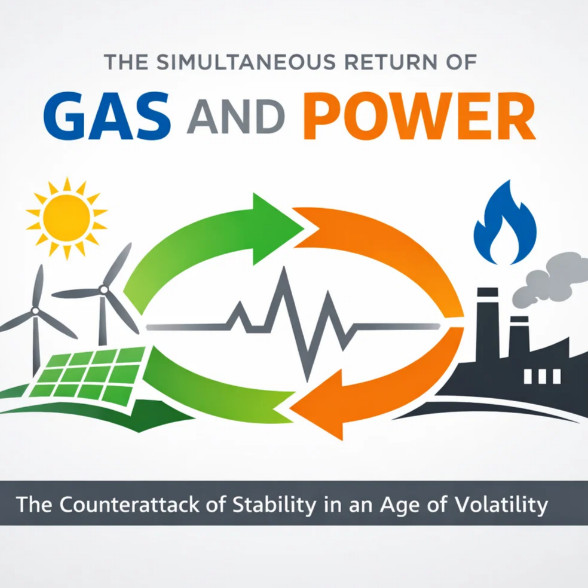
* 재생에너지가 늘어난다고 해서 전력 시스템이 자동으로 안정되는 것은 아니다. 태양광과 풍력은 빠르게 확대되고 있지만, 출력 변동성이 커서 전력망 운영은 오히려 더 복잡해지고 있다.
* 에너지 문제는 다시 안보의 문제로 돌아오고 있다. 중동 긴장과 해상 수송로 리스크는 전력과 연료 공급이 여전히 국제정치와 지정학에 크게 흔들릴 수 있음을 보여준다.
* 가스와 원자력은 사라지는 전원이 아니라, 다시 전략 자산으로 부상하고 있다. 가스는 유연한 백업 전원으로, 원자력은 24시간 공급 가능한 저탄소 안정 전원으로 다시 주목받고 있다.
* 전력시장의 기준은 단순한 가격 경쟁에서 안정성 경쟁으로 이동하고 있다. 이제는 얼마나 싸게 생산하느냐보다, 얼마나 끊기지 않고 안정적으로 공급하느냐가 더 중요해지고 있다.
* AI 시대의 산업 경쟁력은 결국 전력 인프라 경쟁력과 연결된다. 데이터센터는 막대한 전력을 24시간 안정적으로 필요로 하기 때문에, 앞으로는 전력을 안정적으로 확보한 지역과 기업이 더 유리해질 가능성이 크다.
***
에너지 전환은 오랫동안 하나의 직선처럼 설명돼 왔다. 태양광과 풍력이 늘어나면 석탄과 가스는 자연스럽게 밀려나고, 전력 시스템은 점점 더 깨끗하고 효율적인 방향으로 움직일 것이라는 기대였다. 그러나 현실의 전력망은 그렇게 단순하게 움직이지 않는다. 재생에너지는 분명 빠르게 늘고 있지만, 전력 시스템은 오히려 더 민감하고 더 복잡해지고 있다. 태양과 바람은 미래의 중심축이지만, 동시에 인간이 필요로 하는 정확한 순간에 맞춰 움직이지 않는 전력이기도 하다.
여기에 중동을 둘러싼 군사적 긴장, 해상 수송로 리스크, 그리고 AI와 데이터센터가 끌어올린 거대한 상시 전력 수요까지 겹치면서, 전력의 세계는 다시 ‘안정’이라는 오래된 질문 앞으로 되돌아오고 있다. 그 결과 한때 퇴출 수순에 들어간 듯 보였던 가스와 기존 전력이 다시 핵심 자원으로 불려 나오고 있다. 이것은 탈탄소의 실패라기보다, 현실이 이상을 다시 조정하기 시작했다는 징후에 가깝다.
친환경의 그림자
재생에너지가 전력 시스템에 던진 가장 큰 변화는 발전의 원리 자체가 달라졌다는 점이다. 과거의 전력 시스템은 기본적으로 수요를 따라가는 구조였다. 사람이 전기를 더 쓰면 발전소를 더 돌리고, 덜 쓰면 출력을 낮추는 방식이었다. 발전의 리듬은 인간의 소비 패턴에 맞춰져 있었다. 하지만 태양광과 풍력은 이 질서를 뒤집는다. 이제 전력은 필요한 시간에 생산되는 것이 아니라, 햇빛과 바람이 허락할 때 생산된다. 공급의 리듬이 수요가 아니라 자연 조건에 묶이기 시작한 것이다.
이 변화는 단순한 기술적 특징이 아니라 시스템 리스크의 출발점이다. 태양광은 밤이 되면 생산이 완전히 멈추고, 구름이 끼면 짧은 시간 안에도 출력이 크게 흔들린다. 풍력 역시 바람이 약해지면 즉시 발전량이 줄어든다. 문제는 전력이 다른 재화와 다르다는 데 있다. 전력은 대규모로 오래 저장하기가 어렵기 때문에, 생산과 소비가 거의 동시에 맞아떨어져야 한다. 공급이 흔들리면 전력망 전체가 긴장 상태에 들어간다.
이러한 특징은 이미 여러 나라에서 뚜렷하게 드러나고 있다. 낮에는 태양광 발전이 몰리며 전기가 남아돌고, 해가 지거나 바람이 약해지는 시간대에는 다시 급하게 전력이 필요해진다. 같은 날 안에서도 과잉과 부족이 연달아 나타나는 구조가 굳어지고 있는 셈이다. 겉으로는 ‘전기가 많이 생산된다’는 긍정적 장면처럼 보이지만, 실제 운영 현장에서는 그 반대다. 전력망은 훨씬 더 빠른 속도로 균형을 맞춰야 하고, 운영자는 훨씬 더 자주, 더 크게 대응해야 한다.
캘리포니아의 덕 커브 현상은 이런 변화를 상징적으로 보여준다. 한낮에는 태양광이 전력을 밀어 올리지만, 저녁이 되면 짧은 시간 안에 다른 전원이 급격히 출력을 끌어올려야 한다. 이 말은 재생에너지가 많아질수록 시스템이 자동으로 안정되는 것이 아니라, 오히려 더 정교한 보완 장치와 더 많은 유연성 자원이 필요해진다는 뜻이다. 결국 재생에너지는 해답이면서 동시에 새로운 문제를 만들어내는 존재가 되었다. 친환경의 확대가 곧바로 안정의 확대를 의미하지는 않는다는 사실이 이제는 전 세계 전력 시스템에서 확인되고 있다.
전쟁이 흔든 스위치
재생에너지의 물리적 변동성만으로도 시스템은 충분히 복잡해졌지만, 최근 세계 에너지 시장은 한 가지 변수를 더 떠안았다. 지정학이다. 특히 이란을 둘러싼 군사 충돌과 호르무즈 해협 리스크는 에너지가 얼마나 빠르게 경제 문제에서 안보 문제로 넘어가는지를 다시 보여주고 있다. 에너지 수입국 입장에서 가장 두려운 것은 단순한 가격 상승이 아니라, 공급망 그 자체가 흔들릴 수 있다는 감각이다.
호르무즈 해협은 상징적인 공간이다. 이 좁은 해상 통로의 긴장은 곧바로 원유와 LNG 가격, 운송 비용, 보험료, 조달 전략, 발전원가, 전력요금으로 번진다. 에너지 가격은 단순히 시장 심리 때문에 요동치는 것이 아니다. 세계의 전력 시스템이 여전히 항로, 탱커, 터미널, 장기 계약, 지정학적 통제선 같은 전통적 인프라에 깊이 묶여 있기 때문이다. 재생에너지가 늘어났다고 해서 이러한 사슬이 사라진 것은 아니다. 오히려 전력 수요가 커질수록, 그리고 화석연료가 백업 전원으로 남아 있을수록, 이 사슬의 전략적 가치는 더 커진다.
유럽이 러시아 가스 위기에서 겪은 충격은 이런 현실을 잘 보여준다. 한동안 유럽은 재생에너지 확대를 통해 에너지 안보와 탈탄소를 동시에 달성할 수 있다고 기대했지만, 실제 위기 국면에서는 LNG 확보, 비축 확대, 터미널 증설, 기존 발전소 재가동, 산업용 전력 보호 같은 고전적인 과제가 다시 전면으로 떠올랐다. 에너지 전환은 지정학을 지우는 프로젝트가 아니라, 새로운 지정학 위에 다시 놓이는 프로젝트였던 셈이다.
최근 중동 긴장이 던지는 메시지도 같다. 전쟁은 재생에너지의 필요성을 없애지 않는다. 하지만 그 재생에너지를 떠받칠 수 있는 안정 전원과 공급망의 중요성을 훨씬 더 크게 만든다. 이상적인 연료 조합을 설계하는 일보다, 당장 돌릴 수 있는 설비와 당장 들여올 수 있는 연료가 더 중요해지는 순간이 분명히 존재한다. 그리고 바로 그 순간마다 가스와 기존 전력은 ‘불편하지만 필요한 것’에서 ‘없으면 안 되는 것’으로 위치가 바뀐다.
다시 불려온 조절 가능한 전력
이런 조건에서 가장 빠르게 복권된 자원이 바로 천연가스다. 가스 발전의 장점은 분명하다. 빨리 켤 수 있고, 빨리 줄일 수 있으며, 수요 변화와 재생에너지의 출력 변동에 맞춰 비교적 민첩하게 대응할 수 있다. 전력 시스템이 불안해질수록 가스의 가치는 단순한 연료비가 아니라 ‘조절 능력’에서 평가받기 시작한다. 과거에는 탄소 배출량을 기준으로 주로 비판받았지만, 지금은 시스템을 버티게 하는 장치라는 성격이 더 부각되고 있다.
미국은 이 흐름을 가장 선명하게 보여주는 곳 가운데 하나다. 재생에너지 확대가 계속되는 동시에, 가스는 여전히 중요한 전원으로 남아 있다. 특히 풍력 비중이 높은 지역에서는 풍력이 약해질 때 가스 발전이 이를 메우고, 풍력이 강할 때는 가스 발전이 뒤로 물러나는 식의 보완 구조가 나타난다. 이는 가스와 재생에너지가 단순한 경쟁 관계가 아니라, 점점 더 역할을 나누는 관계로 바뀌고 있음을 뜻한다. 재생에너지가 시스템의 방향이라면, 가스는 그 방향이 흔들리지 않도록 붙잡아주는 안전장치에 가깝다.
유럽에서도 가스의 위치는 단순한 과도기 자원 이상으로 바뀌고 있다. 장기적으로는 배터리, 수소, 계통 연계, 수요반응이 가스의 일부 역할을 대체할 수 있겠지만, 지금 이 순간 대규모로 상용화되어 있고 즉시 활용할 수 있는 해답은 여전히 가스다. 그래서 가스는 친환경 담론 안에서는 불편한 존재이지만, 실제 운영 현실에서는 점점 더 중요한 자산이 된다. ‘가스의 귀환’은 누군가의 정치적 구호가 아니라, 시스템이 스스로 요구한 결과에 가깝다.
원자력도 비슷한 이유로 다시 주목받고 있다. 원자력은 기동성이 가스만큼 빠르지는 않지만, 24시간 안정적으로 전기를 공급할 수 있는 대표적인 저탄소 전원이다. 특히 소형모듈원자로는 대형 원전의 높은 초기 투자비와 긴 건설 기간이라는 약점을 일부 줄일 수 있는 후보로 거론되며, 미래의 산업단지나 데이터센터와 결합할 가능성까지 논의되고 있다. 아직 해결해야 할 과제가 많지만, 전력 시스템이 다시 ‘항상 켜져 있는 전기’를 찾기 시작했다는 사실만으로도 원자력은 정책의 중심부로 조금씩 돌아오고 있다.
결국 오늘의 전력 시스템은 재생에너지 대 화석연료라는 단순 대결 구도로 설명되지 않는다. 오히려 재생에너지와 가스, 재생에너지와 원자력, 그리고 저장과 수요반응이 서로 맞물리는 다층적 구조로 바뀌고 있다. 여기서 중요한 것은 어느 한 전원을 완전히 밀어내는 일이 아니라, 어떤 전원이 어느 시간대와 어떤 상황에서 시스템을 지탱할 수 있는지를 정교하게 조합하는 일이다.
싸게보다 끊기지 않게
전력시장의 기준 역시 조용하지만 근본적으로 바뀌고 있다. 과거 시장의 핵심 질문은 단순했다. 누가 더 싸게 전기를 만드는가. 그러나 지금 시장의 중심에는 전혀 다른 질문이 떠오르고 있다. 누가 필요한 순간에 전기를 보장할 수 있는가. 전력은 더 이상 단순한 에너지 상품이 아니다. 타이밍과 안정성을 가진 서비스가 되어가고 있다.
같은 양의 전기라도 언제 생산되느냐에 따라 가치가 달라진다. 한낮의 과잉 공급 시간대 전력은 값이 낮거나 심지어 부담이 되기도 하지만, 저녁 피크 시간대 전력은 같은 양이라도 훨씬 더 큰 가치를 갖는다. 이 변화는 전기가 단순한 양의 문제가 아니라, 시스템 균형을 언제 어떻게 지탱하느냐의 문제라는 사실을 드러낸다. 그래서 시장은 실제로 생산한 전기량만이 아니라, 필요할 때 전기를 생산할 수 있는 준비 상태와 예비력, 즉응 능력, 회복력에 점점 더 높은 가격을 매기기 시작한다.
이 지점에서 용량시장이나 유연성 보상 구조가 중요해진다. 발전소는 전기를 팔지 않는 시간에도, 위기 상황에서 바로 공급할 수 있는 상태를 유지하는 것만으로 의미를 갖는다. 과거에는 이런 비용이 비효율처럼 보였지만, 변동성이 커진 시대에는 사실상 보험료에 가깝다. 전력망이 흔들리는 순간 시스템 전체의 피해는 발전소 한두 곳의 손익을 훨씬 넘어선다. 결국 예비력은 낭비가 아니라 안정성의 가격이 된다.
배터리 저장 기술은 이 전환에서 가장 많은 기대를 모으는 분야다. 실제로 배터리는 몇 시간 단위의 피크 조정과 단기적 변동 대응에서 강력한 수단이 되어가고 있다. 그러나 아직은 모든 문제를 해결할 수 있는 만능 열쇠가 아니다. 며칠 이상 이어지는 저풍속 상태, 계절성 편차, 전쟁으로 인한 연료 가격 급등, 예기치 못한 대규모 수요 폭증까지 감당하기에는 아직 한계가 있다. 그래서 시장은 배터리를 키우면서도, 동시에 가스와 기존 안정 전원을 내려놓지 못한다. 이 모순은 기술이 부족해서만이 아니라, 전력 시스템이 필요로 하는 안전마진 자체가 그만큼 크기 때문이다.
결국 전력시장은 ‘최저가 경쟁’에서 ‘무정전 경쟁’으로 이동하고 있다. 앞으로 더 중요한 것은 전기를 얼마나 싸게 만들 수 있느냐보다, 위기 상황에서도 얼마나 안정적으로 공급할 수 있느냐가 될 가능성이 크다. 이 변화는 전원 믹스만 바꾸는 것이 아니라, 투자 기준과 요금 체계, 기업 입지 전략, 국가 산업정책까지 함께 바꾼다. 안정성은 더 이상 숨어 있는 비용이 아니라, 전력경제의 한가운데로 올라온 핵심 항목이다.
AI가 바꿔버린 수요의 성격
수요 측면의 변화는 더 급진적이다. AI와 데이터센터는 단순히 전기를 많이 쓰는 산업이 아니다. 이들은 전력이 ‘한 번도 끊기면 안 되는’ 산업이다. 과거의 제조업은 전력비가 중요했지만, 지금의 디지털 인프라는 전력의 품질과 연속성 자체에 훨씬 더 민감하다. 한 번의 정전, 몇 초의 전압 변동만으로도 서비스 장애와 막대한 손실이 발생할 수 있기 때문이다.
이 때문에 AI 시대의 전력 수요는 양만이 아니라 질을 바꾸고 있다. 얼마나 많은 전기를 쓰느냐보다, 얼마나 끊기지 않게 전기를 받을 수 있느냐가 핵심이 된다. 데이터센터는 24시간 내내 돌아가야 하고, 냉각과 서버 운용, 네트워크 장비까지 모두 안정적인 전원을 전제로 설계된다. 그래서 데이터센터가 몰리는 지역에서는 단순한 발전량보다 송전망, 변전 설비, 예비력, 계통 연결 능력이 더 중요한 경쟁력이 된다.
일부 지역에서는 이미 이 변화가 사회적, 정치적 문제로 떠오르고 있다. 전력망이 감당할 수 있는 범위를 넘어 데이터센터 수요가 커지면 신규 연결 허가가 늦어지고, 산업용·가정용 전력과의 우선순위 갈등도 생긴다. 디지털 산업은 무형의 산업처럼 보이지만, 실제로는 엄청난 양의 전기와 물리적 계통, 냉각설비, 토지, 물을 요구하는 매우 물질적인 산업이다. 그래서 AI 경쟁은 동시에 전력 인프라 경쟁이 된다.
이 흐름 속에서 대형 기술기업들은 단순히 재생에너지 구매계약만으로는 부족하다고 판단하기 시작했다. 장기 전력조달 계약, 자체 전원 확보, 원전과의 연계, 계통 강화 투자, 지역 전력망 협력 같은 전략이 동시에 검토된다. 겉으로는 AI 산업 이야기지만, 본질적으로는 기업이 스스로 전력 안보를 조달하려는 시대가 열리고 있는 셈이다. 이 구조가 굳어질수록 조달 능력이 큰 기업은 더 안정적인 전력을 선점하고, 그렇지 못한 기업과 지역은 더 높은 가격과 더 큰 불안정성을 떠안을 가능성이 커진다. AI는 단순한 신산업이 아니라, 전력의 배분 질서까지 바꾸는 변수다.
미래를 가르는 다섯 가지 장면
첫째, 가스는 예상보다 오래, 그리고 더 전략적인 방식으로 남을 가능성이 높다. 앞으로 10년 안에 가스는 단순히 탄소가 많은 연료라는 이유만으로 빠르게 사라지지 않을 수 있다. 오히려 재생에너지 확대와 AI 수요 증가가 동시에 일어날수록, 가스는 백업 전원과 유연성 자원으로서 더 강한 의미를 갖게 될 가능성이 있다. 일부 국가는 여기에 탄소 포집 기술을 결합해 가스를 ‘줄여야 할 연료’가 아니라 ‘관리 가능한 안정 전원’으로 재정의하려 할 것이다. 그렇게 되면 국제 LNG 시장과 수송로, 공급계약을 둘러싼 경쟁은 예상보다 더 길게 이어질 수 있다.
둘째, 원자력은 기후의 언어가 아니라 안정성의 언어로 복귀할 가능성이 높다. 그동안 원자력 논쟁은 대체로 탄소 감축과 안전성의 대립으로 설명돼 왔지만, 앞으로는 ‘24시간 쉬지 않고 전기를 공급할 수 있는 저탄소 전원’이라는 가치가 더 크게 부각될 수 있다. 특히 소형모듈원자로는 대규모 수요 거점이나 산업단지, 데이터센터와 결합하는 형태로 추진될 가능성이 있다. 상용화 속도는 기대보다 느릴 수 있지만, 정책과 금융의 방향은 이미 안정 전원을 더 중시하는 쪽으로 움직이고 있다.
셋째, 전력은 더 비싸고 더 복잡한 상품이 될 가능성이 크다. 재생에너지 설비가 늘어난다고 해서 전기요금이 자동으로 내려가지는 않는다. 이제 비용은 발전기 한 대의 건설비가 아니라, 저장, 예비력, 송전망, 계통 연결, 백업 설비, 운영 유연성, 공급망 안전성까지 포함하는 방향으로 확장되고 있기 때문이다. 소비자는 단순한 전력 단가가 아니라, 시스템 전체의 안정 비용을 함께 지불하게 될 가능성이 높다. 이 과정에서 값싸고 안정적인 전력을 확보한 지역은 새로운 산업 중심지가 되고, 그렇지 못한 지역은 투자 유치에서 불리해질 수 있다.
넷째, 에너지 안보는 다시 국가 전략의 한복판으로 돌아올 가능성이 높다. 재생에너지가 늘어나더라도 지정학은 사라지지 않는다. 오히려 LNG, 우라늄, 송전장비, 변압기, 배터리 원자재, 반도체, 냉각 인프라 등 전력 시스템 전반의 공급망이 안보 프레임 안으로 더 깊이 들어갈 수 있다. 한 지역의 전쟁과 해협의 긴장이 전 세계 전력 비용과 산업 활동을 흔드는 구조는 앞으로도 반복될 가능성이 높다. 각국은 무엇을 얼마나 싸게 사오느냐보다, 위기 때도 조달할 수 있는가를 중심으로 에너지 전략을 다시 짤 수밖에 없다.
다섯째, 결국 가장 앞서가는 국가는 가장 친환경적인 나라보다 가장 안정적인 시스템을 설계한 나라가 될 가능성이 높다. 앞으로 에너지 전환의 승부는 도입량 경쟁만으로 결정되지 않는다. 태양광 몇 기를 더 세웠느냐, 풍력 몇 기를 더 깔았느냐보다, 그 전기를 언제든 쓸 수 있게 만드는 능력이 더 중요해질 수 있다. 송전망을 제때 확충하고, 유연성 자원에 보상하며, AI와 제조업 수요를 계통 계획과 연결하고, 위기 때도 백업 전원을 유지할 수 있는 나라가 결국 산업 경쟁력도 가져갈 가능성이 크다. 친환경은 방향이고 안정성은 실행 능력이다. 방향만 있는 국가는 흔들리고, 실행 능력이 있는 국가는 버틴다.
안정성을 설계하는 시대
지금 벌어지는 변화는 단순히 가스가 조금 더 남고, 재생에너지가 조금 더 늦게 늘어나는 정도의 수정이 아니다. 전력 시스템을 바라보는 시각 자체가 바뀌고 있다. 재생에너지는 여전히 미래의 중심축이지만, 그것만으로 시스템이 자동으로 완성되지는 않는다. 오히려 재생에너지가 늘어날수록, 디지털 경제가 전기를 더 많이 요구할수록, 전력망은 더 많은 안정 장치와 더 긴 호흡의 설계를 필요로 한다. 그래서 가스와 원자력, 저장, 수요반응, 송전망, 용량시장, 에너지 안보가 동시에 중요해진다. 중요한 것은 무엇 하나만 선택하는 일이 아니라, 서로 다른 전원과 제도를 하나의 시스템 안에서 어떻게 조합하느냐이다.
가스와 전력의 동시 귀환은 과거로 돌아가는 장면이 아니다. 그것은 미래가 예상보다 더 많은 백업과 더 높은 안정성을 요구한다는 사실의 표현이다. 앞으로의 에너지 전환은 무엇을 얼마나 빨리 늘릴 것인가의 문제이기도 하지만, 동시에 무엇으로 시스템을 버틸 것인가의 문제이기도 하다. 친환경의 속도만이 아니라, 불확실성 속에서도 전기를 끊기지 않게 만드는 능력. 이제 에너지의 승부는 바로 그 능력을 누가 더 정교하게 설계하느냐에서 갈릴 가능성이 크다.
Reference
International Energy Agency. 2025. Electricity 2025. Paris: IEA. Published February 14, 2025.
International Energy Agency. 2025. Energy and AI. Paris: IEA. Published April 10, 2025.
U.S. Energy Information Administration. 2025. “Amid Regional Conflict, the Strait of Hormuz Remains Critical Oil Chokepoint.” Today in Energy. Washington, DC: EIA. Published June 16, 2025.
U.S. Energy Information Administration. 2025. World Oil Transit Chokepoints. Washington, DC: EIA. Updated 2025.
International Atomic Energy Agency. 2025. Nuclear Technology Review 2025. Vienna: IAEA. Published August 27, 2025.
The Simultaneous Return of Gas and Power
- The Counterattack of Stability in an Age of Volatility
[Key Message]
* The growth of renewable energy does not automatically make the power system stable. As solar and wind expand rapidly, their output variability is making grid operation more complex, not less.
* Energy is once again becoming a matter of security. Tensions in the Middle East and risks to maritime transport routes show that electricity and fuel supplies can still be deeply shaken by geopolitics.
* Gas and nuclear power are not fading away but reemerging as strategic assets. Gas is drawing attention as a flexible backup source, while nuclear power is being reevaluated as a low-carbon and stable source that can supply electricity around the clock.
* The standard of the electricity market is shifting from price competition to reliability competition. What matters now is not simply how cheaply power can be produced, but how steadily and uninterruptedly it can be delivered.
* In the AI era, industrial competitiveness is ultimately tied to power infrastructure competitiveness. Because data centers require massive amounts of electricity around the clock, regions and companies that can secure stable power supply are likely to hold a stronger advantage going forward.
***
For a long time, the energy transition was described as a straight line. As solar and wind power increased, coal and gas would naturally be pushed out, and the power system would move in an ever cleaner and more efficient direction. But real power grids do not move so simply. Renewable energy is certainly growing fast, yet power systems are actually becoming more sensitive and more complex. The sun and wind are the central axis of the future, but they are also forms of electricity that do not move precisely in step with the moments humans need them. As military tensions surrounding the Middle East, risks to maritime shipping routes, and the enormous constant electricity demand driven by AI and data centers are added on top of this, the world of electricity is once again returning to the old question of “stability.” As a result, gas and conventional power, which once seemed to be on a path toward phase-out, are being called back as core resources. This is less a failure of decarbonization than a sign that reality has begun adjusting the ideal once again.
The Shadow of Clean Energy
The biggest change renewable energy has brought to power systems is that it has changed the very principle of generation. The power systems of the past were basically structured to follow demand. If people used more electricity, power plants generated more; if they used less, output was lowered. The rhythm of generation was matched to human consumption patterns. But solar and wind power overturn this order. Now electricity is not produced when it is needed, but when sunlight and wind allow it to be produced. The rhythm of supply has begun to be tied not to demand, but to natural conditions.
This change is not merely a technical characteristic. It is the starting point of systemic risk. Solar generation stops completely at night, and when clouds appear, output can fluctuate sharply even within a short period of time. Wind power also declines immediately when the wind weakens. The problem lies in the fact that electricity is unlike other goods. Because it is difficult to store electricity on a large scale for long periods, production and consumption must almost coincide in real time. When supply fluctuates, the entire grid enters a state of tension.
These characteristics are already becoming clearly visible in many countries. During the daytime, solar generation floods the system and electricity becomes excessive, but when the sun sets or the wind weakens, power is urgently needed again. In other words, a structure is taking hold in which surplus and shortage appear one after another within the same day. On the surface, this may look like a positive scene in which “a lot of electricity is being produced,” but in actual operations the opposite is true. Grids have to balance themselves at much greater speed, and operators have to respond far more often and on a much larger scale.
California’s duck curve is a symbolic example of this change. At midday, solar power pushes electricity supply upward, but by evening other power sources must ramp up output sharply within a short time. This means that the more renewable energy increases, the less the system stabilizes automatically; instead, it requires more sophisticated backup mechanisms and more flexible resources. In the end, renewable energy has become something that is both an answer and a source of new problems at the same time. The fact that the expansion of clean energy does not automatically mean an expansion of stability is now being confirmed across power systems around the world.
The Switch Shaken by War
Even the physical volatility of renewable energy alone has been enough to make the system highly complex, but recently the global energy market has taken on one more variable: geopolitics. In particular, military clashes surrounding Iran and the risks around the Strait of Hormuz are once again showing how quickly energy can shift from being an economic issue to a security issue. For energy-importing countries, what is most frightening is not simply price increases, but the sense that the supply chain itself can be shaken.
The Strait of Hormuz is a symbolic space. Tension in this narrow maritime corridor immediately spreads into crude oil and LNG prices, shipping costs, insurance premiums, procurement strategies, generation costs, and electricity rates. Energy prices do not fluctuate merely because of market psychology. They move this way because the world’s electricity systems are still deeply tied to traditional infrastructure such as shipping lanes, tankers, terminals, long-term contracts, and geopolitical lines of control. The increase in renewable energy has not erased these chains. On the contrary, the larger electricity demand becomes, and the longer fossil fuels remain as backup power sources, the more strategic value these chains acquire.
Europe’s shock during the Russian gas crisis shows this reality well. For a time, Europe expected that expanding renewable energy could achieve energy security and decarbonization at the same time. But in an actual crisis, classic tasks such as securing LNG, expanding reserves, building terminals, restarting existing power plants, and protecting industrial electricity supply all returned to the forefront. The energy transition was not a project that erased geopolitics; it was a project laid once again on top of a new geopolitics.
The message coming from recent tensions in the Middle East is the same. War does not eliminate the need for renewable energy. But it makes the importance of stable power sources and supply chains that can support those renewables far greater. There are clearly moments when what matters more than designing an ideal fuel mix is having facilities that can be run immediately and fuels that can be brought in immediately. And at precisely those moments, gas and conventional power shift from being “uncomfortable but necessary” to being “indispensable.”
Dispatchable Power Called Back Again
Under these conditions, the resource that has been restored most quickly is natural gas. The strengths of gas-fired power are clear. It can be turned on quickly, reduced quickly, and respond relatively nimbly to changes in demand and fluctuations in renewable output. The more unstable the power system becomes, the more the value of gas is assessed not simply by its fuel cost, but by its “ability to adjust.” In the past, it was mainly criticized on the basis of its carbon emissions, but now its nature as a device that keeps the system standing is becoming more prominent.
The United States is one of the clearest places showing this trend. At the same time that renewable energy continues to expand, gas remains an important power source. In regions with high shares of wind power in particular, gas generation fills the gap when wind weakens, and steps back when wind is strong. This means gas and renewables are no longer in a simple competitive relationship, but are increasingly moving into a relationship of shared roles. If renewable energy is the direction of the system, gas is closer to a safety mechanism that keeps that direction from wavering.
In Europe as well, the position of gas has changed beyond that of a simple transitional resource. In the long run, batteries, hydrogen, grid interconnection, and demand response may replace part of the role of gas, but at this very moment the answer that is already commercialized at scale and can be used immediately is still gas. That is why gas remains an uncomfortable presence within clean-energy discourse, yet an increasingly important asset in actual operational reality. The “return of gas” is not someone’s political slogan; it is closer to the result demanded by the system itself.
Nuclear power is also drawing renewed attention for similar reasons. Nuclear is not as fast to start as gas, but it is a representative low-carbon power source capable of supplying electricity stably around the clock. Small modular reactors in particular are being discussed as candidates that could partially reduce the weaknesses of large nuclear plants, such as high upfront investment costs and long construction periods, and even as possible future partners for industrial complexes or data centers. Many challenges remain, but the very fact that power systems have begun once again to search for “electricity that is always on” is enough to bring nuclear gradually back to the center of policy.
In the end, today’s electricity systems cannot be explained by the simple confrontation of renewables versus fossil fuels. Rather, they are shifting into a multilayered structure in which renewables and gas, renewables and nuclear, and storage and demand response are all interlocked. What matters here is not completely driving out any one source, but precisely combining which source can support the system at which time of day and under which circumstances.
More Than Cheap, It Must Not Go Out
The standards of electricity markets are also changing quietly but fundamentally. In the past, the core market question was simple: who can generate electricity more cheaply? But now a completely different question is rising to the center of the market: who can guarantee electricity at the moment it is needed? Electricity is no longer just an energy commodity. It is becoming a service with timing and stability.
Even the same amount of electricity has different value depending on when it is produced. Power generated during hours of oversupply at midday may be low in value or even burdensome, while the same amount of electricity during the evening peak can be far more valuable. This change reveals that electricity is not just a matter of quantity, but a matter of how and when the balance of the system is sustained. That is why markets are increasingly assigning higher prices not only to the amount of electricity actually produced, but also to preparedness, reserve capacity, immediate response capability, and resilience.
At this point, capacity markets and flexibility compensation structures become important. Power plants have meaning even during hours when they are not selling electricity, simply because they remain ready to supply in a crisis. In the past, this kind of cost may have looked inefficient, but in an age of rising volatility, it is closer to an insurance premium. When the grid shakes, the damage to the entire system goes far beyond the profit and loss of one or two generating units. In the end, reserve capacity becomes not waste, but the price of stability.
Battery storage technology is the field drawing the greatest expectations in this transition. In fact, batteries are becoming powerful tools for peak shaving and short-term volatility response. But they are not yet a master key capable of solving every problem. They still face limits in dealing with prolonged low-wind conditions lasting several days, seasonal variations, fuel price spikes caused by war, and sudden surges in large-scale demand all at once. This is why the market cannot let go of gas and conventional stable power even while expanding batteries. This contradiction exists not only because technology is insufficient, but because the size of the safety margin the power system requires is itself that large.
In the end, electricity markets are moving from “lowest-price competition” to “nonstop-power competition.” In the future, what matters more may not be how cheaply electricity can be produced, but how stably it can be supplied even in times of crisis. This change reshapes not only the power mix, but also investment criteria, rate systems, corporate location strategies, and national industrial policy. Stability is no longer a hidden cost. It has become a central item in the economics of electricity.
The Nature of Demand Changed by AI
The change on the demand side is even more radical. AI and data centers are not simply industries that consume a lot of electricity. They are industries for which electricity “must never be interrupted even once.” Traditional manufacturing cared about power costs, but today’s digital infrastructure is far more sensitive to the quality and continuity of electricity itself. A single outage, a few seconds of voltage fluctuation, can lead to service disruptions and enormous losses.
For this reason, electricity demand in the AI era is changing not only in quantity, but in quality. The key is no longer simply how much electricity is used, but how uninterruptedly it can be received. Data centers must run 24 hours a day, and cooling, server operations, and network equipment are all designed on the assumption of stable power. That is why, in regions where data centers cluster, generation volume alone is not enough; transmission lines, substations, reserve capacity, and grid connection capability become even more important competitive advantages.
In some regions, this change has already become a social and political issue. When data center demand grows beyond what the grid can handle, new connection permits are delayed, and conflicts arise over priorities between industrial and household electricity use. Digital industry may appear to be an intangible industry, but in reality it is a highly material industry that requires enormous amounts of electricity, physical grid infrastructure, cooling systems, land, and water. That is why competition in AI is at the same time competition in power infrastructure.
In this flow, large technology companies are beginning to judge that simple renewable power purchase agreements are not enough. Long-term electricity procurement contracts, securing dedicated power sources, linking with nuclear plants, investment in grid strengthening, and cooperation with local power systems are all being considered at the same time. On the surface, this looks like a story about the AI industry, but in essence it is the opening of an era in which companies seek to procure their own energy security. The more this structure hardens, the more likely it becomes that companies with strong procurement capabilities will secure more stable electricity, while companies and regions without such capabilities will bear higher prices and greater instability. AI is not just a new industry. It is a variable that changes the very order of electricity allocation.
Five Scenes That Will Divide the Future
First, gas is likely to remain longer than expected, and in a more strategic way. Over the next decade, gas may not disappear quickly simply because it is a carbon-intensive fuel. On the contrary, the more renewable energy expands and the faster AI-driven demand grows, the more gas may acquire stronger meaning as a backup power source and flexibility resource. Some countries will likely try to redefine gas not as “fuel that must be reduced,” but as “manageable stable power,” by combining it with carbon capture technology. If that happens, competition over the international LNG market, shipping routes, and supply contracts may continue far longer than expected.
Second, nuclear power is likely to return not in the language of climate, but in the language of stability. Until now, the nuclear debate has largely been framed as a conflict between decarbonization and safety, but going forward, the value of nuclear as “low-carbon power that can supply electricity around the clock” may become much more prominent. Small modular reactors, in particular, may be pursued in forms linked with large demand centers, industrial complexes, or data centers. Commercialization may proceed more slowly than hoped, but the direction of policy and finance is already moving toward placing greater emphasis on stable power sources.
Third, electricity is likely to become a more expensive and more complex product. The increase of renewable energy facilities does not automatically lower electricity rates. Costs are no longer simply about the construction cost of a single generator. They are expanding to include storage, reserve capacity, transmission grids, grid connections, backup facilities, operational flexibility, and supply-chain security. Consumers are likely to end up paying not only for the unit price of electricity, but for the cost of stability across the entire system. In this process, regions that secure cheap and stable electricity may become new industrial centers, while regions that fail to do so may be placed at a disadvantage in attracting investment.
Fourth, energy security is likely to return to the very center of national strategy. Even if renewable energy expands, geopolitics will not disappear. On the contrary, LNG, uranium, transmission equipment, transformers, battery raw materials, semiconductors, and cooling infrastructure may all be drawn more deeply into a security framework across the entire power system. The structure in which war in one region or tension in a strait shakes electricity costs and industrial activity across the world is likely to recur. Countries will be forced to redesign their energy strategies around not what they can buy cheaply, but what they can still procure in a crisis.
Fifth, in the end, the countries that move ahead are likely to be not the most environmentally pure ones, but the ones that design the most stable systems. The outcome of the energy transition will not be determined by installation volume alone. More important than how many solar panels or wind turbines are added may be the ability to make that electricity available whenever needed. Countries that expand transmission grids on time, compensate flexibility resources, connect AI and manufacturing demand with grid planning, and maintain backup power even in crises are likely to gain industrial competitiveness in the end. Clean energy is the direction; stability is the capacity to execute. Countries with direction alone will be shaken. Countries with execution capacity will endure.
An Age of Designing Stability
What is happening now is not a minor adjustment in which gas remains a little longer and renewable energy grows a little more slowly. The very perspective through which power systems are viewed is changing. Renewable energy is still the central axis of the future, but that alone does not automatically complete the system. On the contrary, the more renewable energy expands, and the more the digital economy demands electricity, the more the grid needs more stability devices and more long-range design. That is why gas and nuclear, storage, demand response, transmission grids, capacity markets, and energy security all matter at the same time. What matters is not choosing only one of them, but how to combine different power sources and institutions within a single system.
The simultaneous return of gas and power is not a scene of going back to the past. It is an expression of the fact that the future demands more backup and a higher level of stability than expected. The energy transition ahead is certainly a matter of what to expand and how quickly, but at the same time it is a matter of what will keep the system standing. Not only the speed of clean energy, but the ability to keep electricity from being interrupted even amid uncertainty. From now on, the real contest in energy is likely to be decided by who can design that ability with the greatest precision.
Reference
International Energy Agency. 2025. Electricity 2025. Paris: IEA. Published February 14, 2025.
International Energy Agency. 2025. Energy and AI. Paris: IEA. Published April 10, 2025.
U.S. Energy Information Administration. 2025. “Amid Regional Conflict, the Strait of Hormuz Remains Critical Oil Chokepoint.” Today in Energy. Washington, DC: EIA. Published June 16, 2025.
U.S. Energy Information Administration. 2025. World Oil Transit Chokepoints. Washington, DC: EIA. Updated 2025.
International Atomic Energy Agency. 2025. Nuclear Technology Review 2025. Vienna: IAEA. Published August 27, 2025.