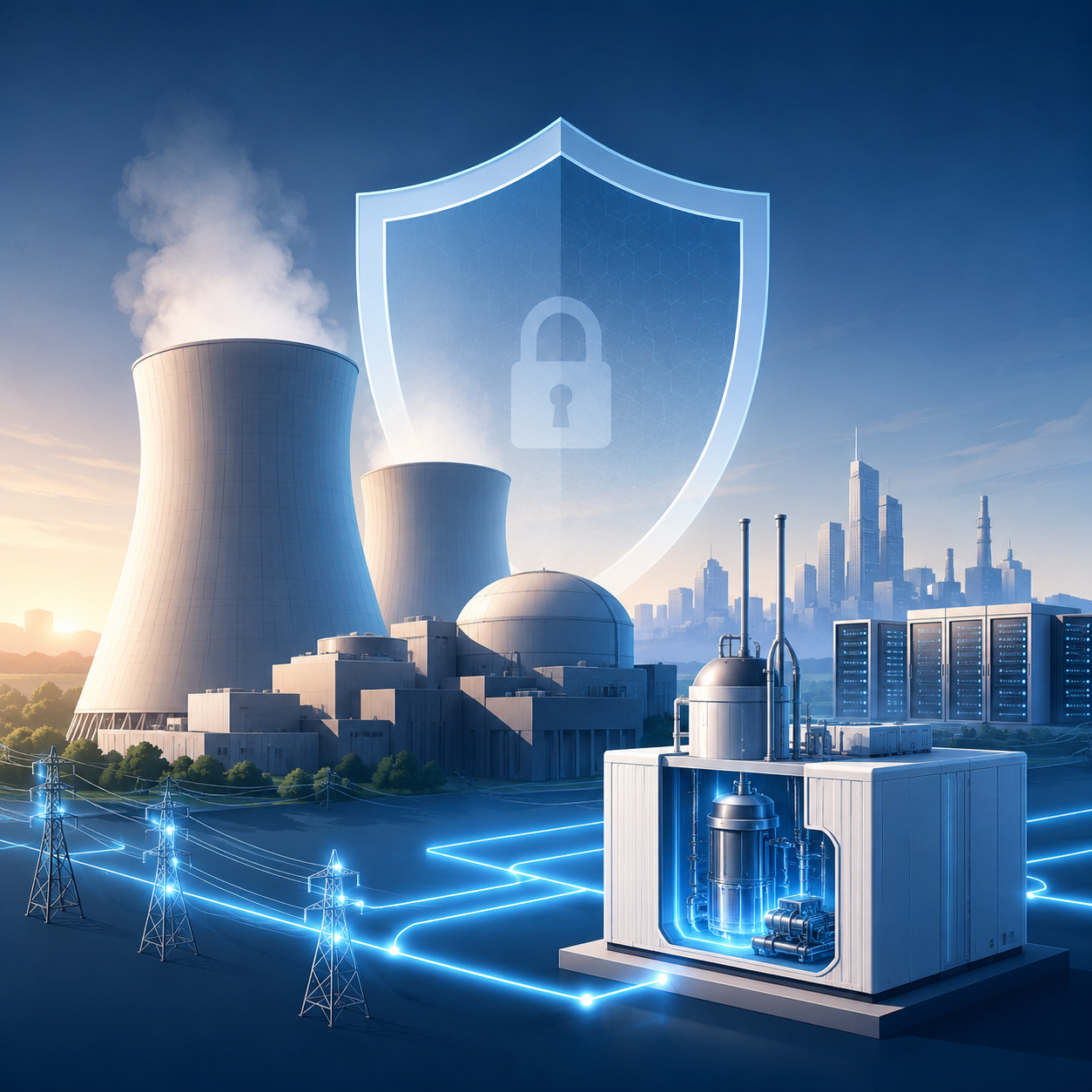
한때 원자력은 지나간 시대의 에너지처럼 보였다. 거대한 콘크리트 돔, 복잡한 안전 규제, 사고에 대한 공포, 사용후핵연료 문제는 원전을 늘 조심스럽고 무거운 주제로 만들었다. 후쿠시마 사고 이후 세계 여러 나라에서 원전은 줄여야 할 전원, 가능하면 벗어나야 할 위험한 기술로 분류됐다. 태양광과 풍력이 빠르게 확산되고, 탄소중립이 국제사회의 중심 의제로 떠오르면서 원전은 더 이상 미래의 주역이 아닌 듯했다.
그러나 에너지의 역사는 종종 예상과 다른 방향으로 움직인다. 지금 세계는 다시 원자력을 바라보고 있다. 이유는 단순하지 않다. 전력 수요는 예상보다 빠르게 늘고, 기후위기는 화석연료 감축을 압박하며, 지정학 갈등은 에너지 공급망을 흔들고 있다. 여기에 인공지능 데이터센터, 반도체 공장, 전기차, 냉난방 전력, 배터리 산업, 로봇 공정까지 겹치면서 전기는 더 이상 생활 인프라가 아니라 국가 경쟁력의 핵심 자원이 되고 있다. 석유를 확보하는 나라가 산업화를 주도했던 시대가 있었다면, 앞으로는 안정적인 전기를 확보하는 나라가 디지털 산업과 제조업, 안보와 기후 대응을 동시에 이끌 가능성이 크다.
원전의 재평가는 그래서 단순한 원전 찬반 논쟁이 아니다. 더 정확히 말하면, 전기가 곧 안보가 되는 시대에 국가가 어떤 전력 체계를 가져야 하느냐는 질문이다. 원전이 완벽한 해답이라는 뜻은 아니다. 원전은 여전히 위험과 비용, 폐기물과 지역 수용성의 문제를 안고 있다. 그러나 전력 수요가 폭증하고, 탄소를 줄여야 하며, 전력망의 안정성까지 지켜야 하는 상황에서 원전을 무조건 배제하는 것 역시 현실적이지 않다는 인식이 커지고 있다. 원자력은 다시 미래의 카드가 되고 있다. 다만 이번 귀환은 과거와 다르다. 대형 원전만이 아니라 소형모듈원전, 즉 SMR이 함께 논의되고 있고, 원전은 단독 주연이 아니라 재생에너지, 저장장치, 송전망, 수요관리와 함께 움직이는 복합 전력 체계의 한 축으로 다시 배치되고 있다.
[Key Message]
* 전기는 이제 생활 인프라가 아니라 국가 안보의 핵심 자원이 되고 있다. 인공지능, 데이터센터, 반도체, 전기차, 첨단 제조업이 동시에 전력 수요를 밀어 올리면서 안정적인 전기 공급 능력이 국가 경쟁력의 기준이 되고 있다.
* 원전의 귀환은 원전 찬반 논쟁이 아니라 전력 안보 전략의 문제다. 원자력은 완벽한 해답은 아니지만, 전력 수요 증가와 탄소 감축, 에너지 안보를 동시에 고려할 때 다시 계산해야 할 현실적 선택지가 되고 있다.
* 대형 원전은 여전히 안정적인 대규모 전력 공급의 중심축이다. 건설비와 기간, 안전성 논란은 크지만, 한 번 가동되면 장기간 안정적으로 전기를 공급할 수 있다는 점에서 제조업 국가와 첨단 산업에는 중요한 기반이 된다.
* SMR은 원자력의 새로운 가능성이지만 아직 검증이 필요한 기술이다. 소형모듈원전은 데이터센터, 산업단지, 군사기지, 도서 지역 등 특수 수요와 결합할 수 있지만, 경제성·안전성·규제·상용화 경험은 아직 풀어야 할 과제다.
* 원전의 미래는 기술력보다 신뢰와 책임에 달려 있다. 사용후핵연료, 사고 대응, 지역 수용성, 정책 일관성, 투명한 규제 체계를 함께 갖추지 못하면 원전은 전력 안보 카드가 아니라 또 다른 사회적 갈등이 될 수 있다.
***
전력의 시대
20세기의 국가 경쟁력은 석유, 철강, 항만, 도로, 대규모 공장지대에서 출발했다. 충분한 원료를 들여오고, 값싼 에너지로 공장을 돌리고, 제품을 빠르게 운송하는 나라가 성장했다. 하지만 21세기 중반으로 갈수록 경쟁력의 출발점은 점점 전력으로 이동하고 있다. 전기는 더 이상 가정의 조명과 냉장고를 움직이는 생활 에너지에 머물지 않는다. 인공지능을 학습시키는 서버, 반도체 클린룸, 전기차 충전망, 배터리 공장, 스마트 물류창고, 로봇 생산라인, 해수담수화 시설, 국방 통신망까지 거의 모든 핵심 인프라가 전기를 먹고 움직인다.
특히 인공지능은 전력 문제를 전면으로 끌어올렸다. 디지털 산업은 한동안 가볍고 깨끗한 산업처럼 보였다. 소프트웨어와 플랫폼은 굴뚝 없이 성장했고, 클라우드는 물리적 기반이 희미한 서비스처럼 인식됐다. 그러나 생성형 인공지능의 시대가 열리면서 디지털 산업의 물질적 토대가 드러났다. 인공지능은 눈에 보이지 않는 알고리즘만으로 작동하지 않는다. 거대한 데이터센터, 고성능 반도체, 냉각 장치, 송전망, 변전소, 장기 전력 구매 계약이 있어야 한다. 데이터센터는 이제 인터넷의 뒷방이 아니라 지역 전력망을 뒤흔드는 거대한 수요자가 되었다.
문제는 전력 수요가 늘어나는 속도와 전력 공급 체계가 바뀌는 속도가 다르다는 데 있다. 데이터센터와 공장은 몇 년 안에 지을 수 있다. 그러나 송전망과 대형 발전소는 훨씬 긴 시간이 필요하다. 재생에너지는 빠르게 늘고 있지만 날씨와 시간대에 따라 출력이 달라진다. 배터리는 이 변동성을 줄이는 데 필수적이지만 아직 장기간, 대규모 저장을 완전히 감당하기에는 비용과 기술의 한계가 있다. 천연가스 발전은 빠르게 투입할 수 있지만 가격 변동과 탄소 배출 문제가 남는다. 바로 이 틈에서 원전이 다시 호출된다. 원전은 한 번 가동되면 오랜 기간 대규모 전기를 안정적으로 공급할 수 있고, 발전 과정에서 탄소 배출이 적다.
전기는 이제 단순히 많이 만드는 것만으로 충분하지 않다. 언제든 끊기지 않아야 하고, 가격이 예측 가능해야 하며, 탄소 배출도 낮아야 한다. 산업은 전기요금이 불안정한 곳을 피하고, 데이터센터는 안정적인 전력 계약을 찾아 움직이며, 국가는 전력망이 흔들릴 때 안보가 흔들린다는 사실을 깨닫고 있다. 전력은 보이지 않는 국경이 되었다. 전기가 부족한 나라는 첨단 산업을 유치하기 어렵고, 전기요금이 급등하는 나라는 제조업 경쟁력을 지키기 어렵다. 앞으로의 산업 지도는 공항과 항만, 도로망만이 아니라 발전소와 송전망, 전력 저장 시설을 중심으로 다시 그려질 가능성이 크다.
흔들리는 탈원전의 확신
후쿠시마 사고 이후 원전은 많은 나라에서 정치적으로 부담스러운 에너지가 되었다. 원전 사고는 확률이 낮더라도 한 번 발생하면 사회적 충격이 크다. 방사성 물질에 대한 공포는 단순한 기술 설명만으로 쉽게 해소되지 않는다. 사용후핵연료를 어디에, 얼마나 안전하게, 얼마나 오래 보관할 것인가라는 질문도 간단하지 않다. 그래서 원전은 오랫동안 줄여야 할 위험으로 여겨졌다. 어떤 나라에서는 탈원전이 시대정신처럼 받아들여졌고, 원전의 자리를 재생에너지와 에너지 효율 개선이 대신할 것이라는 기대가 커졌다.
그러나 에너지 정책은 이상만으로 움직이지 않는다. 러시아와 우크라이나 전쟁은 세계에 에너지 안보의 현실을 다시 보여주었다. 천연가스 가격이 급등하고, 전기요금이 뛰고, 산업계가 비용 압박을 받았다. 에너지는 시장에서 사고파는 상품인 동시에 정치와 안보의 도구라는 사실이 분명해졌다. 화석연료 의존도를 줄이면서도 안정적인 전기를 확보해야 하는 모순적인 과제가 각국 앞에 놓였다. 탄소를 줄이기 위해 전기차와 히트펌프, 산업 전기화를 확대해야 하는데, 정작 그 전기를 어떻게 충분하고 안정적으로 만들 것인지가 또 다른 숙제가 된 것이다.
탈원전의 논리는 안전과 환경의 관점에서 강한 설득력을 가졌다. 그러나 전력 수요가 계속 늘어나는 현실 앞에서 그 논리는 새로운 질문을 마주하게 되었다. 원전을 줄인 자리를 무엇으로 채울 것인가. 석탄과 가스를 줄이면서 재생에너지만으로 24시간 안정적인 전력망을 운영할 수 있는가. 송전망과 저장장치가 충분히 준비되지 않은 상태에서 원전을 너무 빨리 줄이면 전기요금과 산업 경쟁력은 어떻게 되는가. 기후 대응과 전력 안보가 충돌할 때 어느 쪽을 우선할 것인가.
물론 이 질문들이 원전 확대의 정답을 자동으로 보장하는 것은 아니다. 다만 원전을 단순히 과거의 에너지로 밀어내기에는 상황이 복잡해졌다는 뜻이다. 과거의 탈원전 논쟁은 원전의 위험을 중심으로 전개됐다. 지금의 원전 재평가는 전력 수요, 탄소중립, 에너지 안보, 산업 경쟁력이라는 더 넓은 틀 안에서 이루어진다. 원전을 좋아해서가 아니라, 원전을 빼고 계산했을 때 남는 공백이 너무 크다는 현실적 판단이 등장한 것이다.
대형 원전의 귀환
원전 논의의 중심에는 여전히 대형 원전이 있다. 대형 원전의 장점은 분명하다. 한 기가 완공되면 수십 년 동안 막대한 전기를 안정적으로 생산할 수 있다. 연료를 자주 교체하지 않아도 되고, 발전량이 크며, 날씨에 좌우되지 않는다. 전력 수요가 큰 제조업 국가, 반도체와 철강, 화학, 배터리 산업을 가진 국가는 이런 안정성을 쉽게 포기하기 어렵다. 공장과 데이터센터는 전기가 필요할 때만 돌아가는 시설이 아니다. 24시간, 365일, 예측 가능한 전력이 필요하다. 대형 원전은 바로 이 요구에 가장 가까운 전원 가운데 하나다.
하지만 대형 원전은 쉬운 선택지가 아니다. 건설 기간이 길고 초기 투자비가 크다. 공사가 지연되거나 비용이 초과되면 정치적 부담이 커진다. 원전 건설은 단순한 발전소 공사가 아니라 금융, 규제, 안전 심사, 지역 수용성, 인력 양성, 공급망 관리가 모두 얽힌 초장기 국가 프로젝트다. 민주주의 국가에서 대형 원전은 정책 일관성이 흔들릴 때마다 위험해진다. 정권이 바뀔 때마다 원전 정책이 오락가락하면 기업은 투자를 미루고, 인력은 빠져나가며, 공급망은 약해진다. 원전은 하루아침에 다시 켤 수 있는 스위치가 아니다. 한 번 생태계가 무너지면 회복에는 긴 시간이 걸린다.
그럼에도 대형 원전이 다시 논의되는 이유는 전력 수요의 규모 때문이다. 인공지능과 전기화가 만들어내는 수요는 작은 보완 전원만으로 해결하기 어렵다. 대형 산업단지와 수도권, 첨단 제조 클러스터는 엄청난 전기를 요구한다. 재생에너지를 최대한 늘리더라도 흐린 날, 바람 없는 시간, 야간과 계절 변동을 고려하면 전력망은 일정한 중심축을 필요로 한다. 대형 원전은 바로 그 중심축이 될 수 있다.
대형 원전의 복귀는 단순히 예전 방식으로 돌아간다는 뜻이 아니다. 앞으로의 대형 원전은 더 엄격한 안전 기준, 더 투명한 정보 공개, 더 정교한 금융 구조, 더 강한 지역 협의 체계를 요구받게 될 것이다. 원전은 기술적으로 안전하다고 주장하는 것만으로 충분하지 않다. 사회가 안전하다고 납득할 수 있어야 한다. 원전의 경제성도 단순히 발전 단가만으로 평가하기 어렵다. 장기간 안정적인 전력 공급, 탄소 감축, 전력망 안정성, 산업 유치 효과까지 함께 따져야 한다. 반대로 비용 초과, 폐기물 관리, 사고 대응 비용도 함께 계산해야 한다. 원전의 재평가는 원전을 다시 미화하는 일이 아니라, 훨씬 더 냉정하고 넓은 계산을 요구하는 과정이다.
소형모듈원전이라는 새로운 상상력
최근 원전 논의에서 가장 많이 등장하는 단어는 소형모듈원전, 즉 SMR이다. SMR이 주목받는 이유는 원전의 오래된 약점을 줄일 수 있다는 기대 때문이다. 기존 대형 원전은 규모가 크고 현장 맞춤형 공사가 많아 공정 관리가 어렵다. 반면 SMR은 상대적으로 작은 원자로를 공장에서 표준화해 제작하고, 현장에서 조립하는 방식을 지향한다. 이론적으로는 건설 기간을 줄이고, 초기 투자 부담을 낮추며, 필요에 따라 여러 기를 단계적으로 배치할 수 있다. 대형 원전이 거대한 댐이라면, SMR은 여러 지역에 배치할 수 있는 모듈형 전력 블록에 가깝다.
SMR이 특히 매력적으로 보이는 곳은 대형 전력망이 닿기 어렵거나 특수한 전력 수요가 있는 지역이다. 오지, 도서 지역, 군사기지, 산업단지, 해수담수화 시설, 지역난방, 수소 생산, 데이터센터 등이 대표적이다. 예컨대 데이터센터는 막대한 전기를 안정적으로 확보해야 하면서도 탄소 감축 요구를 받는다. 재생에너지 전력 구매만으로는 24시간 전력 수요를 완전히 맞추기 어렵다. 이런 상황에서 SMR은 “항상 켜져 있는 저탄소 전원”이라는 이미지로 부상한다. 데이터센터 옆에 안정적인 전원을 붙이는 상상은 이제 공상과학이 아니라 실제 산업 전략의 한 장면으로 논의되고 있다.
물론 SMR은 아직 약속과 현실 사이에 있다. 기술적 가능성은 크지만 상업적 검증은 충분하지 않다. 실제 비용이 얼마나 낮아질지, 공장 생산의 규모의 경제가 얼마나 빨리 작동할지, 규제 심사를 어떻게 표준화할지, 사용후핵연료와 안전 문제를 어떻게 다룰지 아직 풀어야 할 과제가 많다. 작은 원전이라고 해서 위험이 자동으로 사라지는 것은 아니다. 오히려 여러 지역에 분산 배치될 경우 보안, 감시, 비상 대응 체계는 더 정교해져야 한다. 원전이 작아진다고 사회적 책임까지 작아지는 것은 아니다.
그럼에도 SMR이 중요한 이유는 에너지 논의의 상상력을 바꾸고 있기 때문이다. 원전은 더 이상 해안가에 세워진 거대한 발전소만을 의미하지 않는다. 전력 수요가 있는 곳 가까이에서, 산업과 도시의 구조에 맞춰, 열과 전기를 함께 공급하는 분산형 저탄소 인프라로 논의되기 시작했다. 이는 원자력의 이미지 자체를 바꿀 수 있다. 원전이 국가 전력망의 거대한 기둥이라면, SMR은 산업 현장과 지역 단위의 맞춤형 전원으로 자리 잡을 가능성이 있다. 다만 그 가능성은 아직 증명되어야 한다. SMR의 미래는 홍보 문구가 아니라 실제 첫 상용 사례의 성패에 달려 있다.
기후 해법과 위험의 경계
원전을 둘러싼 논쟁은 앞으로도 쉽게 끝나지 않을 것이다. 원전 지지자들은 원전이 탄소 배출을 줄이면서도 안정적인 전기를 공급할 수 있는 거의 유일한 대규모 전원이라고 말한다. 태양광과 풍력은 빠르게 늘려야 하지만, 날씨와 시간의 영향을 받기 때문에 원전 같은 안정 전원이 필요하다는 주장이다. 특히 전력망이 흔들리면 산업과 생활 전체가 멈추기 때문에 기후 대응과 전력 안보를 동시에 고려하면 원전을 배제하기 어렵다는 논리다.
반대로 원전 비판론자들은 원전이 너무 비싸고 느리며 위험하다고 말한다. 신규 원전은 완공까지 긴 시간이 걸리고, 비용 초과가 반복될 수 있다. 사용후핵연료 처분장은 많은 나라에서 여전히 사회적 합의를 얻기 어렵다. 사고 확률이 낮아졌다고 해도 완전히 사라진 것은 아니다. 또한 원전에 막대한 예산을 투입하면 재생에너지, 송전망, 배터리, 에너지 효율 개선에 들어갈 자원이 줄어들 수 있다는 우려도 있다.
이 논쟁에서 중요한 것은 원전을 신화화하지도, 악마화하지도 않는 태도다. 원전은 모든 문제의 해답이 아니다. 그러나 전력 수요가 폭증하는 시대에 원전을 무조건 배제하는 것도 현실적이지 않다. 원전은 강력한 장점을 가진 동시에 무거운 책임을 요구하는 기술이다. 따라서 질문은 “원전을 할 것인가 말 것인가”에서 멈추면 안 된다. 어떤 원전을, 어디에, 어떤 규모로, 어떤 규제와 감시 아래, 어떤 전력망 조합 속에서 운영할 것인가를 물어야 한다.
원전의 기후적 가치는 분명하다. 발전 과정에서 탄소를 거의 배출하지 않고, 날씨와 관계없이 장시간 전력을 공급한다. 그러나 기후 해법이라는 이유만으로 모든 문제가 사라지는 것은 아니다. 고준위폐기물, 해체 비용, 사고 대응 체계, 주민 수용성, 규제 독립성은 여전히 원전의 핵심 과제다. 원전의 미래는 기술의 문제가 아니라 신뢰의 문제이기도 하다. 사람들은 원전이 안전하다는 설명보다, 위험이 발생했을 때 누가 책임지고 어떻게 대응할 것인지에 더 민감하다. 원전은 단지 전기를 만드는 시설이 아니라 사회가 위험을 관리하는 능력을 시험하는 공공 기술이다.
앞으로의 에너지 전략은 단일 해답보다 조합의 정교함이 중요해질 것이다. 태양광과 풍력은 계속 확대되어야 한다. 배터리와 양수발전, 수소 저장, 수요반응 기술도 강화되어야 한다. 송전망 투자는 더 빨라져야 하고, 전력 소비 효율도 높아져야 한다. 그 위에 원전이 들어간다면, 원전은 재생에너지를 밀어내는 경쟁자가 아니라 전력망의 안정성을 보완하는 축으로 설계되어야 한다. 원전의 재평가가 의미 있으려면 그것은 원전 단독의 부활이 아니라 전력 시스템 전체의 재설계로 이어져야 한다.
한국의 기회와 숙제
한국은 원전 논의에서 특별한 위치에 있다. 국토는 좁고, 에너지 자원은 부족하며, 제조업 비중은 높다. 반도체, 디스플레이, 철강, 석유화학, 배터리, 조선, 자동차, 데이터센터는 모두 안정적인 전력을 요구한다. 한국 경제는 전기를 많이 쓰는 산업 위에 서 있다. 전기요금과 전력 품질은 곧 산업 경쟁력이다. 한국이 전력 안보를 놓치면 산업 전략 전체가 흔들릴 수밖에 없다.
한국은 동시에 원전 건설과 운영 경험을 가진 나라다. 설계, 제작, 시공, 운영, 정비, 부품 공급망이 축적돼 있고, 해외 원전 수출 경험도 있다. 세계적으로 원전이 재평가되는 흐름은 한국 기업과 산업 생태계에 기회가 될 수 있다. 대형 원전 수출, 원전 기자재, 운영 정비, SMR 기술 개발, 원전 해체, 방사성폐기물 관리까지 다양한 영역에서 새로운 시장이 열릴 수 있다. 원전은 단순한 발전원이 아니라 수출 산업이자 첨단 제조업의 한 축이 될 수 있다.
하지만 기회만 있는 것은 아니다. 가장 큰 문제는 정책의 일관성이다. 원전은 5년짜리 정책으로 다룰 수 없다. 원전 하나를 기획하고 짓고 운영하고 해체하는 데는 수십 년이 걸린다. 인력 양성도 마찬가지다. 대학과 연구기관, 기업의 전문 인력이 한 번 빠져나가면 다시 복원하기 어렵다. 정권마다 원전 정책이 급격히 흔들리면 산업 생태계는 장기 투자를 할 수 없다. 원전이 전력 안보의 카드가 되려면 정치 구호가 아니라 국가 전력 전략으로 다뤄져야 한다.
사용후핵연료 문제도 더 이상 미룰 수 없다. 원전의 신뢰는 발전소 안에서만 결정되지 않는다. 전기를 만든 뒤 남는 고준위폐기물을 어떻게 관리할 것인가가 원전 정책의 정당성을 좌우한다. 임시저장 시설을 계속 늘리는 방식만으로는 사회적 신뢰를 얻기 어렵다. 장기 처분장, 지역 보상, 투명한 정보 공개, 독립적 규제, 주민 참여가 함께 가야 한다. 원전 확대를 말하려면 폐기물 관리의 책임도 함께 말해야 한다. 원전의 진짜 비용은 발전소를 짓는 순간이 아니라, 수십 년 뒤까지 책임지는 능력에서 드러난다.
SMR 역시 한국에 기회이자 시험대다. 한국이 SMR을 미래 수출 산업으로 키우려면 기술 개발만으로는 부족하다. 안전 규제 체계, 표준 설계, 실증 부지, 금융 모델, 해외 인증, 국제 협력, 공급망 전략이 함께 필요하다. SMR은 아직 시장이 완전히 열린 산업이 아니기 때문에 누가 먼저 안전성과 경제성을 입증하느냐가 중요하다. 기술 홍보보다 중요한 것은 실제로 작동하는 첫 사례다. 원전 산업에서 신뢰는 말이 아니라 운영 기록으로 쌓인다.
한국 사회가 원전을 둘러싼 찬반의 진자운동을 넘어설 수 있는지도 중요하다. 원전은 위험하니 모두 줄여야 한다는 주장과, 원전만이 미래라는 주장은 모두 현실을 단순화한다. 한국에 필요한 것은 더 냉정한 전력 전략이다. 어느 정도의 원전이 필요한지, 재생에너지는 어디까지 늘릴 수 있는지, 송전망은 어떻게 보강할지, 산업단지의 전력 수요를 어떻게 관리할지, 전기요금 체계는 어떻게 바꿀지, 사용후핵연료는 어떻게 책임질지 한꺼번에 논의해야 한다. 원전은 이 거대한 퍼즐의 한 조각이다. 중요한 것은 그 조각을 어디에, 어떤 크기로 놓을 것인가다.
전력 안보의 새로운 질서
앞으로 에너지 질서는 원전 대 재생에너지라는 단순한 대결 구도로 설명하기 어려워질 것이다. 재생에너지는 더 커질 것이다. 배터리와 저장 기술도 발전할 것이다. 전기차와 히트펌프, 데이터센터와 인공지능은 전력 수요를 계속 밀어 올릴 것이다. 동시에 기후 위기는 화석연료를 줄이라고 압박할 것이다. 이 복잡한 방정식 속에서 원전은 다시 하나의 현실적 선택지로 떠오르고 있다.
그러나 원전의 재평가는 과거로 돌아가는 일이 아니다. 과거의 원전은 대규모 산업화 시대의 전력 공급 장치였다. 앞으로의 원전은 전력 안보, 탄소중립, 디지털 인프라, 지역 수용성, 위험 관리가 함께 얽힌 복합 인프라가 된다. 원전은 더 투명해야 하고, 더 안전해야 하며, 더 유연해야 한다. 원전 산업은 더 이상 기술자와 정부만의 영역에 머물 수 없다. 시민, 지역사회, 금융시장, 산업계, 환경정책이 함께 검증하는 공공 기술이 되어야 한다.
가장 현실적인 미래는 하나의 에너지원이 모든 문제를 해결하는 그림이 아닐 가능성이 크다. 태양광과 풍력은 전력의 큰 비중을 차지하고, 배터리와 저장 기술은 변동성을 흡수하며, 원전은 장시간 안정 전원으로 버티고, 가스는 과도기적 보완 전원으로 남고, 전력 수요 관리는 소비를 조절하는 방식이 될 수 있다. 에너지의 미래는 하나의 영웅이 모든 문제를 해결하는 서사가 아니라 여러 기술이 서로의 약점을 보완하는 조합의 서사에 가깝다.
원전의 귀환을 둘러싼 핵심은 결국 이것이다. 전기가 곧 안보가 되는 시대에 국가는 어떤 전력 체계를 가질 것인가. 가장 싼 전기만 찾던 시대는 지나가고 있다. 이제 중요한 것은 싸면서도 안정적이고, 깨끗하면서도 충분하며, 빠르게 늘릴 수 있으면서도 사회가 감당할 수 있는 전력이다. 이 어려운 조건을 모두 만족하는 단일 전원은 없다. 그래서 원전의 재평가는 더 넓은 전력 전략 속에서 의미를 가진다.
원자력은 다시 돌아오고 있다. 하지만 그것은 무조건적인 부활이 아니다. 더 냉정한 계산, 더 엄격한 안전, 더 투명한 합의, 더 정교한 전력망 설계 속에서만 가능한 귀환이다. 원전이 미래의 카드가 될 수 있는지는 원전 자체의 기술력만이 아니라, 사회가 위험을 관리하고 장기 전략을 유지할 수 있는 능력에 달려 있다. 전력 안보의 시대, 원자력은 다시 시험대에 올랐다. 이번 시험의 기준은 단순한 발전량이 아니다. 안정성과 책임, 비용과 신뢰를 함께 감당할 수 있느냐가 원전의 미래를 결정할 것이다.
Reference
International Energy Agency. Electricity 2026: Analysis and Forecast to 2030. Paris: IEA, 2026.
International Energy Agency. The Path to a New Era for Nuclear Energy. Paris: IEA, 2025.
International Energy Agency. Key Questions on Energy and AI. Paris: IEA, 2026.
International Energy Agency. Global Energy Review 2026. Paris: IEA, 2026.
OECD Nuclear Energy Agency. The NEA Small Modular Reactor Dashboard: Third Edition. Paris: OECD NEA, 2025.
OECD Nuclear Energy Agency. NEA Small Modular Reactor Dashboard. Paris: OECD NEA, 2025.
World Nuclear Association. World Nuclear Performance Report 2025. London: World Nuclear Association, 2026.
World Nuclear Association. The World Nuclear Supply Chain 2023. London: World Nuclear Association, 2023.
U.S. Energy Information Administration. Annual Energy Outlook 2025. Washington, DC: EIA, 2025.
U.S. Energy Information Administration. Short-Term Energy Outlook. Washington, DC: EIA, 2026.
International Atomic Energy Agency. Climate Change and Nuclear Power 2024. Vienna: IAEA, 2024.
International Atomic Energy Agency. Advances in Small Modular Reactor Technology Developments: A Supplement to IAEA Advanced Reactors Information System. Vienna: IAEA, 2024.
The Reassessment of Nuclear Power
- Why Nuclear Energy Is Returning in an Age When Electricity Has Become Security
Nuclear power once seemed like an energy source from a bygone era. Massive concrete domes, complex safety regulations, fear of accidents, and the problem of spent nuclear fuel made nuclear energy a cautious and burdensome subject. After the Fukushima accident, many countries classified nuclear power as a source of electricity that should be reduced, or as a risky technology to be phased out if possible. As solar and wind power expanded rapidly and carbon neutrality became a central agenda for the international community, nuclear power no longer appeared to be a leading force of the future.
But the history of energy often moves in unexpected directions. The world is now looking at nuclear power again. The reasons are not simple. Electricity demand is rising faster than expected, the climate crisis is pressuring countries to cut fossil fuels, and geopolitical conflicts are shaking energy supply chains. On top of this, artificial intelligence data centers, semiconductor plants, electric vehicles, cooling and heating demand, the battery industry, and robotic production processes are all expanding at once. Electricity is no longer just a basic living infrastructure. It is becoming a core resource of national competitiveness. There was a time when countries that secured oil led industrialization. In the future, countries that secure stable electricity are likely to lead digital industries, manufacturing, security, and climate response at the same time.
The reassessment of nuclear power, therefore, is not a simple debate over whether one supports or opposes nuclear energy. More precisely, it is a question of what kind of power system a country should have in an age when electricity itself has become security. This does not mean nuclear power is a perfect answer. Nuclear energy still carries problems of risk, cost, waste, and local acceptance. Yet as electricity demand surges, carbon emissions must be reduced, and grid stability must be maintained, the view is growing that excluding nuclear power entirely is also unrealistic. Nuclear power is once again becoming a card for the future. This return, however, is different from the past. It is not only large-scale nuclear power plants that are being discussed, but also small modular reactors, or SMRs. Nuclear power is being repositioned not as a solo star, but as one pillar of a complex power system that works together with renewable energy, storage systems, transmission grids, and demand management.
[Key Message]
* Electricity is no longer just basic infrastructure; it is becoming a core resource of national security. As artificial intelligence, data centers, semiconductors, electric vehicles, and advanced manufacturing drive up power demand, the ability to supply stable electricity is becoming a measure of national competitiveness.
* The return of nuclear power is not simply a debate over support or opposition; it is a question of electricity security strategy. Nuclear power is not a perfect answer, but rising electricity demand, carbon reduction, and energy security are making it a realistic option that must be reconsidered.
* Large nuclear power plants remain a central pillar of stable, large-scale electricity supply.
Despite high construction costs, long timelines, and safety concerns, their ability to provide reliable power for decades makes them important for manufacturing nations and advanced industries.
* SMRs offer a new possibility for nuclear energy, but they still need real-world verification. Small modular reactors could serve data centers, industrial complexes, military bases, islands, and remote areas, but their economics, safety, regulation, and commercial deployment remain unresolved challenges.
* The future of nuclear power depends not only on technology, but on trust and responsibility. Without credible solutions for spent fuel, accident response, local acceptance, policy consistency, and transparent regulation, nuclear power may become another source of social conflict rather than a card for electricity security.
***
The Age of Electricity
In the twentieth century, national competitiveness began with oil, steel, ports, roads, and large industrial zones. Countries grew by bringing in enough raw materials, running factories with inexpensive energy, and transporting products quickly. But as we move deeper into the twenty-first century, the starting point of competitiveness is increasingly shifting toward electricity. Electricity is no longer limited to the household energy that powers lights and refrigerators. Almost every core infrastructure now runs on electricity, including servers that train artificial intelligence, semiconductor clean rooms, electric vehicle charging networks, battery factories, smart logistics warehouses, robotic production lines, desalination facilities, and military communications networks.
Artificial intelligence, in particular, has brought the issue of electricity to the forefront. For a long time, the digital industry seemed light and clean. Software and platforms grew without smokestacks, and the cloud was perceived as a service with an almost invisible physical foundation. But with the rise of generative artificial intelligence, the material base of the digital industry has been revealed. Artificial intelligence does not run on invisible algorithms alone. It requires massive data centers, high-performance semiconductors, cooling systems, transmission grids, substations, and long-term power purchase agreements. Data centers are no longer the back room of the internet. They have become enormous electricity consumers that can shake regional power grids.
The problem is that the speed at which electricity demand is rising is different from the speed at which power supply systems can change. Data centers and factories can be built within a few years. But transmission grids and large power plants take much longer. Renewable energy is expanding quickly, but its output changes depending on weather and time of day. Batteries are essential for reducing this variability, but in terms of cost and technology, they still have limitations in fully handling long-duration and large-scale storage. Natural gas power plants can be deployed quickly, but they still face price volatility and carbon emissions problems. It is precisely in this gap that nuclear power is being called upon again. Once in operation, nuclear power can supply large amounts of electricity steadily over a long period, and it produces little carbon during power generation.
It is no longer enough simply to produce a lot of electricity. Electricity must not be interrupted, its price must be predictable, and its carbon emissions must be low. Industries avoid places with unstable electricity prices, data centers move in search of stable power contracts, and countries are realizing that when the power grid becomes unstable, security also becomes unstable. Electricity has become an invisible border. A country short of electricity will find it difficult to attract advanced industries, and a country with surging electricity prices will struggle to protect its manufacturing competitiveness. The industrial map of the future is likely to be redrawn not only around airports, ports, and roads, but also around power plants, transmission grids, and electricity storage facilities.
The Shaking Confidence in Nuclear Phase-Out
After the Fukushima accident, nuclear power became a politically burdensome energy source in many countries. Even if the probability of a nuclear accident is low, the social shock is enormous once it happens. Fear of radioactive materials is not easily resolved by technical explanations alone. The question of where, how safely, and for how long spent nuclear fuel should be stored is also far from simple. For these reasons, nuclear power was long seen as a risk that should be reduced. In some countries, nuclear phase-out was accepted almost as the spirit of the times, and expectations grew that renewable energy and energy efficiency improvements would replace nuclear power.
But energy policy does not move by ideals alone. The war between Russia and Ukraine showed the world once again the reality of energy security. Natural gas prices soared, electricity bills rose, and industries came under cost pressure. It became clear that energy is both a commodity traded in markets and a tool of politics and security. Countries now face the contradictory task of reducing dependence on fossil fuels while also securing stable electricity. To cut carbon emissions, they must expand electric vehicles, heat pumps, and industrial electrification. But how to produce enough stable electricity for all of this has become another major challenge.
The logic of nuclear phase-out had strong persuasive power from the perspectives of safety and the environment. But in the face of continuously rising electricity demand, that logic has encountered new questions. What will fill the space left by reduced nuclear power? Can a twenty-four-hour stable power grid be operated with renewable energy alone while reducing coal and gas? If nuclear power is reduced too quickly before transmission grids and storage systems are sufficiently prepared, what happens to electricity prices and industrial competitiveness? When climate response and electricity security collide, which should be prioritized?
Of course, these questions do not automatically guarantee that expanding nuclear power is the answer. They simply mean that the situation has become too complex to push nuclear power aside as merely an energy source of the past. Earlier debates over nuclear phase-out centered on the risks of nuclear energy. Today’s reassessment of nuclear power is taking place within a much broader framework that includes electricity demand, carbon neutrality, energy security, and industrial competitiveness. Nuclear power is not being reconsidered because people suddenly like it. It is being reconsidered because, when nuclear power is removed from the equation, the remaining gap looks too large.
The Return of Large Nuclear Power Plants
At the center of the nuclear debate are still large nuclear power plants. Their advantages are clear. Once a large reactor is completed, it can generate enormous amounts of electricity reliably for decades. It does not require frequent fuel replacement, produces large output, and is not affected by weather. Countries with high electricity demand, especially those with manufacturing sectors such as semiconductors, steel, chemicals, and batteries, cannot easily give up this stability. Factories and data centers are not facilities that operate only when electricity is available. They need predictable electricity twenty-four hours a day, 365 days a year. Large nuclear power plants are among the power sources closest to meeting this requirement.
But large nuclear power plants are not an easy choice. They require long construction periods and high initial investment. If construction is delayed or costs exceed estimates, the political burden grows. Building a nuclear power plant is not simply a power station construction project. It is an extremely long-term national project involving finance, regulation, safety review, local acceptance, workforce training, and supply chain management. In democratic countries, large nuclear projects become vulnerable whenever policy consistency is shaken. If nuclear policy swings back and forth every time a government changes, companies delay investment, skilled workers leave, and supply chains weaken. Nuclear power is not a switch that can simply be turned back on overnight. Once the industrial ecosystem collapses, recovery takes a long time.
Even so, large nuclear power plants are being discussed again because of the scale of electricity demand. The demand created by artificial intelligence and electrification cannot be solved by small supplementary power sources alone. Large industrial complexes, metropolitan areas, and advanced manufacturing clusters require enormous amounts of electricity. Even if renewable energy is expanded as much as possible, cloudy days, windless hours, nighttime demand, and seasonal variation mean that the power grid needs a stable central axis. Large nuclear power plants can serve as that axis.
The return of large nuclear power plants does not mean going back to the old way. Future large nuclear projects will be required to meet stricter safety standards, provide more transparent information, develop more sophisticated financial structures, and build stronger local consultation systems. It is not enough to insist that nuclear power is technically safe. Society must be able to accept that it is safe. The economics of nuclear power also cannot be assessed only by the cost of generation. Long-term stable electricity supply, carbon reduction, grid stability, and the effect of attracting industries must all be considered. At the same time, cost overruns, waste management, and accident response costs must also be included. Reassessing nuclear power is not about glorifying it again. It is a process that demands a far colder and broader calculation.
Small Modular Reactors and a New Energy Imagination
The term that appears most often in recent nuclear discussions is small modular reactor, or SMR. SMRs are drawing attention because they are expected to reduce some of the long-standing weaknesses of nuclear power. Conventional large nuclear power plants are massive, and because they involve a great deal of site-specific construction, process management is difficult. By contrast, SMRs aim to use relatively small reactors manufactured in standardized form at factories and assembled on site. In theory, this can shorten construction periods, lower initial investment burdens, and allow multiple units to be deployed in stages as needed. If a large nuclear power plant is like a giant dam, an SMR is closer to a modular power block that can be placed in multiple locations.
SMRs appear especially attractive in places where large power grids are difficult to reach or where there is special electricity demand. Examples include remote areas, islands, military bases, industrial complexes, desalination facilities, district heating systems, hydrogen production sites, and data centers. Data centers, for example, must secure vast amounts of electricity reliably while also facing pressure to reduce carbon emissions. Renewable power purchases alone cannot fully match twenty-four-hour electricity demand. In this situation, SMRs are emerging with the image of an always-on low-carbon power source. The idea of placing a stable power source next to a data center is no longer science fiction. It is now being discussed as part of real industrial strategy.
Of course, SMRs are still somewhere between promise and reality. Their technological potential is large, but commercial verification remains insufficient. Many questions still need to be answered. How low will actual costs become? How quickly will the economies of scale from factory production work? How will regulatory review be standardized? How will spent fuel and safety issues be handled? A smaller nuclear reactor does not automatically mean that risk disappears. If reactors are distributed across multiple regions, security, monitoring, and emergency response systems must become even more sophisticated. Just because nuclear reactors become smaller does not mean social responsibility becomes smaller as well.
Still, SMRs matter because they are changing the imagination of energy policy. Nuclear power no longer means only a massive power station built on the coast. It is beginning to be discussed as a distributed low-carbon infrastructure that can be placed closer to electricity demand, tailored to the structure of industries and cities, and used to supply both heat and electricity. This could change the image of nuclear power itself. If nuclear power has traditionally been a huge pillar of the national power grid, SMRs may become customized power sources for industrial sites and local regions. But that possibility still needs to be proven. The future of SMRs depends not on promotional language, but on the success or failure of the first commercial examples that actually operate.
The Boundary Between Climate Solution and Risk
The debate over nuclear power will not end easily. Supporters of nuclear energy argue that it is one of the few large-scale power sources capable of reducing carbon emissions while also providing stable electricity. Solar and wind power must be expanded rapidly, but because they are affected by weather and time, stable power sources such as nuclear energy are needed. In particular, if the power grid becomes unstable, industry and daily life can both stop. Therefore, the argument goes, nuclear power cannot be excluded when climate response and electricity security are considered together.
Critics of nuclear power, on the other hand, argue that it is too expensive, too slow, and too dangerous. New nuclear power plants take a long time to complete, and cost overruns can occur repeatedly. In many countries, spent fuel disposal sites still struggle to gain social consent. Even if the probability of an accident has decreased, it has not disappeared entirely. There is also concern that if huge budgets are spent on nuclear power, fewer resources will be available for renewable energy, transmission grids, batteries, and energy efficiency improvements.
What matters in this debate is the attitude of neither mythologizing nor demonizing nuclear power. Nuclear power is not the answer to every problem. But in an era of surging electricity demand, excluding it entirely is also unrealistic. Nuclear power is a technology with powerful advantages and heavy responsibilities. Therefore, the question should not stop at whether to use nuclear power or not. We must ask what kind of nuclear power, where, at what scale, under what regulations and oversight, and within what combination of power systems it should be operated.
The climate value of nuclear power is clear. It produces almost no carbon during electricity generation and supplies power for long periods regardless of weather. But calling it a climate solution does not make all problems disappear. High-level radioactive waste, decommissioning costs, accident response systems, local acceptance, and regulatory independence remain central challenges. The future of nuclear power is not only a matter of technology. It is also a matter of trust. People are more sensitive not to explanations that nuclear power is safe, but to who will take responsibility and how they will respond if a risk occurs. Nuclear power is not merely a facility that produces electricity. It is a public technology that tests society’s ability to manage risk.
Future energy strategy will depend more on the sophistication of combinations than on a single answer. Solar and wind power must continue to expand. Batteries, pumped hydro storage, hydrogen storage, and demand response technologies must also be strengthened. Investment in transmission grids must accelerate, and electricity consumption efficiency must improve. If nuclear power is included on top of this, it should be designed not as a competitor that pushes out renewable energy, but as a pillar that supports grid stability. For the reassessment of nuclear power to be meaningful, it must lead not to the revival of nuclear power alone, but to the redesign of the entire power system.
Korea’s Opportunities and Challenges
Korea occupies a special position in the nuclear debate. It has a small land area, lacks domestic energy resources, and has a high share of manufacturing. Semiconductors, displays, steel, petrochemicals, batteries, shipbuilding, automobiles, and data centers all require stable electricity. The Korean economy stands on industries that consume large amounts of power. Electricity prices and power quality are directly tied to industrial competitiveness. If Korea loses electricity security, its entire industrial strategy will inevitably be shaken.
At the same time, Korea has experience in building and operating nuclear power plants. It has accumulated capabilities in design, manufacturing, construction, operation, maintenance, and parts supply chains, and it has experience exporting nuclear power plants overseas. The global reassessment of nuclear power could become an opportunity for Korean companies and the broader industrial ecosystem. New markets could open in large nuclear plant exports, nuclear components, operation and maintenance, SMR technology development, nuclear decommissioning, and radioactive waste management. Nuclear power can become not only a source of electricity, but also an export industry and a pillar of advanced manufacturing.
But there are not only opportunities. The biggest issue is policy consistency. Nuclear power cannot be handled as a five-year policy. Planning, building, operating, and decommissioning a nuclear power plant takes decades. The same is true of workforce training. Once experts in universities, research institutes, and companies leave the field, rebuilding that human base is difficult. If nuclear policy swings sharply with every change of government, the industrial ecosystem cannot make long-term investments. For nuclear power to become a card of electricity security, it must be treated not as a political slogan but as a national power strategy.
The issue of spent nuclear fuel can no longer be postponed. Trust in nuclear power is not determined only inside the power plant. How a country manages the high-level radioactive waste that remains after electricity generation determines the legitimacy of nuclear policy. Continuing to expand temporary storage facilities alone cannot win social trust. Long-term disposal sites, regional compensation, transparent information disclosure, independent regulation, and resident participation must go together. If a country speaks of expanding nuclear power, it must also speak of responsibility for waste management. The real cost of nuclear power is revealed not at the moment a power plant is built, but in the ability to take responsibility for decades afterward.
SMRs are also both an opportunity and a test for Korea. If Korea wants to develop SMRs into a future export industry, technology development alone will not be enough. Safety regulation systems, standardized designs, demonstration sites, financing models, overseas certification, international cooperation, and supply chain strategies are all necessary. Because the SMR market has not fully opened yet, what matters is who can first prove safety and economic viability. More important than technological promotion is the first actual case that works. In the nuclear industry, trust is built not by words but by operating records.
It is also important whether Korean society can move beyond the pendulum swing of support and opposition over nuclear power. The argument that nuclear power is dangerous and should all be reduced oversimplifies reality. So does the argument that nuclear power alone is the future. What Korea needs is a colder and more realistic power strategy. It must discuss at the same time how much nuclear power is needed, how far renewable energy can be expanded, how transmission grids should be reinforced, how electricity demand from industrial complexes should be managed, how the electricity pricing system should change, and how spent nuclear fuel should be handled responsibly. Nuclear power is one piece of this large puzzle. What matters is where that piece should be placed and how large it should be.
The New Order of Electricity Security
The future energy order will become increasingly difficult to explain through a simple confrontation between nuclear power and renewable energy. Renewable energy will grow larger. Batteries and storage technologies will also advance. Electric vehicles, heat pumps, data centers, and artificial intelligence will continue to push up electricity demand. At the same time, the climate crisis will pressure countries to reduce fossil fuels. In this complex equation, nuclear power is emerging again as one realistic option.
But the reassessment of nuclear power is not a return to the past. In the past, nuclear power was a device for supplying electricity during the era of large-scale industrialization. In the future, nuclear power will become a complex infrastructure where electricity security, carbon neutrality, digital infrastructure, local acceptance, and risk management are intertwined. Nuclear power must become more transparent, safer, and more flexible. The nuclear industry can no longer remain only the domain of engineers and governments. It must become a public technology tested together by citizens, local communities, financial markets, industries, and environmental policy.
The most realistic future is unlikely to be one in which a single energy source solves every problem. Solar and wind power may take up a large share of electricity. Batteries and storage technologies may absorb variability. Nuclear power may serve as a long-duration stable power source. Gas may remain as a transitional supplementary source. Demand management may adjust consumption. The future of energy is not a story in which one hero solves every problem. It is closer to a story of several technologies complementing one another’s weaknesses.
The core issue behind the return of nuclear power is ultimately this. In an age when electricity itself has become security, what kind of power system should a country have? The era of searching only for the cheapest electricity is passing. What matters now is electricity that is affordable yet stable, clean yet sufficient, expandable yet socially manageable. There is no single power source that satisfies all these difficult conditions. That is why the reassessment of nuclear power has meaning within a broader power strategy.
Nuclear power is returning. But this is not an unconditional revival. It is a return that is possible only through colder calculations, stricter safety, more transparent consensus, and more sophisticated power grid design. Whether nuclear power can become a card for the future depends not only on the technology of nuclear power itself, but also on society’s ability to manage risk and maintain a long-term strategy. In the age of electricity security, nuclear power is once again on the test bench. The standard of this test is not simply the amount of electricity generated. The future of nuclear power will be decided by whether it can bear stability and responsibility, cost and trust, all at once.
Reference
International Energy Agency. Electricity 2026: Analysis and Forecast to 2030. Paris: IEA, 2026.
International Energy Agency. The Path to a New Era for Nuclear Energy. Paris: IEA, 2025.
International Energy Agency. Key Questions on Energy and AI. Paris: IEA, 2026.
International Energy Agency. Global Energy Review 2026. Paris: IEA, 2026.
OECD Nuclear Energy Agency. The NEA Small Modular Reactor Dashboard: Third Edition. Paris: OECD NEA, 2025.
OECD Nuclear Energy Agency. NEA Small Modular Reactor Dashboard. Paris: OECD NEA, 2025.
World Nuclear Association. World Nuclear Performance Report 2025. London: World Nuclear Association, 2026.
World Nuclear Association. The World Nuclear Supply Chain 2023. London: World Nuclear Association, 2023.
U.S. Energy Information Administration. Annual Energy Outlook 2025. Washington, DC: EIA, 2025.
U.S. Energy Information Administration. Short-Term Energy Outlook. Washington, DC: EIA, 2026.
International Atomic Energy Agency. Climate Change and Nuclear Power 2024. Vienna: IAEA, 2024.
International Atomic Energy Agency. Advances in Small Modular Reactor Technology Developments: A Supplement to IAEA Advanced Reactors Information System. Vienna: IAEA, 2024.