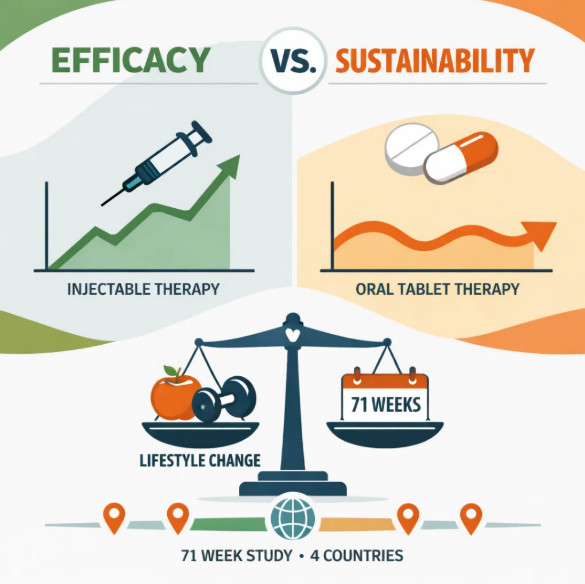
2025년 9월, 세계적으로 권위 있는 의학 학술지에 비만 치료의 방향을 다시 생각하게 만드는 연구가 실렸다. 여러 나라 연구자들이 함께 진행한 이 임상시험은 당뇨병이 없는 과체중·비만 성인을 대상으로, 하루 한 번 먹는 세마글루타이드 25mg이 실제로 체중 관리에 어떤 결과를 내는지 살펴본 연구였다. 시험은 4개국 22개 기관에서 71주 동안 진행됐고, 참가자들은 먹는 약 또는 위약을 복용하면서 생활습관 개선도 함께 이어갔다. 쉽게 말해, 연구진은 “먹는 비만 치료제가 실제 치료 현장에서 주사제의 대안이 될 수 있는가”를 비교적 엄격한 방식으로 확인하려 한 것이다.
결과는 꽤 분명했다. 64주 시점에서 체중 변화 폭은 먹는 세마글루타이드 복용군이 위약군보다 훨씬 컸다. 단순히 평균 감량 폭만 의미 있었던 것이 아니라, 일정 수준 이상 체중을 줄인 사람의 비율도 복용군에서 더 높게 나타났다. 몸이 가벼워지면서 일상 기능과 신체적 편안함이 나아졌다고 느낀 사람도 더 많았다. 이 결과가 흥미로운 이유는 하나다. 먹는 약은 편하더라도 효과는 주사보다 약할 것이라는 막연한 인식을 흔들었기 때문이다. 이제 비만 치료는 단지 “얼마나 강한 약인가”만이 아니라 “얼마나 많은 사람이 실제로 이어갈 수 있는가”를 함께 따지는 단계로 넘어가고 있다.
비만 치료가 어려운 이유, 살보다 더 큰 문제들
비만은 겉으로 보면 체중의 문제처럼 보이지만, 실제로는 그보다 훨씬 넓은 문제를 품고 있다. 체중이 늘면 혈당과 혈압이 흔들리고, 콜레스테롤과 지방간 문제가 따라붙기 쉽다. 무릎과 허리는 더 빨리 지치고, 수면무호흡이 생기면 밤에 쉬어도 낮에 계속 피곤하다. 그래서 비만은 단순히 몸집이 커진 상태가 아니라 여러 만성질환이 동시에 출발하는 지점에 가깝다. 치료의 목적도 외모를 바꾸는 데만 있지 않다. 몸 전체의 부담을 낮추고, 앞으로 생길 위험을 줄이며, 일상의 기능을 회복하는 데 더 가깝다.
그런데도 비만은 오랫동안 의지의 문제로 설명돼 왔다. 덜 먹고 많이 움직이면 된다는 말은 단순해서 쉽게 받아들여진다. 하지만 실제 몸은 그렇게 간단하게 움직이지 않는다. 식욕과 포만감은 마음먹는다고 바로 조절되는 것이 아니라 호르몬, 수면 상태, 스트레스, 뇌의 보상 체계가 함께 영향을 준다. 체중이 줄기 시작하면 몸은 오히려 이를 낯선 변화로 받아들이고, 더 배고프게 만들거나 다시 원래 상태로 돌아가려는 방향으로 움직이기도 한다. 그래서 비만 치료에서 약의 역할은 생활습관을 대신하는 것이 아니다. 배고픔의 소음을 조금 낮추고, 포만감의 시간을 조금 늘려서 생활을 바꿀 수 있는 틈을 마련하는 데 있다.
이 점에서 비만 치료의 핵심은 “얼마나 빨리 빠지느냐”보다 “얼마나 오래 관리되느냐”에 있다. 처음 몇 킬로그램을 빼는 것보다 그 상태를 오래 유지하는 일이 훨씬 어렵기 때문이다. 치료가 시작의 문제가 아니라 유지의 문제라는 뜻이다. 그래서 강한 효과만 내는 약보다, 오랫동안 무리 없이 이어갈 수 있는 치료가 훨씬 중요해진다.
주사에서 알약으로, 치료를 루틴으로 바꾸는 변화
비만 치료제가 주목받아 온 이유는 분명하다. 효과가 눈에 띄기 때문이다. 하지만 실제 시장에서는 약효만으로 모든 것이 결정되지 않는다. 아무리 좋은 약이라도 생활 속에 자리 잡지 못하면 중단으로 이어지기 쉽다. 바쁜 사람에게는 치료 일정이 부담이 되고, 누군가에게는 병원 치료를 시작했다는 사실 자체가 심리적인 장벽이 되기도 한다. 특히 주사제는 단지 바늘의 문제가 아니다. 보관, 이동, 투여 시점, 반복되는 긴장감 같은 요소들이 모두 생활의 마찰을 만든다.
이 때문에 먹는 세마글루타이드가 던지는 의미는 단순히 “주사 대신 알약”이 아니라 “비만 치료를 더 일상적인 것으로 바꿀 수 있느냐”에 있다. 주사가 부담스러워 치료를 망설이던 사람에게는 알약이 훨씬 현실적인 시작점이 될 수 있다. 병원에서 큰 결심으로 시작하는 치료가 아니라, 아침 루틴 안에 들어오는 관리 방식으로 이동할 가능성이 생기는 것이다. 치료가 특별한 사건이 아니라 반복 가능한 습관이 될 수 있다면, 더 많은 사람이 더 일찍 치료를 시작할 수 있다.
물론 알약이라고 해서 모든 문제가 사라지는 것은 아니다. 먹는 세마글루타이드 역시 복용 조건이 있고, 위장 불편감 같은 부작용도 나타날 수 있다. 어떤 사람에게는 주 1회 주사가 더 편할 수도 있고, 다른 사람에게는 매일 복용이 훨씬 부담이 적을 수도 있다. 그래서 중요한 것은 어느 방식이 절대적으로 더 낫다는 결론이 아니다. 더 중요한 변화는 선택지가 늘어난다는 사실이다. 비만 치료가 넓어지려면 한 가지 방식만으로는 부족하다. 서로 다른 생활 패턴과 부담 수준에 맞는 여러 입구가 있어야 한다.
이 지점에서 이번 연구의 의미가 또렷해진다. 이 시험은 단순히 새 약 하나의 효과를 확인한 것이 아니다. 비만 치료가 이제 강도만 겨루는 단계에서, 지속성과 접근성을 함께 따지는 단계로 넘어가고 있음을 보여준다. 결국 치료는 처방전 위에서 끝나는 것이 아니라, 각자의 생활 안에서 얼마나 오래 살아남느냐가 승부를 가른다.
약이 벌어준 시간, 사회가 바뀌는 방식
비만 치료를 둘러싼 가장 현실적인 질문은 결국 하나로 모인다. 약을 끊은 뒤에는 어떻게 되는가. 많은 사람의 몸은 체중이 줄어든 뒤에도 다시 원래 상태로 돌아가려는 힘을 만든다. 이것은 단순한 의지 부족으로 설명하기 어렵다. 몸이 본래의 체중을 지키려는 방향으로 반응하기 때문이다. 그래서 비만 치료는 단기 감량으로 평가할 문제가 아니다. 진짜 중요한 것은 약으로 줄인 체중을 얼마나 안정적으로 유지할 수 있는지, 그리고 그 사이 생활의 방향을 얼마나 바꿔 놓을 수 있는지다.
약은 모든 것을 해결하는 마법이 아니다. 다만 변화를 시작할 수 있는 시간을 만들어 주는 도구일 수는 있다. 식욕이 조금 누그러들고 폭식 충동이 줄어든 사이, 수면을 안정시키고 식사 패턴을 정리하고 운동을 생활 속에 넣는 과정이 필요하다. 단백질 섭취를 챙기고 근력 운동을 시작하는 일도 감량 이후를 버티는 데 중요하다. 결국 약의 가치는 체중계 숫자 하나보다, 그 숫자가 줄어드는 동안 삶의 구조를 함께 바꿀 수 있게 도와주는 데 있다.
먹는 비만 치료제가 널리 쓰이기 시작하면 변화는 의료 안에서만 끝나지 않을 가능성이 크다. 사람들은 비만을 덜 도덕적으로, 더 의학적으로 보기 시작할 수 있다. “의지가 약해서”라는 말 대신 “치료와 관리가 필요한 상태”라는 인식이 커질 수 있다. 그렇게 되면 보험, 건강관리 프로그램, 직장 문화, 개인의 자기 인식까지 조금씩 달라질 수 있다. 비만 치료제가 바꾸는 것은 체중만이 아니라, 비만을 바라보는 사회의 문장일지도 모른다.
먹는 세마글루타이드는 단지 새로운 제형의 약이 아니다. 비만 치료가 얼마나 강한 효과를 내는가를 넘어, 얼마나 오래 이어질 수 있는가를 묻는 변화의 신호다. 앞으로의 비만 치료는 가장 빠르게 빼는 기술보다, 가장 오래 유지되는 관리 방식이 중심이 될 가능성이 크다. 결국 이 시장의 진짜 승부는 약효만이 아니라 지속성에서 난다.
Reference
The New England Journal of Medicine, 2025-09-18, “Oral Semaglutide at a Dose of 25 mg in Adults with Overweight or Obesity”, Sean Wharton; Ildiko Lingvay; Pawel Bogdanski; et al.
The Real Contest in Obesity Treatment Is Not Efficacy but Sustainability
In September 2025, a study was published in a globally respected medical journal that prompted a fresh look at the direction of obesity treatment. Conducted by researchers from several countries, this clinical trial examined what kind of results a once-daily oral dose of semaglutide 25 mg could actually produce in adults with overweight or obesity who did not have diabetes. The trial ran for 71 weeks across 22 institutions in 4 countries, and participants continued lifestyle modification while taking either the oral drug or a placebo. Put simply, the researchers were trying to determine, in a fairly rigorous way, whether an oral obesity treatment could become a real alternative to injectable therapy in actual clinical practice.
The results were quite clear. By week 64, the magnitude of weight change was far greater in the group taking oral semaglutide than in the placebo group. It was not only the average amount of weight loss that was meaningful; the proportion of people who reduced their weight by a certain threshold was also higher in the treatment group. More participants also reported improvements in daily functioning and physical comfort as their bodies became lighter. What makes these findings interesting is simple: they challenge the vague assumption that oral medication may be more convenient but less effective than injections. Obesity treatment is now moving beyond the question of “how powerful is the drug” to include “how many people can actually stay on it.”
Why Obesity Treatment Is Difficult: Problems Bigger Than Weight
Obesity may appear, on the surface, to be a problem of body weight, but in reality it contains a much broader set of issues. As weight increases, blood sugar and blood pressure become unstable, and problems such as cholesterol abnormalities and fatty liver tend to follow. The knees and lower back tire more quickly, and when sleep apnea develops, people remain exhausted during the day no matter how long they rest at night. In that sense, obesity is not simply a state of having a larger body; it is closer to the point at which multiple chronic diseases begin at once. The purpose of treatment, therefore, is not limited to changing appearance. It is much closer to reducing the body’s overall burden, lowering future risk, and restoring everyday function.
And yet obesity has long been described as a matter of willpower. The idea that one simply needs to eat less and move more is simple, and for that reason it is easily accepted. But the human body does not work that neatly. Appetite and satiety are not controlled instantly by determination; they are shaped by hormones, sleep status, stress, and the brain’s reward system. As weight begins to fall, the body may interpret the change as unfamiliar and start pushing in the opposite direction, making a person feel hungrier or trying to return to its previous state. That is why, in obesity treatment, the role of medication is not to replace lifestyle change. Its role is to create room for change by lowering the noise of hunger and extending the feeling of fullness a little longer.
From this perspective, the core of obesity treatment lies less in “how quickly the weight comes off” and more in “how long it can be managed.” It is much harder to maintain a reduced weight for a long period than to lose the first few kilograms. In other words, treatment is not mainly a problem of starting; it is a problem of continuing. That is why a therapy that can be sustained comfortably over time matters far more than one that merely produces a strong effect.
From Injections to Pills: A Shift That Turns Treatment into Routine
There is a clear reason obesity drugs have attracted so much attention: they work. But in the real market, efficacy alone does not decide everything. No matter how good a drug is, if it cannot settle into daily life, it is easily abandoned. For busy people, the treatment schedule becomes a burden, and for some, the very fact that they have begun medical treatment becomes a psychological barrier. Injectable drugs, in particular, are not simply a matter of needles. Storage, carrying them around, timing the dose, and the repeated tension associated with administration all create friction in daily life.
This is why the significance of oral semaglutide is not merely “a pill instead of an injection,” but whether it can make obesity treatment more ordinary and more compatible with everyday living. For people who hesitate to begin treatment because injections feel burdensome, a pill may be a much more realistic starting point. It creates the possibility of moving from a treatment that begins with a major decision in the clinic to a form of management that can fit into a morning routine. If treatment can become a repeatable habit rather than a special event, more people may be able to start it earlier.
Of course, being a pill does not mean every problem disappears. Oral semaglutide also has conditions for how it must be taken, and side effects such as gastrointestinal discomfort can still occur. For some people, a once-weekly injection may actually be more convenient, while for others a daily pill may be far less burdensome. So the important point is not that one method is absolutely better than the other. The more important change is that the range of options is expanding. Obesity treatment cannot broaden if it relies on only one approach. It needs multiple entry points suited to different lifestyles and different levels of burden.
This is where the meaning of this study becomes clear. The trial did not merely confirm the efficacy of one new drug. It showed that obesity treatment is moving beyond a stage focused only on strength of effect and into one that weighs sustainability and accessibility together. In the end, treatment does not conclude on the prescription pad; what matters is how long it can survive inside each person’s daily life.
The Time Medication Buys, and the Way Society Changes
The most realistic question surrounding obesity treatment ultimately comes down to one thing: what happens after the medication is stopped? For many people, the body generates a force that tries to return to its previous state after weight has been reduced. This is difficult to explain simply as a lack of willpower. It is the body reacting in a way that tries to preserve its original weight. That is why obesity treatment should not be judged as a matter of short-term weight loss. What truly matters is how stably that reduced weight can be maintained and how much the direction of one’s life can be changed in the meantime.
Medication is not magic that solves everything. But it can be a tool that creates time in which change becomes possible. During the period when appetite eases a little and binge-eating urges decline, there must also be a process of stabilizing sleep, organizing eating patterns, and bringing exercise into daily life. Paying attention to protein intake and beginning strength training are also important for holding the line after weight loss. In the end, the value of medication lies not simply in the number on the scale, but in helping people use the period of weight loss to change the structure of their lives at the same time.
If oral obesity treatments begin to be widely used, the effects are likely to extend beyond medicine alone. People may begin to view obesity less as a moral failing and more as a medical condition. Instead of saying “it is because of weak willpower,” more people may begin to think of it as “a state that requires treatment and management.” If that happens, insurance, health management programs, workplace culture, and even the way individuals understand themselves may gradually begin to change. What obesity treatment changes may not be body weight alone, but the very language society uses to think about obesity.
Oral semaglutide is not merely a new formulation of a drug. It is a signal of change that asks not only how powerful obesity treatment can be, but how long it can be sustained. The future of obesity treatment is likely to revolve less around the technology that produces the fastest weight loss and more around the form of management that can be maintained the longest. In the end, the real contest in this market is won not by efficacy alone, but by sustainability.
Reference
The New England Journal of Medicine, 2025-09-18, “Oral Semaglutide at a Dose of 25 mg in Adults with Overweight or Obesity”, Sean Wharton; Ildiko Lingvay; Pawel Bogdanski; et al.