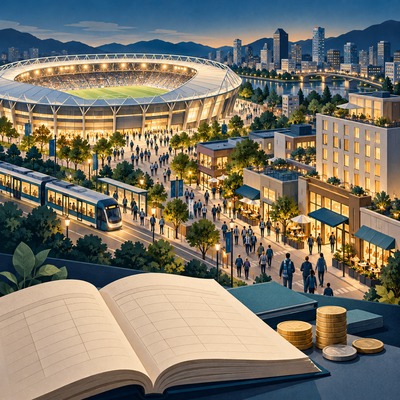
관중이 몰리고 호텔이 차면 도시는 성장한 것처럼 보인다. 그러나 축제의 매출과 지역경제에 새로 남는 이익은 서로 다른 숫자다. 스포츠 행사의 경제적 승부는 경기장 밖에서 시작돼 폐막 이후까지 이어진다.
[Key Message]
* 대형 스포츠 행사의 성과는 방문객 수만으로 판단하기 어렵다. 행사 때문에 새로 유입된 소비와 기존 소비의 이동을 구분해야 한다.
* 경기장과 교통시설을 얼마나 새로 짓느냐에 따라 개최의 경제성이 달라진다. 기존 시설의 활용도와 행사 이후의 운영비를 함께 살펴야 한다.
* 세계적인 주목은 도시를 알릴 기회지만 장기 성장을 보장하지 않는다. 첫 방문을 재방문과 지속적인 거래로 연결하는 과정이 필요하다.
* 지역 전체의 매출이 늘어도 모든 주민과 상인이 같은 혜택을 누리지는 않는다. 수익이 남는 곳과 비용을 부담하는 곳을 나눠 살펴야 한다.
* 성공적인 개최 전략은 대회를 유치하기 전부터 폐막 이후를 설계한다. 남겨야 할 것은 일시적인 열기보다 반복해서 작동하는 지역경제의 연결망이다.
***
환호 뒤에 남는 질문
월드컵 경기가 열리는 날을 상상해보자. 역 앞에는 유니폼을 입은 사람들이 모이고, 식당에서는 여러 나라의 언어가 들린다. 숙박업소 예약이 차고, 거리의 상점에는 평소보다 긴 줄이 생긴다. 도시의 분위기는 단번에 달라진다. 이런 풍경 앞에서 스포츠가 지역경제를 살린다는 설명은 직관적으로 설득력을 얻는다. 사람이 모이면 돈도 움직이기 때문이다.
하지만 지역경제의 성적표는 북적이는 거리의 사진 한 장으로 완성되지 않는다. 관중이 어디에서 왔는지, 무엇을 소비했는지, 그 돈이 누구에게 돌아가는지에 따라 의미가 달라진다. 행사가 없어도 이 도시를 찾았을 방문객이라면 소비 전부를 개최 효과로 계산하기 어렵다. 주민이 다른 여가 지출을 줄여 경기 입장권을 샀다면 지역 안에서 돈의 목적지만 달라졌을 수도 있다.
2026년 6월 9일 와튼스쿨의 경영 전문 매체 ‘날리지 앳 와튼’에 실린 「스포츠가 지역 성장의 엔진이 되는 방식」은 필라델피아의 대형 행사 개최를 주제로 한 전문가 패널 토론을 소개한다. 와튼의 재무학 교수 케빈 카이저가 진행하고 지역 프로축구단, 관광 마케팅 기관, 스포츠 행사 유치 조직의 관계자들이 참여했다. 논의의 중심에는 스포츠 관중을 도시의 장기 고객으로 바꾸는 전략과 개최 비용을 관리하는 문제가 놓여 있다.
다만 이러한 논의는 대회가 지역경제를 얼마나 성장시켰다는 사후 판정과 구분해야 한다. 개최를 준비하는 관계자들의 목표와 전망은 전략을 이해하는 자료이지만, 그 자체로 투자 효과의 증거가 되지는 않는다. 원문에서도 경제적 성과는 행사 전후의 평가가 필요하다는 점이 언급된다. 기대가 어떤 조건에서 실적으로 바뀌는지 묻는 것이 이 논의를 읽는 출발점이다.
여기서부터 필요한 것은 축제의 언어와 회계의 언어를 연결하는 작업이다. 방문객의 즐거움과 주민의 자부심은 도시가 얻는 가치다. 동시에 공공예산을 투입한다면 그 규모에 걸맞은 설명도 필요하다. 즐거운 행사였다는 평가와 지역경제에 이익이 남았다는 평가는 함께 성립할 수 있지만, 하나가 다른 하나를 자동으로 증명하지는 않는다.
매출의 증가와 소비의 이동
가상의 도시에서 스포츠 행사 기간에 식당 매출이 크게 늘었다고 해보자. 경기장 주변 식당에는 분명 반가운 일이다. 그러나 지역경제 전체의 성과를 알려면 한 걸음 더 들어가야 한다. 외지 관람객이 새로 쓴 돈인지, 주민이 평소 다른 동네에서 쓸 돈을 옮겨온 것인지에 따라 지역에 추가된 수요의 크기는 달라진다. 계산의 핵심은 돈이 움직였다는 사실보다 그 돈이 행사 덕분에 얼마나 더 들어왔는지에 있다.
가령 주민이 주말 외식과 영화 관람에 쓰려던 예산을 경기 관람과 주변 식당에서 모두 사용했다고 가정하자. 경기장 상권에는 매출이 생기지만, 다른 식당과 영화관에는 매출 감소가 나타날 수 있다. 개별 사업자의 성과를 합산하면서 이런 이동을 살피지 않으면 도시 전체의 효과를 부풀릴 위험이 있다. 행사장의 계산대가 바빠졌다는 사실만으로 지역의 소비 여력이 커졌다고 단정할 수 없는 이유다.
외지 방문객의 지출도 같은 방식으로 따져야 한다. 원래 그달에 여행할 사람이 경기 일정에 맞춰 방문 날짜만 바꿨다면, 행사 기간의 매출 증가 일부는 다른 시기의 매출을 당겨온 결과일 수 있다. 반대로 행사 때문에 처음 방문한 사람이 하루 더 머물며 지역의 식당과 관광지를 이용한다면 추가 소비의 가능성은 커진다. 방문 목적과 체류 기간을 묻는 조사가 단순한 만족도 조사보다 중요한 정보를 줄 수 있는 지점이다.
혼잡으로 사라진 수요도 계산에 들어가야 한다. 스포츠에 관심이 없는 여행객이 비싼 숙박료와 붐비는 거리를 피해 다른 도시를 선택한다면, 개최 도시는 새 손님을 얻는 동시에 다른 손님을 놓칠 수 있다. 출장을 계획하던 기업이 일정을 미루는 상황도 생각할 수 있다. 따라서 행사 기간에 들어온 방문객 전부를 성과로 세기보다, 행사로 추가된 수요와 밀려난 수요를 함께 비교해야 한다.
이 관점은 스포츠 행사의 가치를 낮추기 위한 장치가 아니다. 효과가 생기는 경로를 정확하게 알아야 지원도 정교해진다. 외지인의 체류가 짧다면 주변 관광과의 연결을 강화할 수 있고, 소비가 경기장 안에 집중된다면 지역 상권으로 이동할 동선을 만들 수 있다. 총매출 하나로 평가할 때 보이지 않던 개선 지점이 소비의 흐름을 나누어 보면 드러난다.
새 시설보다 중요한 활용도
스포츠 행사 유치 경쟁에서는 무엇을 새로 지을 것인지가 쉽게 전면에 등장한다. 큰 경기장과 넓은 광장, 새 도로는 눈에 잘 보인다. 그러나 경제성의 관점에서는 이미 있는 시설을 얼마나 잘 활용할 수 있는지도 같은 무게로 다뤄야 한다. 행사를 위해 필요한 추가 지출이 작을수록, 비슷한 방문객과 소비를 유치하더라도 비용을 회수해야 하는 부담은 줄어든다.
날리지 앳 와튼 기사에서 필라델피아 관계자들이 강조한 강점 가운데 하나도 기존의 경기장, 교통망, 국제공항이다. 도시가 이미 갖춘 기반을 활용해 대형 행사를 수용할 수 있다는 설명이다. 동시에 카이저는 개최에 비용이 따른다는 점을 환기하며, 행사를 사업처럼 운영해야 한다는 문제를 제기한다. 이 대목은 개최 능력과 개최 경제성을 함께 살펴야 한다는 논점으로 이어진다.
이를 다른 도시의 의사결정에 적용하면 질문의 순서가 달라진다. 먼저 대회를 유치하고 필요한 시설을 나열하는 방식보다, 보유 시설과 일상적인 수요를 확인한 뒤 적합한 행사를 고르는 방식이 가능하다. 같은 규모의 행사가 모든 도시에 같은 기회가 될 수는 없다. 기존 경기장을 활용할 수 있는 도시와 대규모 신축이 필요한 도시는 출발점부터 다른 계산서를 받아든다.
신축이 필요하다면 개막일보다 폐막 이후의 달력이 중요하다. 연간 사용 일수는 얼마나 되는지, 운영 주체는 누구인지, 유지보수 비용은 어떻게 조달할지 검토해야 한다. 대회 기간에 모든 좌석을 채우더라도 이후 활용이 부족하면 운영 부담이 길게 이어질 수 있다. 건설비를 확보했다는 설명만으로 시설의 생애 전체에 대한 재정 계획이 완성되는 것은 아니다.
교통시설도 마찬가지다. 행사 때 관중을 빠르게 이동시키는 기능에 더해 주민의 출퇴근과 생활 이동에 어떤 도움을 주는지 물어야 한다. 행사 이후에도 이용할 수 있는 시설이라면 장기적인 편익을 검토할 근거가 생긴다. 다만 원래 추진할 예정이던 사업의 효과 전부를 행사 유치의 성과로 돌려서는 안 된다. 개최 때문에 추가된 투자와 기존 계획을 구분해야 비용과 편익의 관계가 선명해진다.
세계의 시선을 단골로 바꾸는 과정
대형 스포츠 행사는 도시의 이름을 짧은 시간에 널리 알릴 수 있는 무대다. 그러나 이름을 알게 된 사람과 실제로 다시 찾아오는 사람 사이에는 여러 단계가 있다. 화면 속 풍경에 관심을 느끼고, 여행 정보를 검색하고, 이동 비용을 비교하고, 방문을 결정해야 한다. 개최 도시가 장기적인 성과를 원한다면 이 연결 과정을 구체적인 업무로 바꿔야 한다.
여기서 도시 브랜드는 로고와 구호만의 문제가 아니다. 가상의 방문객이 경기에는 만족했지만 숙소로 돌아가는 길에 길을 잃고, 교통 안내를 이해하지 못하고, 예약 과정에서 불편을 겪었다고 해보자. 그 사람에게 도시의 이미지는 홍보 문구보다 실제 경험에 가까울 것이다. 반대로 이동이 쉽고 일상적인 서비스를 편하게 이용했다면 스포츠 밖의 매력도 발견할 여지가 생긴다.
따라서 개최 준비에서 안내 표지, 교통 정보, 접근성, 가격의 투명성 같은 요소를 주변 업무로 취급하기 어렵다. 이런 요소는 방문객의 체류 경험을 구성하고, 주민이 행사를 감당하는 방식에도 영향을 준다. 같은 투자가 일상에서도 유용하게 쓰인다면 행사 준비와 도시 서비스 개선을 연결할 수 있다. 중요한 것은 화려한 장면의 연출과 실제 이용 경험 사이에 간격을 줄이는 일이다.
재방문을 유도하는 방식도 구체적이어야 한다. 예를 들어 방문객이 동의한 범위에서 관심 분야를 파악하고, 경기 이후에는 지역의 음식·공연·전시 정보를 제공하는 프로그램을 설계할 수 있다. 다음 방문에 이용할 수 있는 지역 상점 혜택을 제안하는 방법도 생각할 수 있다. 이는 가능한 실행 방안이며, 효과가 확인된 성과로 제시해서는 안 된다. 실제 참여율과 재방문 여부를 확인하며 조정해야 한다.
지역 기업에도 비슷한 과제가 생긴다. 행사 기간에 처음 거래한 고객이나 납품처와 관계를 이어갈 수 있는지, 단기 주문을 반복 주문으로 연결할 여지가 있는지 살펴야 한다. 도시의 장기 성장은 한 번의 노출보다 지속적인 선택과 거래에 가까이 있다. 행사라는 계기를 활용하려면 폐막과 동시에 끝나는 홍보 예산을 넘어, 이후의 관계를 관리할 담당자와 실행 계획이 필요하다.
도시 안에서 갈리는 손익
지역경제가 성장했다는 표현은 도시를 하나의 주체처럼 보이게 한다. 실제 도시는 서로 다른 사업자와 주민으로 구성된다. 숙박업소의 매출 증가와 통행 제한을 겪는 주민의 불편은 같은 표에 잘 드러나지 않는다. 경기장 주변 상점이 얻는 혜택과 행사 동선에서 벗어난 상점의 상황도 다를 수 있다. 지역 전체의 합계와 구성원들의 경험 사이에 거리가 생길 수 있는 것이다.
지역에 남는 돈의 범위도 살펴야 한다. 방문객이 지출한 금액이 모두 지역 안에 머문다고 가정할 수는 없다. 거래 구조에 따라 외부의 운영사나 공급업체에 지급되는 몫이 있을 수 있다. 반대로 지역 업체의 납품과 고용으로 이어지는 부분도 있을 수 있다. 따라서 지출액에 더해 지역 조달 비중과 지역 사업자의 참여 구조를 확인하면 경제적 연결을 더 구체적으로 평가할 수 있다.
공공부문이 부담하는 비용은 별도의 주의가 필요하다. 민간이 행사 운영비의 상당 부분을 조달하더라도 도시가 제공하는 서비스에는 인력과 예산이 들어갈 수 있다. 추가 교통 운영, 안전 관리, 청소 등의 업무가 실제로 얼마나 늘었는지 살펴야 한다. 평소 예산 안에서 처리했다는 이유만으로 자원이 사용되지 않은 것은 아니다. 다른 업무에 쓸 수 있었던 시간과 역량도 함께 검토할 대상이다.
또한 공공자금에는 다른 사용처가 있다. 같은 재원을 교통 개선이나 생활시설 정비에 쓸 때와 비교해야 행사 지원의 우선순위를 판단할 수 있다. 이는 모든 편익을 금액으로 바꾸라는 요구와는 다르다. 주민의 자부심과 공동체 경험처럼 화폐로 환산하기 어려운 가치도 공개적으로 논의할 수 있다. 다만 그런 가치를 이유로 재정 부담과 기회비용에 관한 설명을 생략해서는 안 된다.
지역의 참여를 넓히려면 개최 이전의 계약과 운영 기준부터 점검할 필요가 있다. 소규모 업체가 참여할 수 있는 납품 규모인지, 판매 공간 배정이 투명한지, 행사장 밖 상권으로 이동할 안내가 있는지 살펴볼 수 있다. 주민의 일상 이동을 위한 동선과 정보 제공도 설계 대상이다. 경제적 혜택을 넓히는 일은 행사 종료 후의 분배보다 기회에 접근하는 조건에서 시작할 수 있다.
폐막 이후를 위한 성적표
성장 엔진이라는 표현에는 지속성이 담겨 있다. 엔진은 한 번 큰 소리를 내는 장치가 아니라 계속해서 힘을 만들어내는 장치다. 스포츠 행사도 같은 기준으로 바라볼 필요가 있다. 개최 기간의 소비가 크더라도 이후의 활동과 연결되지 않는다면 단기적인 수요 증가로 평가하는 편이 정확하다. 장기 성장이라는 판단에는 더 긴 관찰 기간과 다른 지표가 필요하다.
이를 위해 개최 전에 성과의 기준을 정할 수 있다. 방문객 수와 행사 기간 매출뿐 아니라 외지인의 추가 숙박, 지역 업체의 참여, 공공부문의 추가 비용, 시설의 사후 활용 등을 구분해 기록하는 방식이다. 주민 만족도와 이동 불편도 함께 조사할 수 있다. 하나의 거대한 경제효과 숫자보다 서로 다른 지표를 나란히 놓는 편이 도시의 선택을 이해하는 데 도움이 된다.
비교 기준도 중요하다. 행사 기간의 매출이 전년보다 늘었다고 해서 증가분 전체가 행사 효과인 것은 아니다. 물가와 경기, 휴일 배치, 다른 행사 등 매출을 바꾸는 요인이 함께 움직일 수 있기 때문이다. 가능한 범위에서 비슷한 시기나 다른 지역과 비교하고, 어떤 가정으로 효과를 추정했는지 밝혀야 한다. 정확한 수치를 얻기 어렵다면 불확실성의 범위를 공개하는 것이 성과를 단정하는 것보다 유용하다.
평가의 시점은 폐막 직후에만 머물러서는 안 된다. 행사 때 늘린 영업과 고용이 유지되는지, 새 거래가 이어지는지, 시설을 계획대로 쓰는지 시간을 두고 확인해야 한다. 재방문객이 늘었는지도 별도로 살펴볼 수 있다. 지표가 기대에 미치지 못한다면 그 원인을 다음 행사와 도시 정책에 반영할 수 있어야 한다. 평가가 홍보를 위한 절차에 그치면 이런 학습의 기회를 놓치게 된다.
개최 여부를 결정하는 단계에서도 철회하거나 규모를 조정할 기준이 필요하다. 비용이 당초 계획을 넘어설 때 어떤 사업을 줄일지, 예상했던 민간 재원이 부족하면 누가 부담할지 정해두는 방식이다. 열기가 높아질수록 추가 지출을 받아들이기 쉬운 만큼, 판단 기준은 열기가 오르기 전에 마련하는 편이 낫다. 성공을 목표로 삼는 일과 실패 가능성에 대비하는 일은 함께 추진할 수 있다.
대형 스포츠 행사는 도시가 가진 자산을 드러내고 새로운 고객과 관계를 맺는 계기가 될 수 있다. 그 가능성을 현실로 바꾸는 것은 경기의 규모만이 아니다. 추가 소비를 만들어내는 동선, 기존 시설을 활용하는 판단, 지역 업체가 참여하는 거래 구조, 폐막 이후에도 이어지는 운영이 필요하다. 이런 조건이 갖춰지는지를 확인해야 성장 엔진이라는 이름도 설득력을 얻는다.
경기의 승패는 종료 휘슬과 함께 정해진다. 도시의 승패는 그 뒤에 나타난다. 사람들이 다시 찾아오고, 상점의 거래가 이어지고, 시설이 일상 속에서 쓰이며, 공공의 부담을 설명할 수 있을 때 개최의 의미가 구체화된다. 가장 좋은 성적표는 관중이 가장 많았던 날의 사진보다, 관중이 떠난 뒤에도 계속 움직이는 도시의 일상에 있다.
Reference
Basiouny, Angie. “How Sports Are a Local Growth Engine.” Knowledge at Wharton, June 9, 2026.
A Roaring Stadium, a City's Sober Balance Sheet
- When Major Sporting Events Become Engines of Local Economic Growth
When crowds arrive and hotels fill up, a city appears to be growing. Yet revenue generated by a festival and the additional economic benefit left in the community are different figures. The economic contest over a sporting event begins outside the stadium and continues after the closing ceremony.
[Key Message]
* Visitor numbers alone cannot determine the success of a major sporting event. Spending newly attracted by the event must be distinguished from shifts in existing spending.
* The economics of hosting depend on how much new stadium and transport construction is required. The use of existing facilities and operating costs after the event must be considered together.
* Global attention offers an opportunity to introduce a city, but it does not guarantee long-term growth. A process is needed to turn first visits into return visits and continuing commercial relationships.
* Even when revenue rises across a region, residents and businesses do not all benefit equally. Where the gains remain and where the costs fall must be examined separately.
* A successful hosting strategy plans for life after the event before the bid is even won. The lasting legacy should be a network of local economic relationships that keeps functioning, rather than a brief surge of excitement.
***
The Questions That Remain After the Cheers
Imagine a day when a World Cup match is taking place. People in team jerseys gather outside the station, and different languages fill the restaurants. Accommodation bookings fill up, and queues outside shops grow longer than usual. The city's atmosphere changes in an instant. Faced with this scene, the claim that sport revitalizes the local economy feels intuitively persuasive. Where people gather, money moves too.
But a local economy's report card cannot be completed with a single photograph of a bustling street. Its meaning depends on where spectators have come from, what they spend money on, and who receives that money. If visitors would have come to the city anyway, it is difficult to count all their spending as an effect of hosting. If residents cut other leisure spending to buy match tickets, the destination of money within the region may simply have changed.
Published by Knowledge at Wharton, the Wharton School's business publication, on June 9, 2026, "How Sports Are a Local Growth Engine" introduces an expert panel discussion on Philadelphia's hosting of major events. Moderated by Wharton finance professor Kevin Kaiser, the discussion brought together representatives of a local professional soccer club, a tourism marketing agency, and a sports event recruitment organization. At its center were strategies for turning sports spectators into long-term customers of the city and the challenge of managing hosting costs.
Such a discussion must, however, be distinguished from a retrospective assessment of how much an event has grown the local economy. The goals and forecasts of those preparing to host help explain their strategies, but they do not in themselves provide evidence of a return on investment. The original article also notes the need for economic evaluation before and after the events. Asking under what conditions expectations become results is the starting point for reading this discussion.
What is needed from here is a connection between the language of celebration and the language of accounting. Visitors' enjoyment and residents' pride are forms of value a city gains. At the same time, the use of public money requires an explanation proportionate to the amount committed. An event can be both enjoyable and economically beneficial to its host community, but one judgment does not automatically prove the other.
Rising Revenue and Shifting Spending
Suppose restaurant revenue rises sharply during a sporting event in a hypothetical city. This is clearly welcome news for restaurants near the stadium. To understand the result for the entire local economy, however, the analysis must go a step further. The size of the additional demand depends on whether the money is newly spent by out-of-town spectators or redirected by residents from other neighborhoods. The central question is less whether money moved than how much more money entered because of the event.
For example, suppose residents spend their entire planned weekend dining and cinema budget on attending a match and eating nearby. Businesses around the stadium gain revenue, but other restaurants and cinemas may lose sales. Adding up individual businesses' gains without examining these shifts risks overstating the effect on the city as a whole. This is why busier tills at the event do not, by themselves, establish that the community's capacity to spend has increased.
Spending by visitors from outside the region requires the same scrutiny. If someone already planning a trip that month merely changes the dates to coincide with a match, part of the increase in event-period revenue may represent sales brought forward from another period. Conversely, if a first-time visitor attracted by the event stays an extra day and visits local restaurants and attractions, the potential for additional spending increases. This is where surveys asking about the purpose and length of a visit can provide more useful information than satisfaction surveys alone.
Demand lost because of congestion must also enter the calculation. If travelers with no interest in sport choose another city to avoid expensive rooms and crowded streets, the host city may gain new customers while losing others. A company planning a business trip might also postpone it. Rather than counting every visitor during the event as a gain, the analysis must compare demand added by the event with demand displaced by it.
This perspective is not a device for diminishing the value of sporting events. Support can become more precise only when the channels through which benefits arise are understood accurately. If visitors stay briefly, connections to nearby attractions can be strengthened; if spending is concentrated inside the stadium, routes into local shopping and dining districts can be developed. Separating the flows of spending reveals opportunities for improvement that a single total-revenue figure conceals.
Utilization Matters More Than New Construction
In competition to host sporting events, the question of what to build can quickly move to the forefront. Large stadiums, spacious plazas, and new roads are highly visible. From an economic perspective, however, the ability to use existing facilities effectively deserves equal weight. The less additional spending an event requires, the smaller the cost-recovery burden, even when the number of visitors and the spending attracted are similar.
Among the strengths Philadelphia's representatives emphasize in the Knowledge at Wharton article are its existing stadiums, transport network, and international airport. Their argument is that the city can accommodate major events using infrastructure it already possesses. Kaiser, meanwhile, reminds participants that hosting carries costs and raises the need to run events like a business. This leads to the broader point that hosting capacity and the economics of hosting must be assessed together.
Applied to decisions in other cities, this changes the order of the questions. Instead of winning an event first and then listing the facilities required, a city can examine its existing assets and everyday demand before choosing a suitable event. An event of the same size cannot offer every city the same opportunity. A city able to use an existing stadium and one requiring extensive new construction face different balance sheets from the outset.
Where new construction is necessary, the calendar after the closing ceremony matters more than opening day. How many days a year will the facility be used, who will operate it, and how will maintenance be financed? Even if every seat is occupied during the tournament, insufficient subsequent use can leave a prolonged operating burden. Securing construction funding alone does not amount to a financial plan covering the facility's entire life.
The same applies to transport infrastructure. Beyond moving spectators quickly during the event, planners must ask how it helps residents commute and make everyday journeys. Facilities that remain useful afterward provide a basis for examining long-term benefits. Yet the full benefits of projects already planned should not be attributed to winning the event. Distinguishing investment added because of hosting from existing plans clarifies the relationship between costs and benefits.
Turning Global Attention Into Returning Customers
A major sporting event provides a stage on which a city's name can become widely known in a short time. But several steps separate someone who has heard of a city from someone who actually returns. They must become interested in the scenery on screen, search for travel information, compare transport costs, and decide to visit. If a host city wants lasting results, it must turn this chain of connections into concrete work.
Here, a city's brand is about more than logos and slogans. Imagine a visitor who enjoys the match but gets lost returning to the hotel, cannot understand transport directions, and encounters difficulties making reservations. That person's image of the city will likely reflect the experience more than the promotional language. Conversely, easy travel and convenient everyday services create room to discover attractions beyond sport.
It is therefore difficult to treat signage, transport information, accessibility, and transparent pricing as peripheral preparations. These elements shape visitors' experiences and influence how residents cope with the event. If the same investment is useful in everyday life, event preparations can be linked to improvements in city services. What matters is narrowing the gap between a spectacular presentation and the actual experience of using the city.
Methods of encouraging return visits must also be specific. For example, a program could identify visitors' interests within the scope of their consent and provide information about local food, performances, and exhibitions after the match. Offers from local shops that can be used on a future visit are another possibility. These are potential measures, not outcomes whose effectiveness has already been established. They should be adjusted as actual participation and return visits are tracked.
Local businesses face a similar task. They need to examine whether relationships with customers or business partners first encountered during the event can continue, and whether short-term orders can become repeat orders. Long-term urban growth is more closely connected to continuing choices and transactions than to one-off exposure. Making use of an event requires more than a promotional budget that ends with the closing ceremony: it requires people and an action plan to manage the relationships afterward.
Uneven Gains and Costs Within the City
The expression "the local economy grew" can make a city sound like a single entity. In reality, a city consists of different businesses and residents. Higher accommodation revenue and the inconvenience experienced by residents facing traffic restrictions do not readily appear in the same table. Shops around the stadium may also fare differently from those outside the event's main routes. A gap can emerge between the regional total and the experiences of the people who make up that region.
The share of money that remains locally must also be examined. It cannot be assumed that all visitors' spending stays within the community. Depending on the structure of transactions, some may be paid to outside operators or suppliers. Other portions may support local procurement and employment. Looking beyond expenditure totals to the share of local procurement and the structure of local business participation therefore allows a more concrete assessment of economic connections.
Costs borne by the public sector require particular attention. Even if private sources finance a substantial share of event operations, services provided by the city can still require staff and budgets. The actual increase in tasks such as additional transport operations, safety management, and cleaning must be examined. Handling them within an ordinary budget does not mean no resources were used. Time and capacity that could have served other work also merit consideration.
Public funds also have alternative uses. To judge the priority of event support, it must be compared with using the same resources to improve transport or maintain everyday community facilities. This does not require every benefit to be converted into money. Values that are difficult to price, such as residents' pride and shared community experiences, can also be debated openly. Such values should not, however, be used to omit explanations of fiscal burdens and opportunity costs.
Broadening local participation requires examining contracts and operating rules before the event. Are procurement packages small enough for smaller firms to participate? Is the allocation of selling space transparent? Are there directions guiding visitors to commercial areas beyond the venue? Routes and information that support residents' everyday journeys are also matters for design. Expanding economic benefits can begin with the conditions for accessing opportunities, rather than with distribution after the event ends.
A Report Card for Life After the Closing Ceremony
The expression "growth engine" implies continuity. An engine is a device that keeps generating power, rather than merely making a loud noise once. Sporting events need to be viewed by the same standard. Even substantial spending during an event is better described as a temporary increase in demand if it does not connect to subsequent activity. A judgment of long-term growth requires a longer observation period and different indicators.
To that end, performance criteria can be established before hosting. Alongside visitor numbers and event-period sales, cities can separately record additional overnight stays by out-of-town visitors, local business participation, additional public-sector costs, and subsequent facility use. Resident satisfaction and travel inconvenience can also be surveyed. Placing different indicators side by side helps explain a city's choices better than a single enormous economic-impact figure.
The basis of comparison matters too. If revenue during an event exceeds the previous year's figure, the entire increase cannot automatically be attributed to the event. Prices, economic conditions, the timing of holidays, and other events may all change sales at the same time. Where possible, comparisons should be made with similar periods or other regions, and the assumptions behind impact estimates should be disclosed. Where precise figures are hard to obtain, revealing the range of uncertainty is more useful than making a definitive claim of success.
Evaluation should not stop immediately after the closing ceremony. It takes time to establish whether expanded operations and employment are maintained, whether new commercial relationships continue, and whether facilities are used as planned. Changes in return visits can also be examined separately. If indicators fall short of expectations, the reasons should inform the next event and city policy. When evaluation is merely a promotional procedure, this opportunity to learn is lost.
Criteria for withdrawing or adjusting the scale of an event are also needed when the hosting decision is made. A city can specify which projects will be reduced if costs exceed the original plan, and who will bear the burden if anticipated private funding falls short. Because enthusiasm can make additional spending easier to accept, decision criteria are better established before excitement builds. Aiming for success and preparing for possible failure can proceed together.
A major sporting event can provide an opportunity to showcase a city's assets and build relationships with new customers. Turning that possibility into reality requires more than the scale of the competition. It takes routes that generate additional spending, decisions that make use of existing facilities, commercial arrangements involving local firms, and operations that continue beyond the closing ceremony. The label "growth engine" becomes persuasive only when these conditions are examined.
The result of a match is decided at the final whistle. The city's result emerges afterward. The meaning of hosting becomes tangible when people return, shops continue doing business, facilities are used in everyday life, and the public burden can be explained. The best report card lies less in a photograph of the day with the largest crowd than in the everyday life of a city that keeps moving after the spectators have gone.
Reference
Basiouny, Angie. "How Sports Are a Local Growth Engine." Knowledge at Wharton, June 9, 2026.