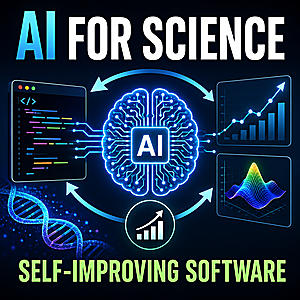
과학자에게 새로운 아이디어가 있더라도 이를 실제 실험과 분석으로 구현하려면 상당한 시간과 전문적인 코딩 작업이 필요하다. ERA는 연구 문제를 성능을 측정할 수 있는 소프트웨어 과제로 바꾸고, 프로그램을 스스로 작성하고 시험하며 개선한다. AI가 논문을 요약하는 보조 도구를 넘어 과학적 방법을 구현하는 연구 파트너로 이동하고 있다.
[Key Message]
과학의 중요한 병목은 아이디어 부족만이 아니라, 아이디어를 실험과 분석으로 구현하는 데 걸리는 시간이다. ERA는 반복적인 코딩과 성능 개선을 자동화해 가설과 검증 사이의 거리를 줄인다.
ERA는 코드를 한 번 작성하는 데 그치지 않고, 실제 성능을 평가하며 프로그램을 반복적으로 개선한다. 언어 모델과 탐색 구조를 결합해 다양한 후보를 만들고, 더 높은 성능을 보이는 방향을 선택한다.
ERA는 생물정보학과 역학 모델링을 비롯해 여러 과학 분야에서 인간 전문가 수준의 소프트웨어를 생성했다. 이는 AI가 기존 코드를 복제하는 수준을 넘어 새로운 분석 방법을 탐색할 수 있음을 보여준다.
AI가 연구 소프트웨어를 개선하더라도 문제 정의와 검증, 해석은 여전히 인간 과학자의 책임이다. 잘못된 평가 기준은 과적합이나 데이터 누출, 과학적 의미의 왜곡으로 이어질 수 있다.
과학자의 경쟁력은 코드를 직접 작성하는 속도보다 중요한 질문과 평가 기준을 설계하는 능력으로 이동할 수 있다. AI는 과학자를 대체하기보다 인간이 제한된 시간 내에 탐색할 수 있는 방법의 범위를 넓힌다.
과학의 숨은 병목, 아이디어보다 구현
과학의 발전은 흔히 날카로운 질문과 독창적인 가설에서 시작된다고 설명된다. 남들이 보지 못한 현상을 발견하고, 그 현상을 설명할 새로운 이론을 제안하는 능력이 과학자의 핵심 역량으로 여겨졌다. 그러나 현대 과학의 실제 연구 현장에서는 좋은 아이디어를 떠올리는 것만으로 충분하지 않다. 연구자는 그 아이디어를 검증할 수 있는 실험을 설계하고, 데이터를 수집하며, 분석 알고리즘을 만들고, 수많은 오류를 수정해야 한다. 데이터의 규모가 커지고 연구 방법이 복잡해질수록 아이디어와 결과 사이에는 길고 반복적인 구현 과정이 놓인다.
특히 생물정보학, 역학, 신경과학, 기후과학, 천문학과 같이 대규모 데이터를 다루는 분야에서는 소프트웨어가 실험 장비만큼 중요한 연구 도구가 되었다. 단일세포의 유전자 발현을 비교하거나 감염병의 확산을 예측하고, 위성 영상에서 산림 손실 지역을 찾아내는 일은 모두 정교한 프로그램을 필요로 한다. 연구 질문이 아무리 흥미로워도 데이터를 처리하는 코드가 없거나 분석 속도가 지나치게 느리면 연구는 앞으로 나아가기 어렵다.
문제는 이러한 연구용 소프트웨어를 만드는 일이 예상보다 훨씬 많은 시간을 요구한다는 점이다. 과학자는 기존 연구에서 사용된 프로그램을 찾아 설치하고, 자신의 데이터 형식에 맞게 수정하며, 오류가 발생하면 원인을 추적해야 한다. 여러 알고리즘 가운데 어떤 방법이 가장 적합한지 비교하고, 매개변수를 조정하며, 결과가偶然이나 과적합에서 비롯된 것은 아닌지 확인해야 한다. 하나의 연구 질문을 검증하기 위해 수십 가지 프로그램과 분석 조건을 시험하는 경우가 흔하다.
2026년 5월 Nature에 발표된 ERA 연구는 이러한 현실에서 출발했다. ERA는 ‘Empirical Research Assistance’의 약자로, 과학자가 수행해야 했던 반복적인 소프트웨어 작성과 성능 개선 작업을 AI가 맡도록 설계된 시스템이다. 연구진은 과학적 발견의 속도를 떨어뜨리는 원인이 반드시 새로운 아이디어의 부족에만 있는 것은 아니라고 보았다. 좋은 아이디어를 실제 계산과 실험으로 옮기는 과정이 더디고 수작업에 의존한다는 점이 또 하나의 중요한 병목이라는 것이다.
이 관점은 AI와 과학의 관계를 새롭게 바라보게 한다. 지금까지 과학 분야의 생성형 AI는 논문을 검색하고 요약하거나, 연구 가설을 제안하고, 간단한 코드를 작성하는 도구로 주로 소개되었다. 그러나 ERA가 겨냥한 영역은 아이디어 생성 이후의 단계다. 연구자가 무엇을 알고 싶은지 정하면, 그 질문을 검증하기 위한 소프트웨어를 만들고 반복적으로 개선하는 과정에 AI를 투입한다. 과학자의 머릿속에 존재하는 가설과 실제 데이터에서 확인되는 결과 사이의 거리를 줄이는 것이다.
코드를 쓰는 AI에서 성능을 높이는 AI로
생성형 AI에게 프로그램 작성을 요청하는 일은 더 이상 생소하지 않다. 필요한 기능을 자연어로 설명하면 AI는 몇 초 내에 코드를 제안한다. 그러나 연구용 소프트웨어는 코드가 실행된다는 사실만으로는 충분하지 않다. 예측이 정확한지, 계산 속도가 빠른지, 기존 방법보다 우수한지, 새로운 데이터에서도 안정적으로 작동하는지를 확인해야 한다. 과학 연구에서는 ‘작동하는 코드’보다 ‘검증된 성능을 갖춘 코드’가 중요하다.
ERA의 차별점은 바로 여기에 있다. ERA는 한 번 프로그램을 작성하고 작업을 끝내지 않는다. 대규모 언어 모델이 후보 코드를 만들면 실제 데이터를 이용해 프로그램을 실행하고, 미리 정해진 평가 지표에 따라 점수를 매긴다. 이후 높은 점수를 받은 후보를 중심으로 코드를 다시 수정하고, 새로운 조합을 만들며, 성능이 향상되는 방향을 탐색한다. 언어 모델이 아이디어와 코드를 제안하는 역할을 맡는다면, 트리 탐색은 수많은 후보 가운데 어느 방향을 더 깊이 파헤칠지 결정하는 역할을 한다.
이 과정은 연구자가 프로그램을 개선하는 방식과 닮아 있다. 인간 개발자도 첫 번째 코드가 완벽할 것이라고 기대하지 않는다. 프로그램을 실행해 결과를 확인하고, 오류를 수정하며, 다른 알고리즘을 적용하고, 성능이 좋아지는지 비교한다. ERA는 이러한 시행착오를 자동화하여, 인간보다 훨씬 많은 후보를 빠르게 시험할 수 있도록 설계되었다.
중요한 조건은 연구 문제가 점수로 평가될 수 있어야 한다는 점이다. 예측 정확도, 처리 속도, 오차율, 데이터 통합 정도처럼 프로그램의 품질을 수치로 측정할 수 있다면 ERA는 그 점수를 높이는 방향으로 코드를 탐색할 수 있다. 연구자가 문제 설명과 데이터, 평가 기준을 제공하면 시스템은 해결책 후보를 만들고 실행하며 수정하는 순환을 반복한다.
이 방식에서는 AI가 프로그램을 작성하는 행위보다 평가와 선택의 구조가 더 중요하다. 언어 모델이 그럴듯한 코드를 만들어도 실제 성능이 떨어지면 탐색 과정에서 밀려난다. 반대로 처음에는 평범해 보였던 방법이라도 평가 결과가 좋으면 그 방향을 중심으로 추가적인 변형이 이루어진다. 언어적으로 설득력 있는 답변이 아니라 실제 실행 결과가 AI의 다음 행동을 결정한다는 점에서 일반적인 대화형 AI와 다르다.
ERA는 과학 소프트웨어 개발을 일종의 진화 과정으로 바꾼다. 여러 후보 프로그램을 만들고 실제 환경에서 성능을 평가받으면, 더 우수한 후보가 다음 세대의 출발점이 된다. 프로그램의 일부를 교체하거나 새로운 계산 방법을 더하고, 기존 알고리즘을 조합하면서 높은 점수에 가까워진다. 사람이 하나씩 아이디어를 떠올리고 시험하던 과정을 AI가 대규모로 수행하는 셈이다.
그렇다고 ERA가 아무것도 없는 상태에서 과학 전체를 이해하고 연구를 시작하는 것은 아니다. 연구자는 먼저 해결할 문제를 구체적으로 정의해야 한다. 어떤 데이터를 사용할지, 무엇을 예측하거나 분류할지, 좋은 결과를 판단할 기준은 무엇인지를 정해야 한다. ERA는 명확한 목표와 평가 기준이 주어졌을 때 가능한 구현 방법을 탐색하는 데 강점을 가진다. 질문을 만드는 능력보다 질문을 실행 가능한 계산으로 전환하고 최적화하는 능력에 가깝다.
생물정보학과 역학에서 확인된 가능성
ERA 연구가 주목받은 이유는 단순한 코딩 시험이 아니라 실제 과학 분야의 어려운 문제에 적용되었기 때문이다. 연구진은 단일세포 생물정보학, 감염병 예측, 신경과학, 지리공간 분석, 시계열 예측, 수치 계산 등 서로 성격이 다른 과제를 통해 시스템의 활용 가능성을 점검했다.
대표적인 사례가 단일세포 RNA 분석이다. 같은 조직에서 채취한 세포라도 실험 시점이나 장비, 연구 기관, 처리 방식에 따라 데이터에 차이가 발생할 수 있다. 이를 배치 효과라고 한다. 연구자는 서로 다른 실험에서 얻은 데이터를 비교하기 전에 기술적 차이를 줄이고 생물학적으로 의미 있는 신호를 보존해야 한다. 그러나 배치 효과를 지나치게 제거하면 실제 세포의 차이까지 사라질 수 있고, 충분히 제거하지 못하면 실험 조건의 차이를 생물학적 발견으로 잘못 해석할 수 있다.
ERA는 이 문제를 해결하기 위한 여러 분석 프로그램을 생성하고 개선했다. 연구진의 평가에서 ERA가 만든 수많은 방법은 당시 공개 성능 평가에서 우수한 인간 개발 방법보다 높은 점수를 기록했다. 연구진은 단일세포 데이터 통합 과제에서 기존 상위 방법을 능가하는 40개의 후보 방법을 보고했다. 이는 AI가 이미 존재하는 분석 절차를 단순히 복제한 것이 아니라, 여러 방법을 새롭게 조합하고 수정해 경쟁력 있는 결과를 만들 수 있음을 보여준다.
감염병 입원 환자 수를 예측하는 과제에서도 의미 있는 성과가 나타났다. 코로나19 유행 당시 각국 연구기관은 앞으로 몇 주 동안 입원 환자가 얼마나 발생할지를 예측하기 위해 다양한 모델을 개발했다. 이러한 예측은 병상과 의료 인력, 치료제를 준비하는 데 활용될 수 있지만, 감염병의 유행은 새로운 변이, 계절, 백신 접종, 사람들의 행동 변화 등 수많은 변수에 영향을 받는다.
ERA는 코로나19 입원 규모를 예측하는 프로그램을 반복적으로 생성하고 개선했다. 연구진은 ERA가 만든 14개의 모델을 비교 대상이 된 미국 질병통제예방센터의앙상블 및 개별 예측 모델보다 높은 성능을 보였다고 설명했다. 앙상블은 여러 예측 모델을 결합해 오류를 줄이는 방식이므로, 이를 넘어섰다는 결과는 ERA가 탐색한 코드와 모델 구조가 단순한 자동 작성 수준을 벗어났음을 시사한다.
자브라피시의 신경 활동을 예측하는 과제도 포함되었다. 연구진은 수만 개의 뉴런에서 관찰된 복잡한 활동 패턴을 예측하는 소프트웨어를 개발하는 데 ERA를 활용했다. 신경 데이터는 규모가 크고 시간에 따라 끊임없이 변하기 때문에 모델의 구조와 계산 효율이 모두 중요하다. ERA는 이처럼 생물학적 배경지식과 대규모 계산이 동시에 요구되는 문제에서도 성능을 개선할 수 있다는 가능성을 보여주었다.
서로 다른 분야에서 결과를 냈다는 사실은 ERA가 특정 과제에만 맞춘 전용 프로그램이 아니라는 점을 보여준다. 핵심은 분야 자체를 완벽하게 이해하는 데 있지 않다. 문제를 실행 가능한 소프트웨어 과제로 표현하고, 프로그램의 품질을 측정할 수 있는 점수를 제공하면 동일한 탐색 구조를 다양한 연구에 적용할 수 있다.
다만 높은 점수가 곧바로 과학적 발견을 보장하는 것은 아니다. 벤치마크에서 기존 방법보다 우수한 결과를 얻었다고 해도 새로운 데이터에서도 같은 성능을 유지하는지, 특정 조건에만 지나치게 맞춰진 것은 아닌지 확인해야 한다. 프로그램이 어떤 이유로 좋은 결과를 냈는지 과학적으로 해석하는 과정이 필요하다. ERA가 만든 소프트웨어는 발견을 촉진하는 유력한 도구이지만, 검증과 해석까지 자동으로 보장하는 장치는 아니다.
과학자의 역할은 사라지는가
AI가 인간 전문가 수준의 연구용 소프트웨어를 만든다는 설명은 과학자의 역할이 줄어들 것이라는 전망으로 이어지기 쉽다. 하지만 ERA의 작동 방식을 들여다보면 오히려 인간 연구자의 역할이 더 분명하게 드러난다.
ERA가 움직이기 위해서는 먼저 누군가가 과학적 문제를 정의해야 한다. 어떤 현상을 설명하려는지, 어떤 데이터가 믿을 만한지, 무엇을 예측해야 하는지, 어떤 결과를 좋은 결과로 평가할지 결정하는 일은 여전히 연구자의 몫이다. 시스템은 주어진 점수를 높이는 데 집중하지만, 그 점수가 과학적으로 적절한지는 스스로 판단하기 어렵다.
예를 들어 감염병 예측 모델의 정확도만 높이도록 목표를 설정하면 특정 지역이나 특정 시기의 데이터에 지나치게 맞춘 모델이 선택될 수 있다. 평균적인 예측 점수는 높지만 고령자나 취약 지역의 위험을 제대로 반영하지 못할 수도 있다. 생물정보학에서도 데이터 통합 점수를 최대화하는 과정에서 실제로 중요한 생물학적 차이가 희석될 가능성이 있다. 평가 기준이 잘못 설계되면 AI는 과학적으로 의미 있는 프로그램이 아니라 시험 점수에 최적화된 프로그램을 만들 수 있다.
데이터 누출도 중요한 문제다. 검증에 사용해야 할 정보가 프로그램 개발 과정에 섞이면 실제보다 성능이 높게 나타난다. 연구자가 의도하지 않았더라도 ERA가 수많은 코드 변형을 시험하는 과정에서 평가 데이터의 특성에 지나치게 적응할 수 있다. 따라서 학습용 데이터와 검증용 데이터를 엄격하게 분리하고, 완전히 독립적인 자료에서 다시 시험해야 한다.
코드의 안정성과 재현성도 검토해야 한다. 특정 컴퓨터 환경에서만 작동하거나 사용한 외부 라이브러리의 버전에 따라 결과가 달라진다면 연구 도구로 신뢰하기 어렵다. 같은 데이터와 조건에서 같은 결과를 얻을 수 있는지, 계산 과정을 기록하는지, 다른 연구자가 코드를 이해하고 검증할 수 있는지가 중요하다.
AI가 만든 프로그램의 출처를 추적하는 문제도 남는다. 기존 논문과 공개 코드를 참고해 새로운 방법을 구성했다면 어떤 아이디어가 어디에서 빌려왔는지 확인할 수 있어야 한다. 연구 성과의 공로를 누구에게 돌릴 것인지, 프로그램에 오류가 있을 때 책임은 누가 질 것인지도 앞으로 논의해야 할 문제다.
이러한 한계는 ERA의 가치를 떨어뜨리는 요인이 아니다. 오히려 AI가 구현 속도를 크게 높일수록 인간은 문제 설정과 검증에 더 많은 역량을 집중해야 한다는 의미다. 과학자의 핵심 역할은 모든 코드를 직접 작성하는 일에서 좋은 질문을 만들고, 평가 기준을 설계하며, 결과를 해석하고, 오류 가능성을 검토하는 일로 이동할 수 있다.
연구자는 AI가 내놓은 결과를 수동적으로 받아들이는 사용자가 아니라 탐색 방향을 결정하는 감독자가 되어야 한다. 예상과 다른 결과가 나왔을 때 새로운 발견의 신호인지, 데이터 오류인지, 평가 기준의 허점인지 구분해야 한다. 높은 성능을 기록한 프로그램이 실제 과학 지식에 어떤 의미를 갖는지 설명해야 한다. 구현의 자동화가 연구자의 판단을 없애는 것이 아니라 판단이 필요한 지점을 바꾸는 것이다.
발견의 속도를 바꾸는 과학 인프라
ERA가 보여준 가장 큰 변화는 하나의 AI 시스템이 인간보다 좋은 코드를 만들었다는 사실에만 있지 않다. 더 중요한 의미는 과학 연구의 시간 구조가 달라질 수 있다는 점이다.
전통적인 연구에서는 하나의 분석 아이디어를 구현하는 데 며칠이나 몇 주가 걸렸다. 여러 방법을 비교하려면 더 많은 시간이 필요했다. 연구팀의 인력과 예산이 부족하면 유망한 아이디어가 있어도 모든 가능성을 시험하기 어려웠다. 연구자는 성공 가능성이 높아 보이는 몇 가지 방법만 선택해야 했고, 나머지는 시간 부족으로 포기했다.
ERA와 같은 시스템은 탐색 비용을 낮출 수 있다. 연구자가 문제와 평가 기준을 제시하면 AI가 다양한 알고리즘과 코드 구조를 만들고, 동시에 많은 후보를 실행하며, 유망한 방법을 중심으로 추가 탐색을 진행한다. 사람이 수개월 동안 시험할 수 있었던 분석 후보를 훨씬 짧은 기간에 비교할 수 있다면 과학자는 더 많은 아이디어를 실제 데이터로 검증할 수 있다.
이는 대형 연구기관뿐 아니라 소규모 연구팀에도 의미가 있다. 연구용 소프트웨어를 전문적으로 개발할 인력을 확보하지 못한 연구자도 자신의 가설을 구현할 수 있는 가능성이 커진다. 희귀질환이나 지역 환경 문제처럼 중요하지만 시장과 연구 인력이 충분하지 않은 분야에서도 맞춤형 분석 도구를 만들 수 있다.
과학 소프트웨어의 개선 속도도 빨라질 수 있다. 지금까지 많은 연구용 프로그램은 특정 논문을 위해 개발된 뒤 유지와 개선이 중단되었다. 최초 개발자가 연구실을 떠나거나 연구비가 떨어지면 오류가 수정되지 않고 새로운 데이터 형식도 반영되지 않았다. ERA가 기존 프로그램을 평가하고 개선하는 데 활용된다면 오래된 연구 도구를 최신 환경에 맞게 갱신하고 계산 효율을 높이는 작업이 가능해질 수 있다.
그러나 이러한 변화가 과학의 민주화를 자동으로 보장하는 것은 아니다. ERA와 같은 시스템을 이용하려면 상당한 계산 자원과 데이터, 전문적인 검증 체계가 필요하다. 고성능 AI와 컴퓨터 인프라를 보유한 기관이 더 많은 프로그램을 더 빠르게 탐색할 수 있다면 연구 격차가 오히려 커질 가능성도 있다. 시스템에 접근할 수 있는 연구자와 그렇지 못한 연구자 사이에 새로운 불균형이 생길 수 있다.
평가 가능한 문제로 연구가 지나치게 집중될 위험도 있다. ERA는 명확한 점수로 품질을 판단할 수 있는 과제에서 강점을 보인다. 하지만 모든 과학적 질문이 하나의 수치로 환원되는 것은 아니다. 새로운 개념을 만드는 이론 연구, 관찰하기 어려운 현상을 해석하는 연구, 어떤 변수를 측정해야 하는지조차 불분명한 초기 탐색 연구에서는 단일한 평가 기준을 만들기 어렵다.
점수를 높이기 쉬운 문제만 선택하면 과학은 특정 측정 가능한 성능 경쟁으로 치우칠 수 있다. 연구의 사회적 가치나 장기적 중요성보다 단기적으로 벤치마크 점수가 잘 나오는 과제가 우선될 수도 있다. 따라서 ERA는 과학의 질문 자체를 선택하는 시스템이 아니라, 인간이 중요하다고 판단한 질문을 더 빠르게 시험하도록 돕는 인프라로 활용되어야 한다.
연구 문화에도 변화가 필요하다. AI가 만든 프로그램과 인간이 작성한 프로그램을 동일한 기준에서 검증하고, 생성 과정과 평가 데이터를 투명하게 공개해야 한다. 어떤 모델과 컴퓨터 자원을 사용했는지, 몇 개의 후보가 시험되었는지, 성능 향상이 독립적인 데이터에서도 재현되었는지를 기록해야 한다. 그렇지 않으면 결과는 뛰어나지만 과정을 확인할 수 없는 소프트웨어가 과학 연구에 확산될 수 있다.
ERA의 등장은 AI가 과학자의 자리를 차지하는 사건이라기보다 과학자가 사용할 수 있는 새로운 실험 장비가 등장한 사건에 가깝다. 현미경이 인간의 눈으로 볼 수 없는 세계를 열고, 망원경이 관측 범위를 우주로 확장했듯이, AI 기반 소프트웨어 탐색 시스템은 인간이 제한된 시간 내에 시험할 수 있는 분석 방법의 범위를 넓힌다.
그동안 과학자는 아이디어를 떠올리고 이를 코드로 옮기는 긴 과정에서 많은 시간을 소비했다. 앞으로는 AI가 구현 후보를 빠르게 만들고 개선하는 동안 연구자가 질문의 의미와 평가 기준, 결과의 해석에 집중할 수 있다. 연구 경쟁력의 기준은 코드를 얼마나 빨리 직접 작성하느냐에서 어떤 문제를 선택하고, 무엇을 좋은 결과로 정의하며, AI가 내놓은 답을 얼마나 엄격하게 검증하느냐로 이동할 가능성이 크다.
ERA가 모든 과학 문제를 해결해 주지는 않는다. 스스로 연구의 목적을 정하지도 못하며, 높은 점수와 중요한 발견을 완전히 구분하지도 못한다. 그러나 아이디어가 있어도 구현에 필요한 시간과 인력이 부족해 시도하지 못했던 연구를 현실로 만들 가능성을 보여주었다. 과학의 속도를 결정하는 요소가 아이디어뿐만 아니라 아이디어를 실행할 수 있는 능력이라면, ERA는 그 실행 능력을 확장하는 새로운 도구다.
AI가 과학 소프트웨어를 스스로 개선하기 시작했다는 것은 기계가 과학자가 되었다는 선언이 아니다. 과학자가 탐색할 수 있는 방법이 비약적으로 늘어나고, 가설과 검증 사이의 시간이 짧아지기 시작했다는 신호다. 앞으로 과학의 중요한 경쟁은 누가 더 많은 코드를 직접 작성하느냐가 아니라, 누가 더 중요한 질문을 선택하고 더 정확한 평가 기준을 설계하며 더 신뢰할 수 있는 검증 체계를 구축하느냐를 중심으로 펼쳐질 것이다.
Reference
Nature, May 2026, Aygun, E., et al., An AI System to Help Scientists Write Expert-Level Empirical Software
AI Improves Scientific Software on Its Own
- The Emergence of ERA, Shifting the Bottleneck of Science from Ideas to Implementation Time
Even when scientists have new ideas, turning them into actual experiments and analyses requires considerable time and specialized coding work. ERA transforms research problems into software tasks with measurable performance and writes, tests, and improves programs on its own. AI is moving beyond its role as a tool that summarizes papers and becoming a research partner that implements scientific methods.
[Key Message]
* A major bottleneck in science is not only a shortage of ideas, but also the time required to turn those ideas into experiments and analyses. ERA reduces the distance between hypothesis and verification by automating repetitive coding and performance improvement.
* ERA does not stop after writing code once; it repeatedly improves programs by evaluating their actual performance. By combining language models with a search structure, it generates multiple candidates and selects directions that deliver better results.
* ERA produced scientific software at the level of human experts across fields including bioinformatics and epidemiological modeling. This shows that AI can move beyond copying existing code and explore new analytical methods.
* Even when AI improves research software, defining problems, verifying results, and interpreting findings remain the responsibility of human scientists. Poorly designed evaluation criteria can lead to overfitting, data leakage, or distorted scientific meaning.
* Scientific competitiveness may shift from the speed of writing code personally to the ability to design important questions and reliable evaluation criteria. Rather than replacing scientists, AI expands the range of methods humans can explore within limited time.
***
Science Hidden Bottleneck: Implementation Rather Than Ideas
Scientific progress is often described as beginning with great questions and original hypotheses. The ability to discover phenomena that others have overlooked and propose new theories to explain them has long been regarded as a core capability of scientists. In the actual world of modern research, however, coming up with a good idea is not enough. Researchers must design experiments capable of testing that idea, collect data, build analytical algorithms, and correct countless errors. As datasets grow larger and research methods become more complex, a long and repetitive implementation process stands between an idea and a result.
In fields that handle large volumes of data, such as bioinformatics, epidemiology, neuroscience, climate science, and astronomy, software has become a research tool as important as experimental equipment. Comparing gene expression across individual cells, predicting the spread of infectious diseases, and identifying deforested areas in satellite imagery all require sophisticated programs. No matter how interesting a research question may be, progress is difficult when there is no code capable of processing the data or when the analysis takes too long.
The problem is that developing this kind of scientific software requires far more time than expected. Scientists must find and install programs used in previous studies, modify them to match their own data formats, and trace the causes of errors when they occur. They must compare multiple algorithms to determine which method is most appropriate, adjust parameters, and verify whether the results are due to chance or overfitting. It is not unusual for researchers to test dozens of programs and analytical conditions in order to examine a single research question.
The ERA study, published in Nature in May 2026, began with this reality. ERA stands for ?쏣mpirical Research Assistance??and is an AI system designed to take over the repetitive work of writing and improving scientific software that scientists previously had to perform themselves. The researchers argued that the factors slowing scientific progress do not necessarily lie only in a lack of new ideas. Another major bottleneck is that the process of translating good ideas into actual calculations and experiments is slow and heavily dependent on manual work.
This perspective offers a new way to understand the relationship between AI and science. Until now, generative AI in science has mainly been introduced as a tool for searching and summarizing papers, proposing research hypotheses, or writing simple code. ERA, however, targets the stage that follows idea generation. Once a scientist determines what they want to know, AI is introduced into the process of building and repeatedly improving the software required to test that question. It reduces the distance between a hypothesis in a scientist?셲 mind and a result observed in actual data.
From AI That Writes Code to AI That Improves Performance
Asking generative AI to write a program is no longer unfamiliar. When a required function is described in natural language, AI can propose code within seconds. Scientific software, however, cannot be judged solely by whether the code runs. Researchers must determine whether its predictions are accurate, whether its calculations are fast, whether it performs better than existing methods, and whether it operates reliably on new data. In scientific research, ?쐁ode with verified performance??matters more than ?쐁ode that merely works.??/div>
This is where ERA differs. ERA does not stop after writing a program once. A large language model generates candidate code, the programs are executed using actual data, and each candidate is scored according to predetermined evaluation metrics. The system then revises the code around the higher-scoring candidates, creates new combinations, and explores directions that improve performance. While the language model proposes ideas and code, tree search determines which candidates deserve deeper exploration.
This process resembles the way researchers improve programs. Human developers do not expect the first version of their code to be perfect. They run the program, examine the results, correct errors, apply different algorithms, and compare whether performance improves. ERA automates this process of trial and error while allowing far more candidates to be tested rapidly than a human could examine.
An important condition is that the research problem must be measurable through a score. If the quality of a program can be quantified through measures such as predictive accuracy, processing speed, error rate, or the degree of data integration, ERA can search for code that improves those scores. Once the researcher provides the problem description, data, and evaluation criteria, the system repeatedly cycles through generating, executing, and modifying candidate solutions.
In this approach, the evaluation and selection structure is more important than the act of writing code itself. Even when the language model produces plausible-looking code, candidates with poor actual performance are eliminated during the search process. Conversely, a method that initially appears ordinary may become the basis for further variations if it performs well in evaluation. Unlike a conventional conversational AI, ERA?셲 next action is determined not by how persuasive an answer sounds but by the outcome of actually executing the program.
ERA transforms scientific software development into a form of evolutionary process. Multiple candidate programs are generated, evaluated in real environments, and the stronger candidates become the starting points for the next generation. The system moves closer to higher scores by replacing parts of a program, adding new computational methods, and combining existing algorithms. In effect, AI carries out at scale the process in which humans would normally think of and test ideas one at a time.
This does not mean that ERA understands the entirety of science and begins research from nothing. Researchers must first define the problem in concrete terms. They must determine which data to use, what should be predicted or classified, and which standards should be used to judge a good result. ERA is strongest when exploring possible implementations after a clear objective and evaluation criteria have been established. Its capability lies less in creating questions than in translating questions into executable calculations and optimizing them.
Possibilities Demonstrated in Bioinformatics and Epidemiology
The ERA study attracted attention because it was applied not merely to coding exercises but to difficult problems in actual scientific fields. The researchers examined its potential across tasks with very different characteristics, including single-cell bioinformatics, infectious disease forecasting, neuroscience, geospatial analysis, time-series forecasting, and numerical computation.
A representative case was single-cell RNA analysis. Even when cells are collected from the same type of tissue, differences can arise depending on the time of the experiment, the equipment used, the research institution, or the processing method. This is known as the batch effect. Before comparing data obtained from different experiments, researchers must reduce these technical differences while preserving biologically meaningful signals. If batch effects are removed too aggressively, real cellular differences may disappear. If they are not removed sufficiently, differences in experimental conditions may be mistakenly interpreted as biological discoveries.
ERA generated and improved multiple analytical programs designed to address this problem. In the researchers??evaluation, many of the methods created by ERA scored higher than leading human-developed methods in public performance benchmarks at the time. The researchers reported 40 candidate methods that surpassed existing top-performing approaches in single-cell data integration tasks. This suggests that AI can do more than simply replicate existing analytical procedures. It can produce competitive results by newly combining and modifying multiple methods.
The system also delivered meaningful results in forecasting infectious disease hospitalizations. During the COVID-19 pandemic, research institutions around the world developed various models to predict how many patients would be hospitalized in the coming weeks. These forecasts could be used to prepare hospital beds, medical personnel, and medicines, but the course of an infectious disease is affected by numerous variables, including new variants, seasons, vaccination rates, and changes in human behavior.
ERA repeatedly generated and improved programs for forecasting COVID-19 hospital admissions. The researchers explained that 14 models developed by ERA outperformed the U.S. Centers for Disease Control and Prevention ensemble and the individual forecasting models used for comparison. An ensemble combines multiple prediction models to reduce errors, so surpassing it suggests that the code and model structures explored by ERA moved beyond simple automated code generation.
The study also included a task involving the prediction of neural activity in zebrafish. The researchers used ERA to develop software capable of predicting complex activity patterns observed across tens of thousands of neurons. Neural data are both large in scale and constantly changing over time, which means that model structure and computational efficiency are equally important. ERA demonstrated the possibility that performance could also be improved in problems requiring both biological background knowledge and large-scale computation.
Its results across multiple fields show that ERA is not a dedicated program customized for only one task. The central issue is not whether the system perfectly understands each scientific discipline. If a problem can be expressed as an executable software task and a score can be provided to measure program quality, the same search structure can be applied to a wide range of research fields.
A high score, however, does not automatically constitute a scientific discovery. Even when a program outperforms existing methods on a benchmark, researchers must confirm whether that performance continues on new data and whether the program has been overfitted to specific conditions. They must also scientifically interpret why the program produced good results. Software created by ERA may be a powerful tool for accelerating discovery, but it does not automatically guarantee verification or interpretation.
Will the Role of Scientists Disappear?
The claim that AI can produce scientific software at the level of human experts can easily lead to the expectation that the role of scientists will diminish. A closer look at the way ERA works, however, makes the role of human researchers even clearer.
For ERA to operate, someone must first define the scientific problem. Determining which phenomenon needs to be explained, which data can be trusted, what must be predicted, and which result should be considered good remains the responsibility of the researcher. The system concentrates on maximizing a given score, but it has difficulty judging on its own whether that score is scientifically appropriate.
For example, when a model is optimized only for the accuracy of infectious disease forecasts, the selected model may become excessively fitted to data from a particular region or period. Its average score may be high while it fails to reflect risks faced by older people or vulnerable regions. In bioinformatics, maximizing a data-integration score may also dilute biologically important differences. When evaluation criteria are poorly designed, AI may create a program optimized for test performance rather than one that is scientifically meaningful.
Data leakage is another important concern. If information that should be reserved for validation becomes mixed into the program-development process, performance can appear higher than it truly is. Even when researchers do not intend it, ERA may adapt too closely to the characteristics of the evaluation data while testing large numbers of code variations. Training and validation data must therefore be strictly separated, and the resulting software must be tested again on completely independent datasets.
Code stability and reproducibility must also be examined. A program is difficult to trust as a research tool if it operates only in a particular computing environment or if its results vary depending on the version of an external library. Researchers must verify whether the same data and conditions produce the same results, whether the calculation process is properly recorded, and whether other scientists can understand and validate the code.
The provenance of AI-generated programs also remains an issue. If a new method is built by drawing on existing papers and open-source code, researchers should be able to trace where its ideas originated. Questions about who deserves credit for the research outcome and who is responsible when the program contains an error will also require further discussion.
These limitations do not mean that ERA has little value. Rather, they mean that as AI greatly increases the speed of implementation, humans must devote more attention to problem definition and verification. The central role of the scientist may shift from writing every line of code personally to asking good questions, designing evaluation criteria, interpreting results, and examining possible sources of error.
Researchers must become supervisors who determine the direction of exploration rather than passive users who simply accept AI-generated results. When an unexpected result appears, they must distinguish whether it signals a new discovery, a data error, or a weakness in the evaluation criteria. They must also explain what scientific meaning lies behind a high-performing program. Automation of implementation does not eliminate human judgment; it changes where judgment is most needed.
Scientific Infrastructure That Changes the Speed of Discovery
The greatest significance of ERA does not lie only in the fact that a single AI system produced better code than humans. Its more important implication is that the time structure of scientific research itself may change.
In conventional research, implementing a single analytical idea could take days or weeks. Comparing multiple methods required even more time. When a research team lacked sufficient personnel or funding, it was difficult to test every promising possibility. Researchers had to select only a few approaches that appeared most likely to succeed, while the rest were abandoned because of time constraints.
Systems like ERA can reduce the cost of exploration. Once a researcher provides the problem and evaluation criteria, AI can create various algorithms and code structures, execute many candidates in parallel, and continue exploring around the most promising approaches. If analytical candidates that once required a month of human testing can be compared in a much shorter period, scientists will be able to test more ideas against actual data.
This matters not only for large research institutions but also for small research teams. Researchers who cannot secure specialized scientific software developers may gain a better chance to implement their hypotheses. Customized analytical tools may also be developed in areas that are important but have attracted limited markets and research personnel, such as rare diseases or local environmental problems.
The rate at which scientific software is improved may also accelerate. Until now, many research programs were developed for a specific paper and then left without maintenance or further development. When the original developer moved to another laboratory or research funding ended, errors went uncorrected and new data formats were not supported. If ERA is used to evaluate and improve existing programs, it may become possible to update older scientific tools for modern environments and increase their computational efficiency.
This change, however, does not automatically guarantee the democratization of science. Operating systems like ERA requires substantial computing resources, data, and specialized validation frameworks. If institutions with high-performance AI and computing infrastructure can explore more programs more quickly, the research gap may widen rather than shrink. A new divide may emerge between scientists who can access these systems and those who cannot.
There is also a risk that research will become excessively focused on problems that are easy to evaluate. ERA is strongest when program quality can be judged with a clear score. Not every scientific question, however, can be reduced to a single number. It is difficult to establish one evaluation criterion for theoretical research that creates new concepts, studies that interpret hard-to-observe phenomena, or early exploratory work in which it is not yet clear which variables should even be measured.
If only problems that are easy to score are selected, science may become overly focused on measurable performance competition. Tasks that produce strong benchmark scores in the short term may receive priority over research with greater social value or long-term significance. ERA should therefore be used not as a system that selects scientific questions on behalf of humans, but as an infrastructure that helps researchers test questions they have judged to be important more rapidly.
Research culture must also change. AI-generated programs and human-written programs should be evaluated under the same standards, and their generation processes and evaluation data should be disclosed transparently. Researchers should record which models and computing resources were used, how many candidate programs were tested, and whether performance improvements were reproduced on independent data. Without such practices, scientific research may become filled with software that produces excellent results but follows processes that cannot be verified.
The arrival of ERA is less like an event in which AI takes the place of scientists and more like the introduction of a new form of experimental equipment. Just as microscopes opened a world invisible to the human eye and telescopes extended observation into the universe, AI-based software-search systems expand the range of analytical methods humans can test within limited time.
Scientists have long spent enormous amounts of time translating ideas into code. In the future, while AI rapidly generates and improves implementation candidates, researchers may concentrate more on the meaning of the question, the evaluation criteria, and the interpretation of the results. The basis of research competitiveness may also shift from how quickly someone can personally write code to which problems they select, how they define a good result, and how rigorously they verify the answers produced by AI.
ERA will not solve every scientific problem. It cannot determine the purpose of research on its own, nor can it perfectly distinguish between a high score and an important discovery. It does, however, demonstrate the possibility of turning into reality research that could not previously be attempted because there was not enough time or personnel to implement an idea. If the speed of science depends not only on the number of ideas but also on the ability to execute them, ERA is a new tool that expands that capacity for execution.
The fact that AI has begun to improve scientific software on its own is not a declaration that machines have become scientists. It is a sign that scientists can explore a greater number of methods and that the time between hypothesis and verification is beginning to shrink. The central competition in science may no longer be about who can write the most code personally, but about who can select the most important questions, design the most accurate evaluation criteria, and build the most reliable systems of verification.
Reference
Nature, May 2026, Aygun, E., et al., An AI System to Help Scientists Write Expert-Level Empirical Software